Basic subtraction skills Math Worksheets for 5-Year-Olds
3 filtered results
-
From - To
Unlock your child's math potential with our Basic Subtraction Skills Worksheets designed for 5-year-olds! These engaging, printable resources help young learners practice fundamental subtraction concepts in a fun and interactive way. Each worksheet introduces simple problems using vivid illustrations and relatable scenarios to make learning enjoyable. Our thoughtfully crafted activities promote number recognition and boost problem-solving skills, ensuring your little one builds a solid mathematical foundation. Perfect for classroom use or at-home learning, these worksheets foster a love for math while preparing children for future academic success. Start your child’s math journey today with our comprehensive subtraction resources!
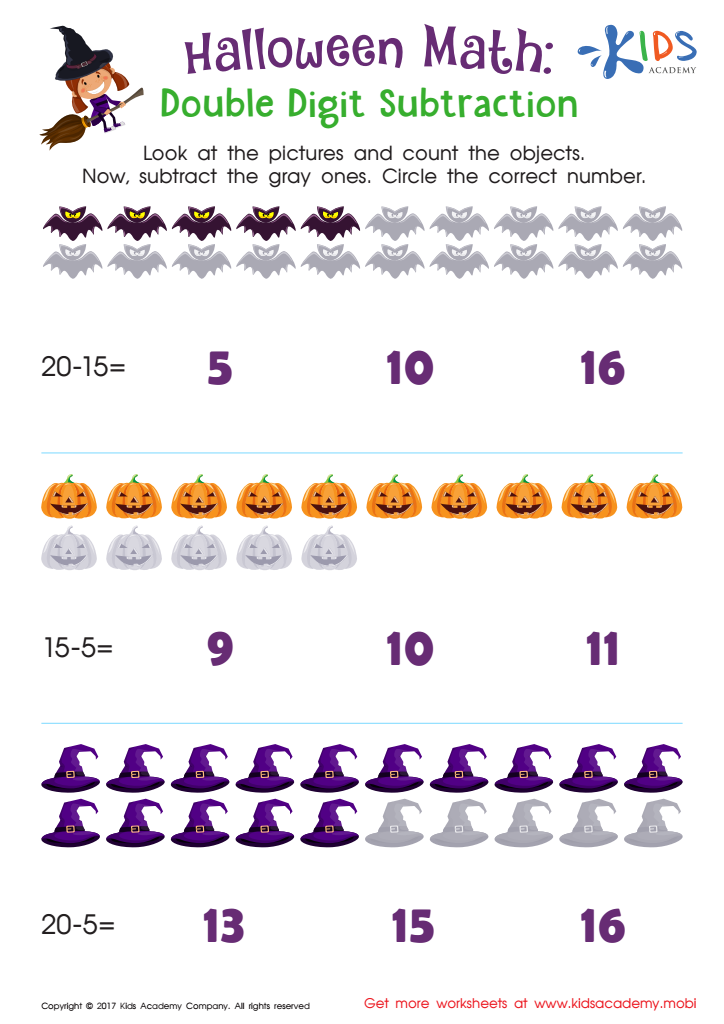
Halloween Math Subtraction Worksheet
 Assign to My Students
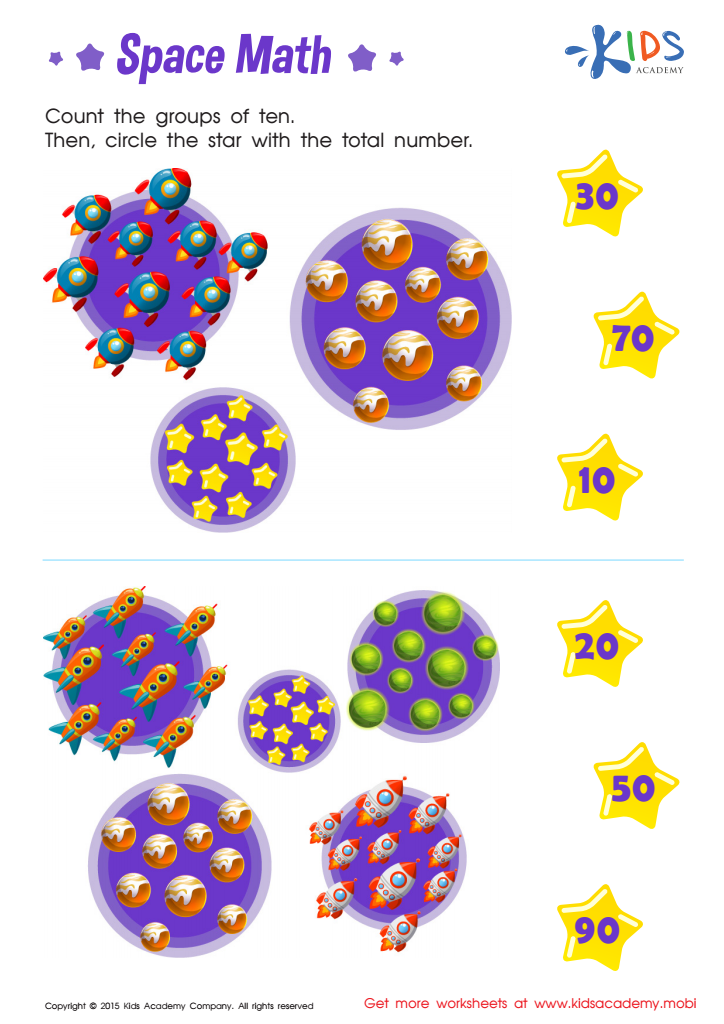
Learn dozens: Space math Worksheet
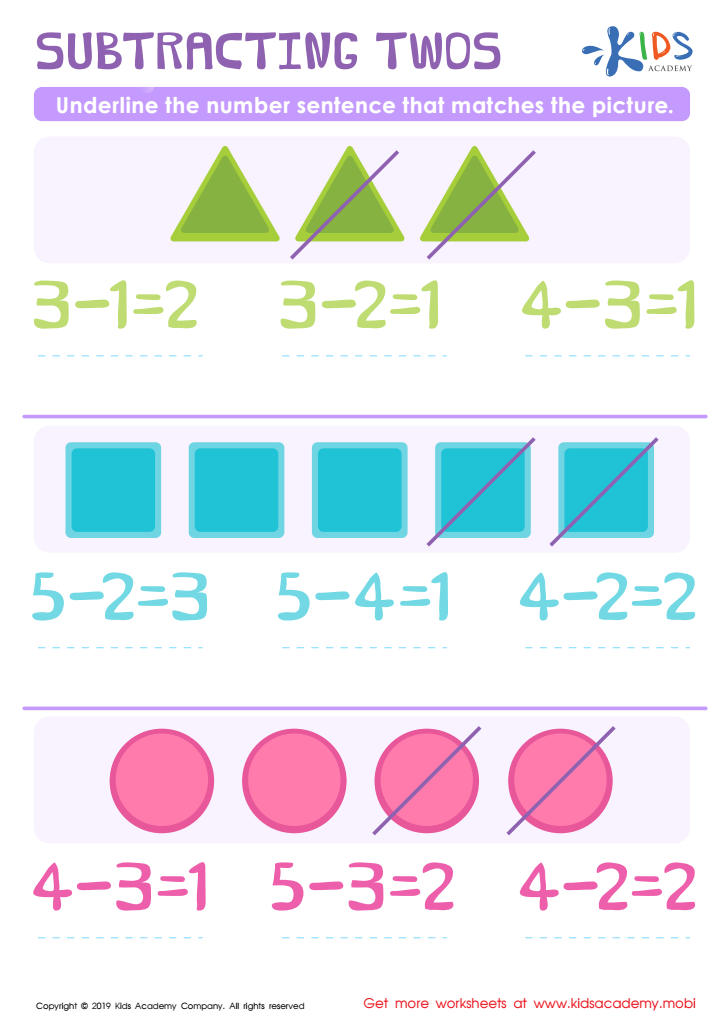
Subtracting Twos Worksheet








Basic subtraction skills are essential for 5-year-olds as they lay the groundwork for future mathematical understanding and critical thinking. At this age, children are naturally curious and absorb information quickly. Developing subtraction skills aids in their cognitive growth, enhancing problem-solving abilities and logical reasoning.
Moreover, subtraction teaches children to understand the concept of 'taking away', which is not only vital for math but also gives them insight into everyday life scenarios, such as sharing or understanding quantity. Early mastery of these skills instills confidence in kids, fostering a positive attitude towards math and learning in general.
Parents and teachers play a crucial role in this development. By engaging children in fun activities that incorporate subtraction, they can create a supportive learning environment. Simple games, stories, and practical situations can make the concept relatable and enjoyable. Furthermore, working on basic subtraction fosters communication between parents and children, building emotional bonds while reinforcing learning.
In summary, nurturing subtraction skills at a young age equips children with necessary tools for academic success and life skills, highlighting its importance for both parents and teachers. Engaging with these concepts now will yield long-term benefits in children’s educational journeys.








