Comparing object weights Math Worksheets for 5-Year-Olds
3 filtered results
-
From - To
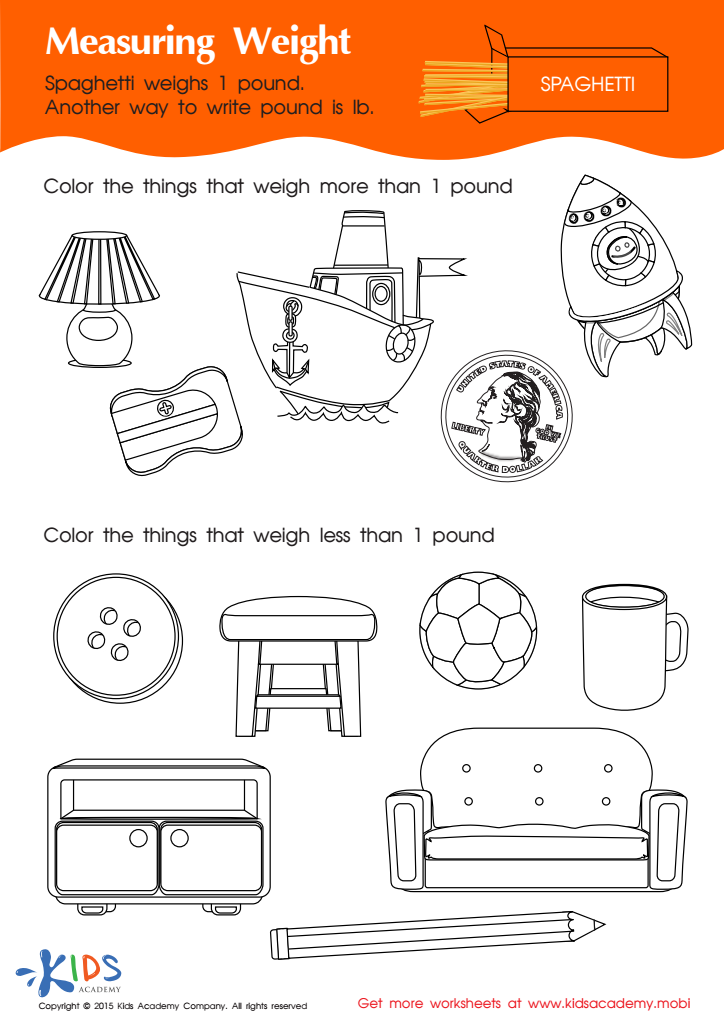
Discover engaging Comparing Object Weights Math Worksheets designed specifically for 5-year-olds! These fun and interactive worksheets help young learners develop essential math skills by understanding the concept of weight through hands-on activities. Kids will compare the weights of various objects, improving their critical thinking and observational skills. Each worksheet is thoughtfully crafted to capture children's interest while reinforcing important early math concepts. Perfect for home or classroom use, our worksheets encourage children to think mathematically and lay a solid foundation for future learning. Join us in making math enjoyable and relatable for your little ones as they explore weights in a playful way!
 Assign to My Students
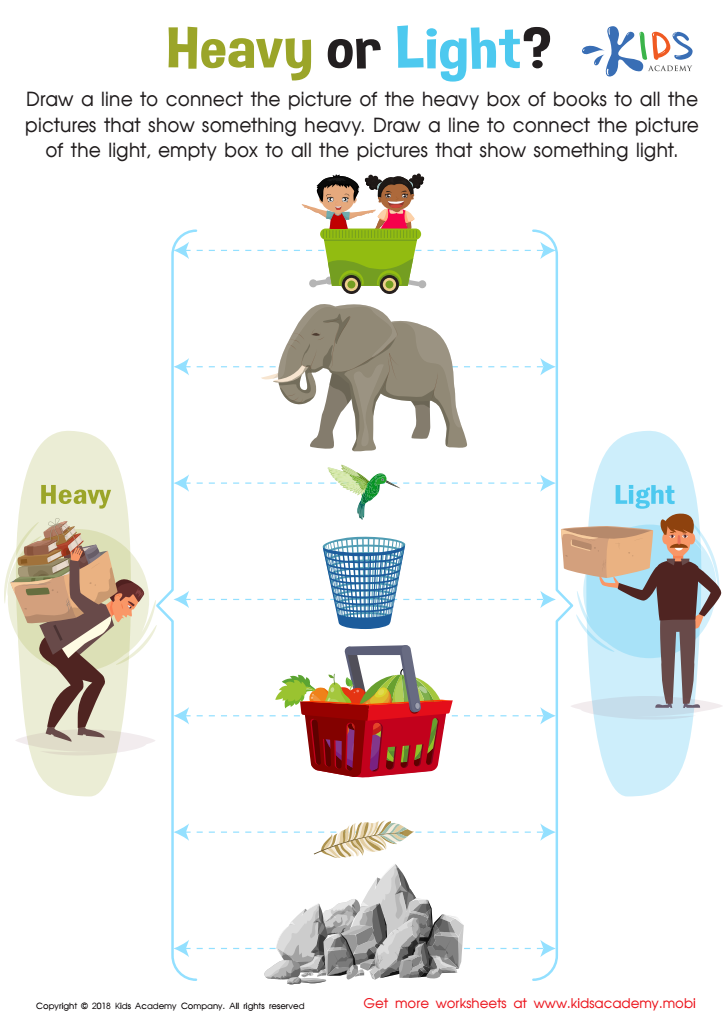
Heavy or Light? Worksheet
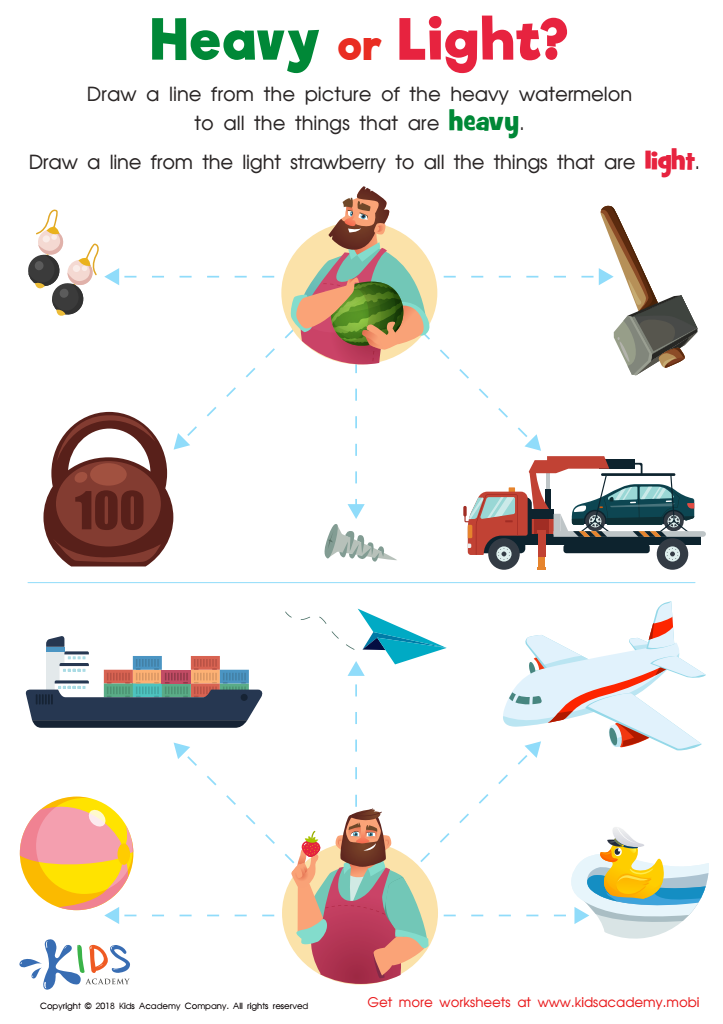
Heavy or Light? Worksheet






Comparing object weights is an essential mathematical skill for 5-year-olds, fostering a foundation for critical thinking and everyday problem-solving. Engaging young learners in weight comparisons not only enhances their understanding of measurement concepts but also integrates physical experiences with abstract ideas.
This hands-on activity promotes curiosity and exploration, allowing children to practice language skills by describing their observations using terms like "heavier," "lighter," and "equal." When parents and teachers facilitate discussions around weight through playful comparisons—like determining which toy is heavier or how to balance items—they reinforce problem-solving skills and develop mathematical language in an interactive manner.
Furthermore, understanding weight lays the groundwork for future concepts in math and science, paving the way for topics like gravity, density, and more complex measurement practices later in their education. It also encourages collaboration and teamwork when children work together in groups, helping to build social skills.
Moreover, such activities can be seamlessly integrated into daily life—whether at the grocery store or kitchen—making learning relevant and engaging. Ultimately, embracing weight comparisons helps to cultivate elementary mathematical skills, a love for learning, and a sense of wonder in the world around them, equipping young students with lifelong tools.








