Mental math skills Math Worksheets for 5-Year-Olds
8 filtered results
-
From - To
Enhance your child's arithmetic abilities with our stimulating collection of Mental Math Skills Worksheets, specially designed for 5-year-olds. These worksheets, available on Kids Academy, focus on developing crucial mental math abilities through fun and interactive exercises. By practicing addition, subtraction, and more, young learners will strengthen their problem-solving skills, boost memory, and improve numerical fluency. Our engaging activities ensure that learning is enjoyable, helping kids build a solid foundation for future mathematical success. Perfect for parents and teachers seeking effective, age-appropriate resources to cultivate a love for math and enhance cognitive development in early learners.
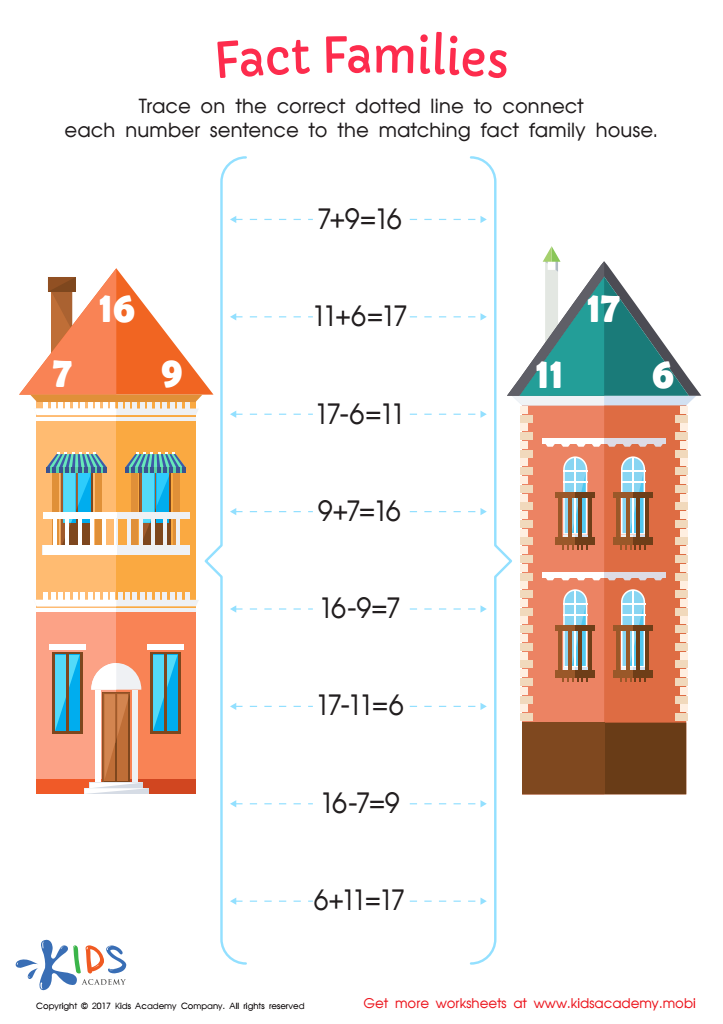
Fact Families — Add and Subtract Worksheet
 Assign to My Students
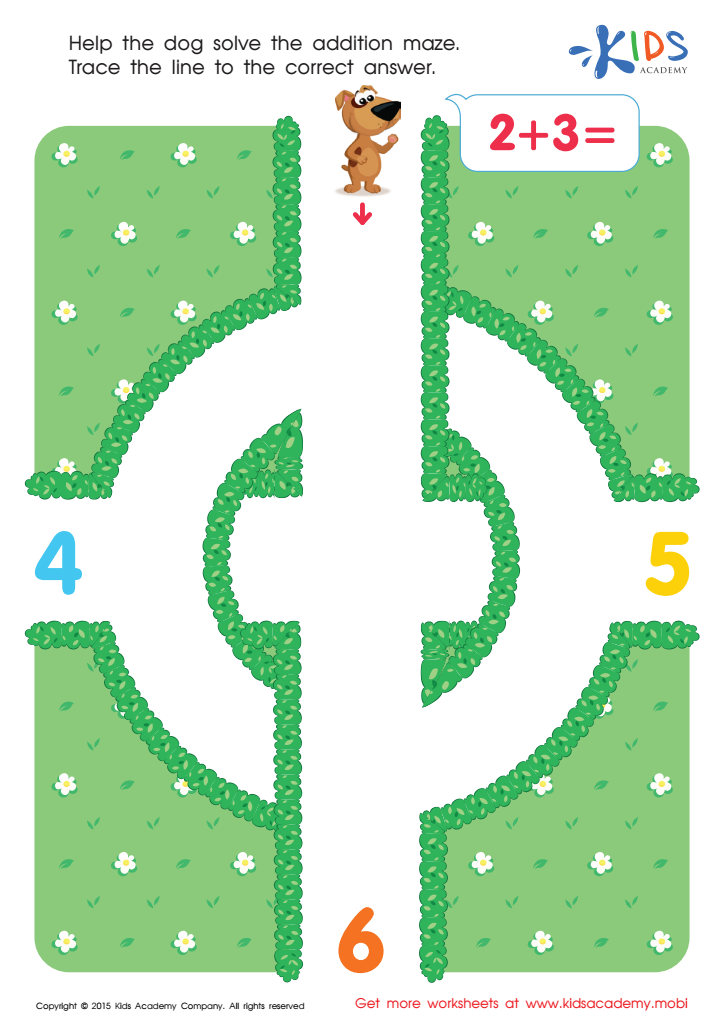
Two And Three Addition Worksheet
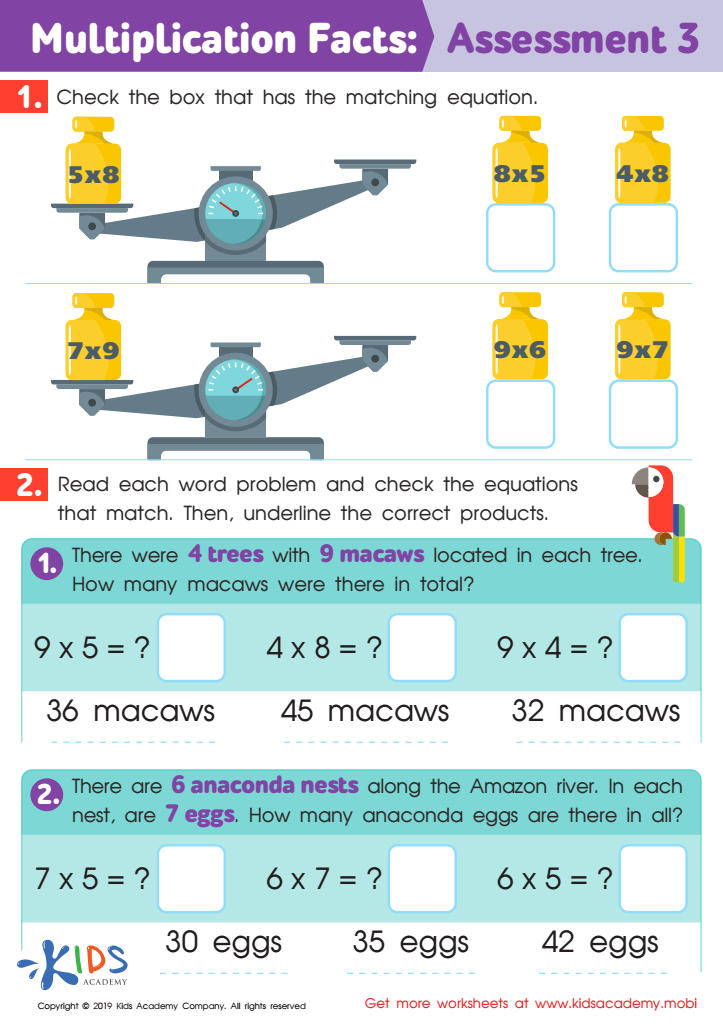
Multiplication Facts: Assessment 3 Worksheet
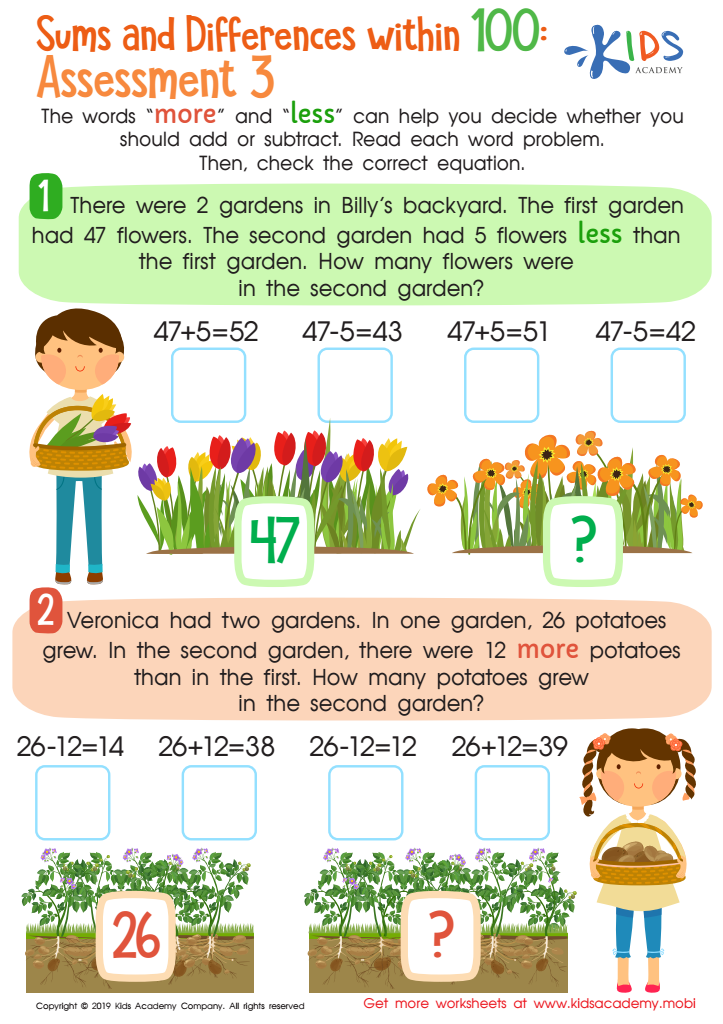
Sums and Differences Within 1 - Assessment 1 Worksheet
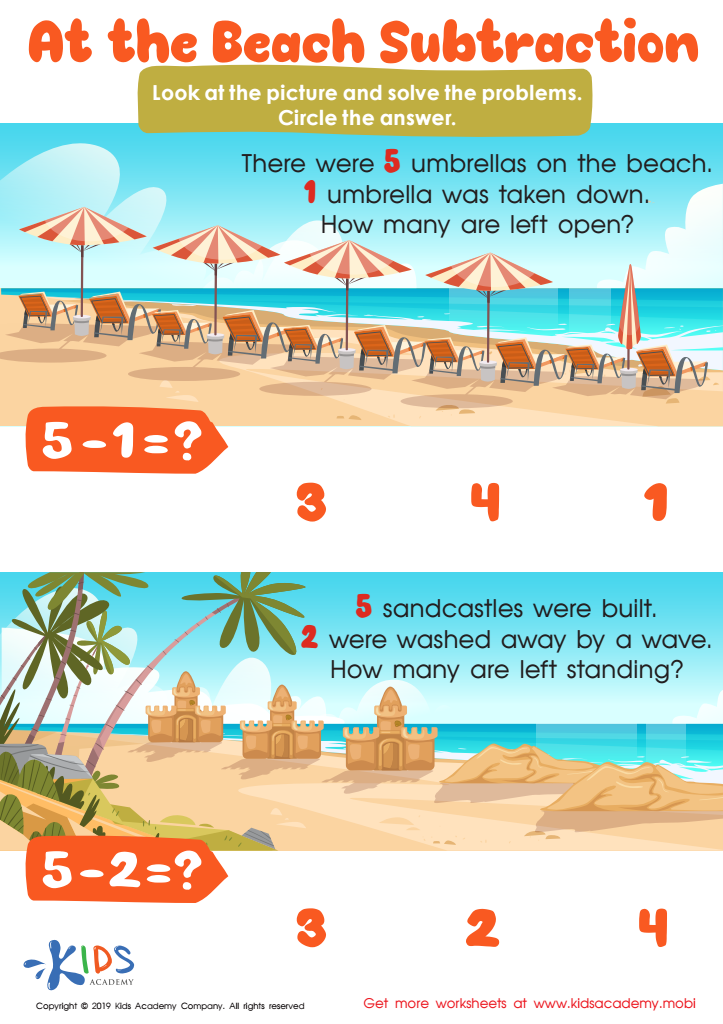
At the Beach Subtraction Worksheet
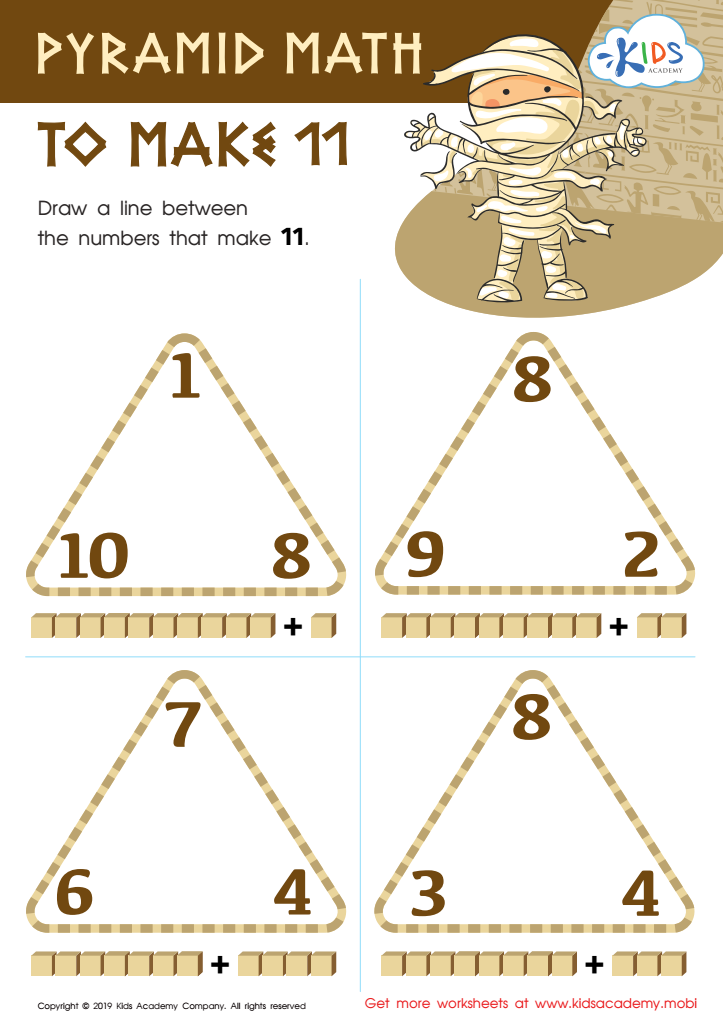
Pyramid Math to Make 11 Worksheet
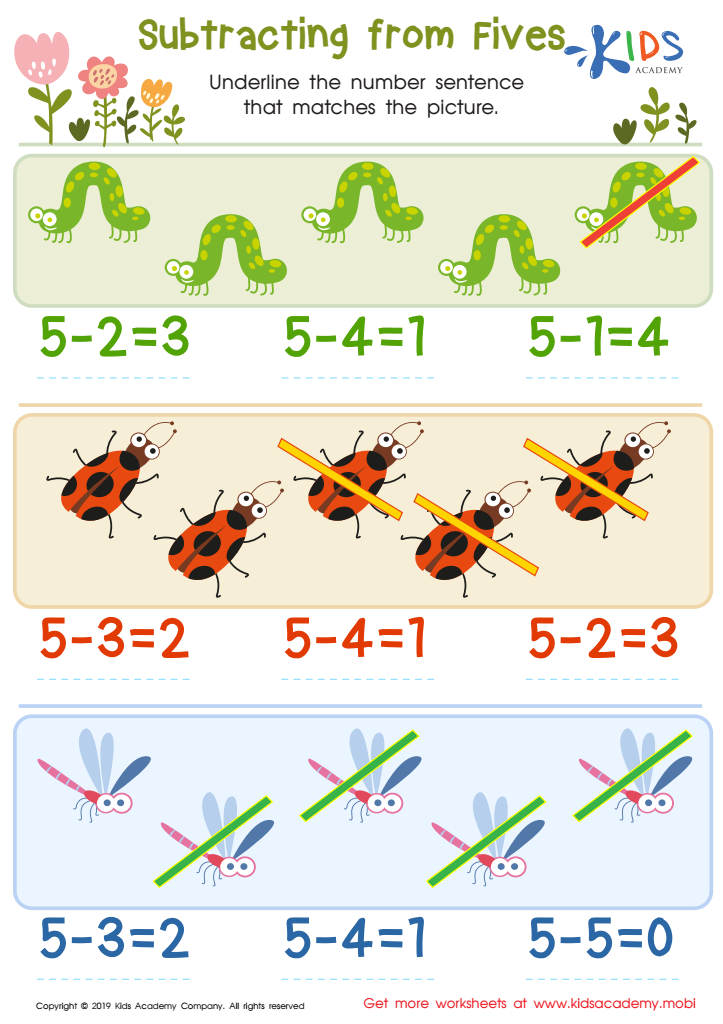
Subtracting From Fives Worksheet





%20(1).jpg)


Mental math skills are crucial for 5-year-olds, providing a strong mathematical foundation and numerous cognitive benefits. Early childhood is a critical period for brain development, and honing these skills harnesses a child's natural curiosity and capacity for learning. By integrating mental math into everyday activities, children develop numerical fluency, understand number sense, and improve problem-solving skills—all of which are fundamental for future academic success.
Parents and teachers should prioritize mental math as it enhances cognitive capabilities like memory, concentration, and logical reasoning. Moreover, mental math encourages a growth mindset, empowering children to tackle challenges confidently and fostering a positive attitude towards learning.
Incorporating mental math into daily routines also improves a child's ability to grasp more complex concepts later. Skills like addition, subtraction, and simple calculations strengthen their ability to understand patterns and relationships in numbers. As children advance through school levels, this solid math foundation will ease their transition into subjects that require higher-order thinking.
Furthermore, mental math skills promote real-life applications, such as understanding time, measuring ingredients, or calculating money. Engaging children in these practical experiences cultivate lifelong learning habits and real-world competencies.
By supporting mental math development early on, parents and teachers set the stage for academic and personal growth, preparing children for a world that increasingly relies on strong numerical and analytical skills.








