Practical math application Math Worksheets for 5-Year-Olds
6 filtered results
-
From - To
Introduce your 5-year-old to the fun world of mathematics with our Practical Math Application worksheets! Perfectly designed for preschoolers and kindergarteners, these worksheets focus on real-life math skills. Kids will practice counting, shape recognition, pattern identification, and basic arithmetic in engaging activities that make learning enjoyable. Each worksheet is created by educational experts to enhance your child’s problem-solving abilities and boost their confidence in math. With vibrant illustrations and interactive exercises, our practical math applications nurture a love for learning and help build a strong foundation for future math success. Explore now and see the difference!
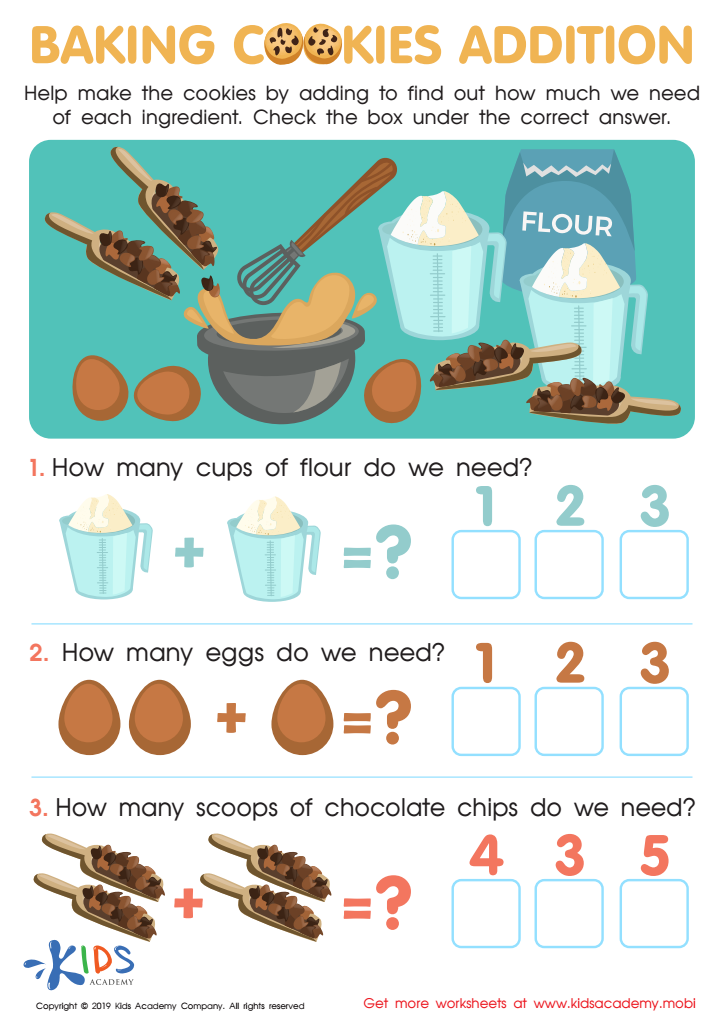
Baking Cookies Addition Worksheet
 Assign to My Students
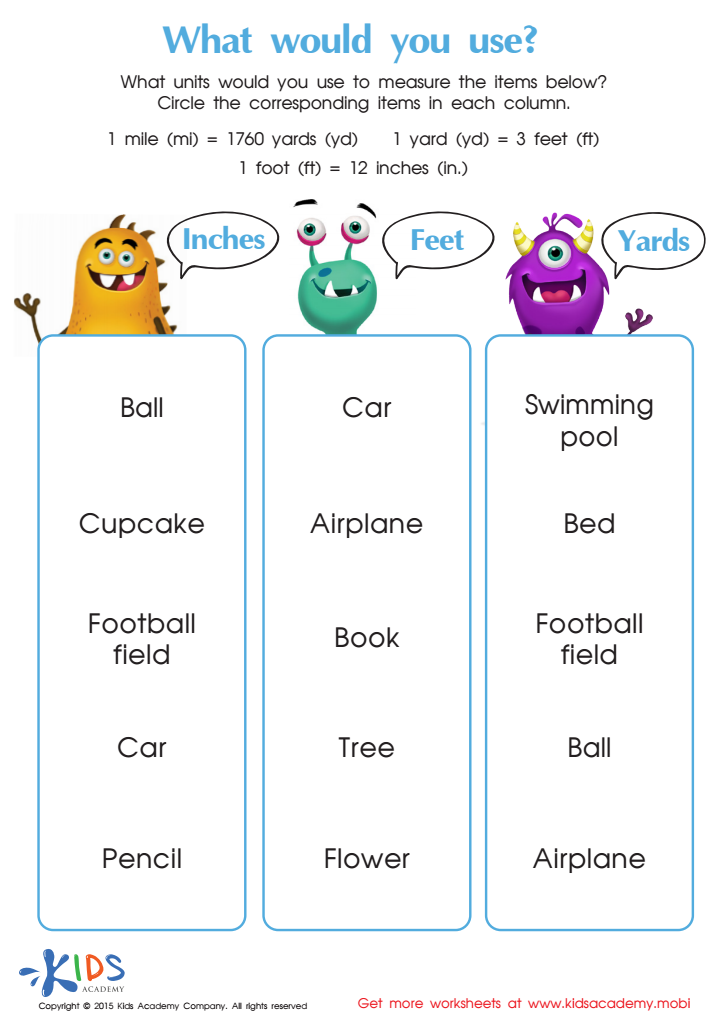
Learning about measuring objects in inches, feet and yards Worksheet
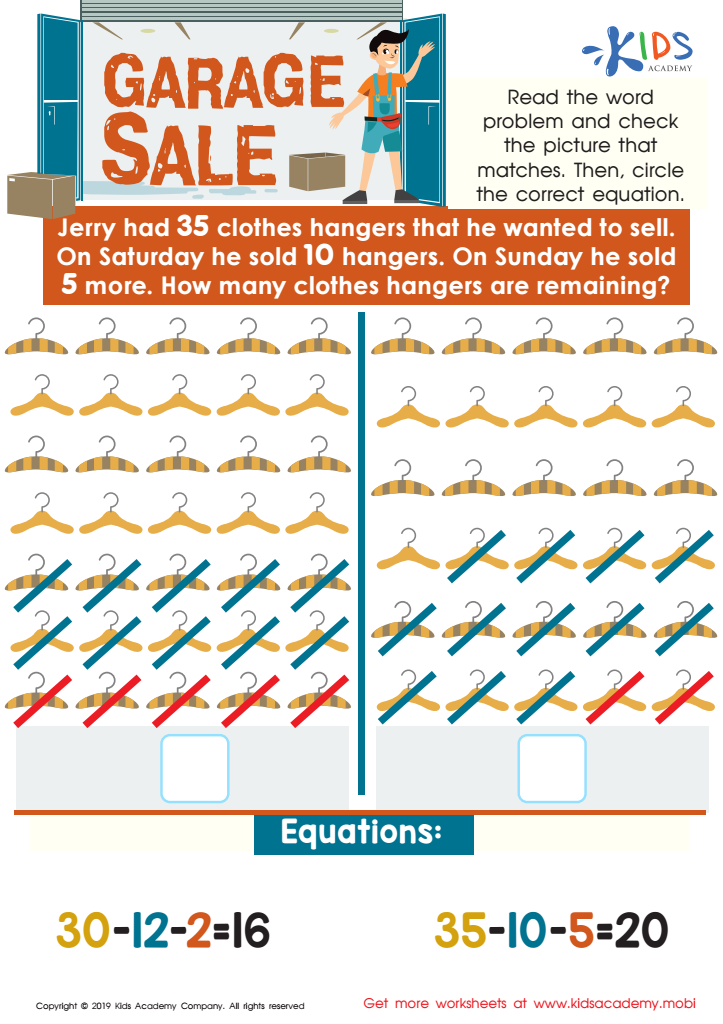
Garage Sale Worksheet
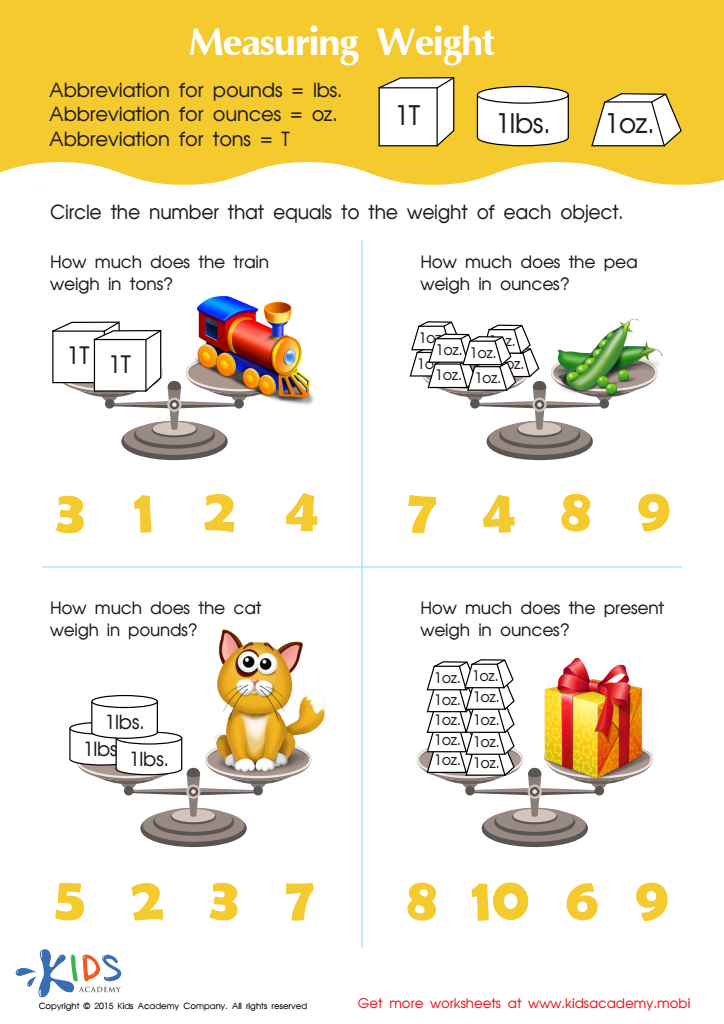
Measuring Weight in Ounces, Pounds and Tons Worksheet
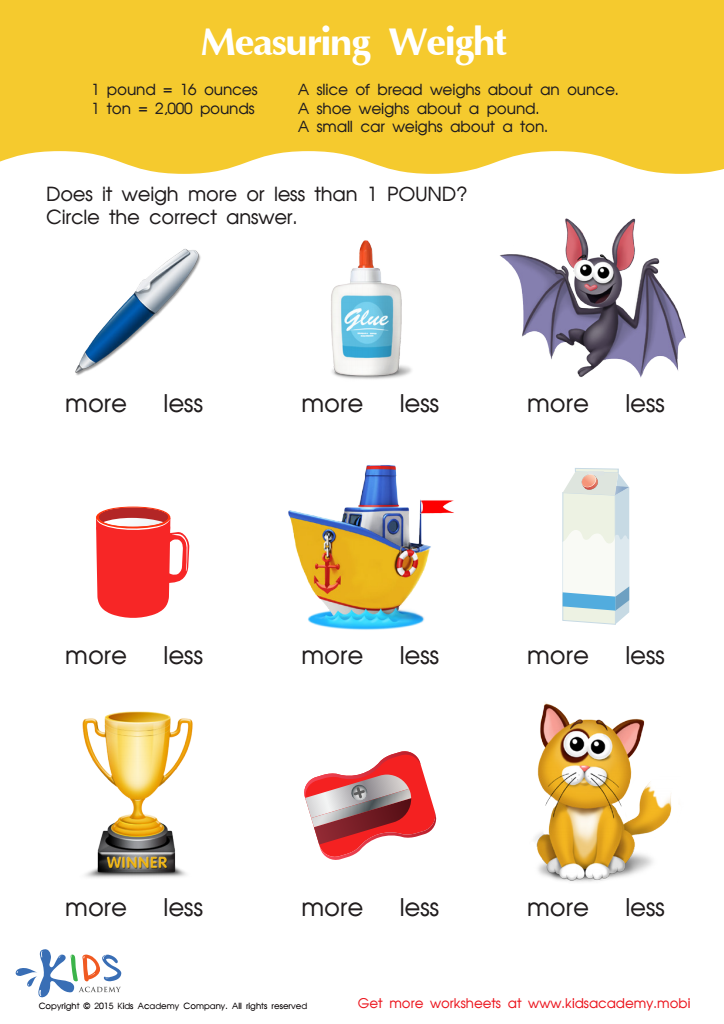
Measuring weight in pounds Worksheet
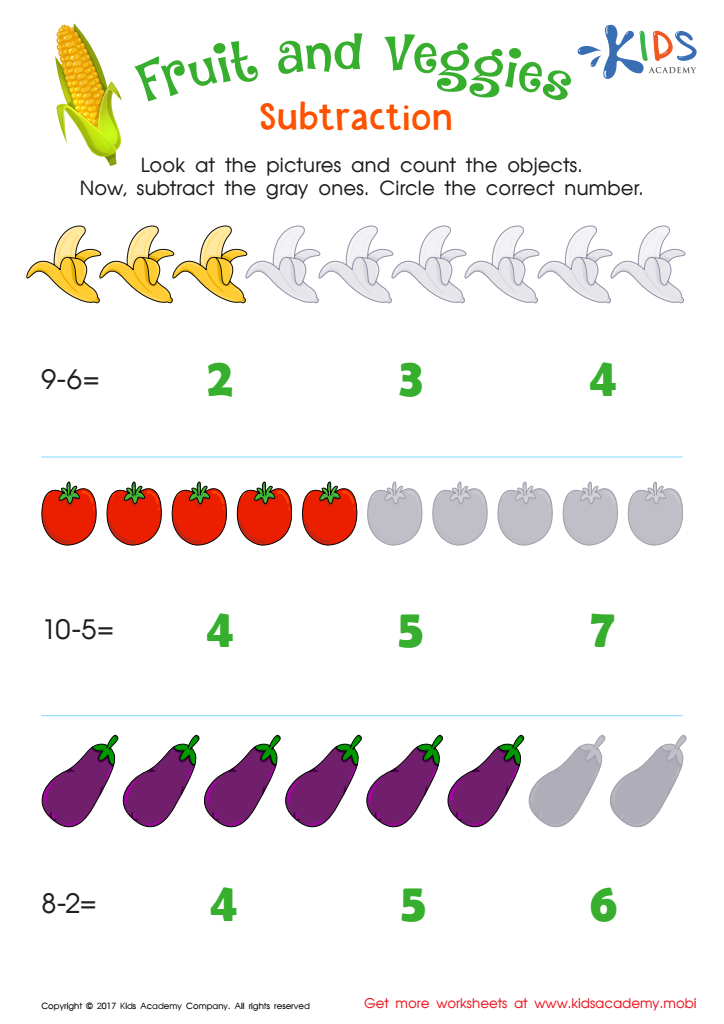
Fruit and Veggies Subtraction Worksheet




.jpg)



Practical math applications for 5-year-olds are crucial in laying a strong educational foundation, as early exposure to math concepts can significantly influence future academic success. At this tender age, math isn't just about numbers; it’s about understanding the world. Engaging children in practical math — such as counting objects, identifying shapes, and recognizing patterns — helps develop critical thinking and problem-solving skills essential for everyday life.
For parents, integrating math into daily activities like sorting groceries, cooking, or playing games demonstrates math’s relevance, making learning fun and impactful. This approach fosters a positive attitude towards math, reducing anxiety and increasing confidence as children grow. Children who enjoy math are more likely to tackle challenges with enthusiasm, a trait that benefits all areas of learning.
Teachers, meanwhile, benefit from prioritizing practical math as it aligns with developmental milestones. Practical math application enhances cognitive development, fine motor skills through activities like measuring and drawing, and language skills through math-based discussions. When both parents and teachers care about integrating practical math into early education, they provide a cohesive learning environment that supports a child's natural curiosity and lays the groundwork for more complex mathematical understanding in the future. Such collaborative effort ensures that children are better prepared for academic challenges and everyday problem-solving.








