Comparing object weights Measurement Worksheets for 5-Year-Olds
3 filtered results
-
From - To
Explore our engaging Comparing Object Weights Measurement Worksheets, specially designed for 5-year-olds! These worksheets foster essential early math skills by encouraging young learners to compare the weights of various objects. Through interactive and colorful activities, children will use visuals and hands-on exercises to enhance their understanding of measurement concepts. Perfect for both classroom and home use, these worksheets help develop critical thinking and observation skills while making learning fun. Ideal for preparing children for future math challenges, our resources are aligned with early learning standards. Start your child's journey into the world of weights and measurements today!
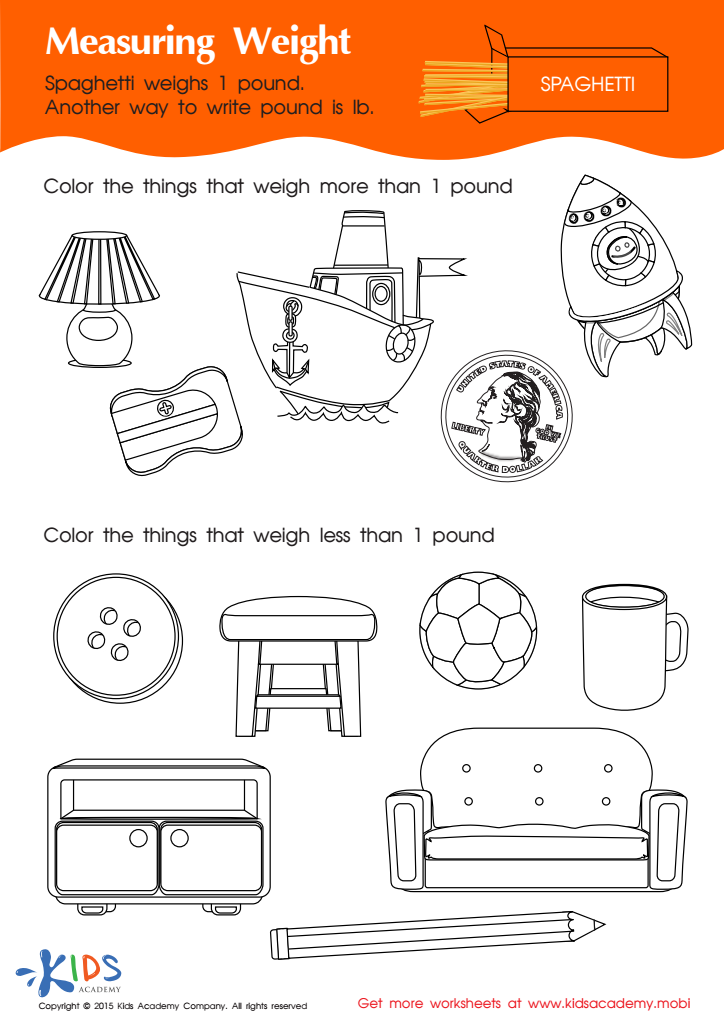
 Assign to My Students
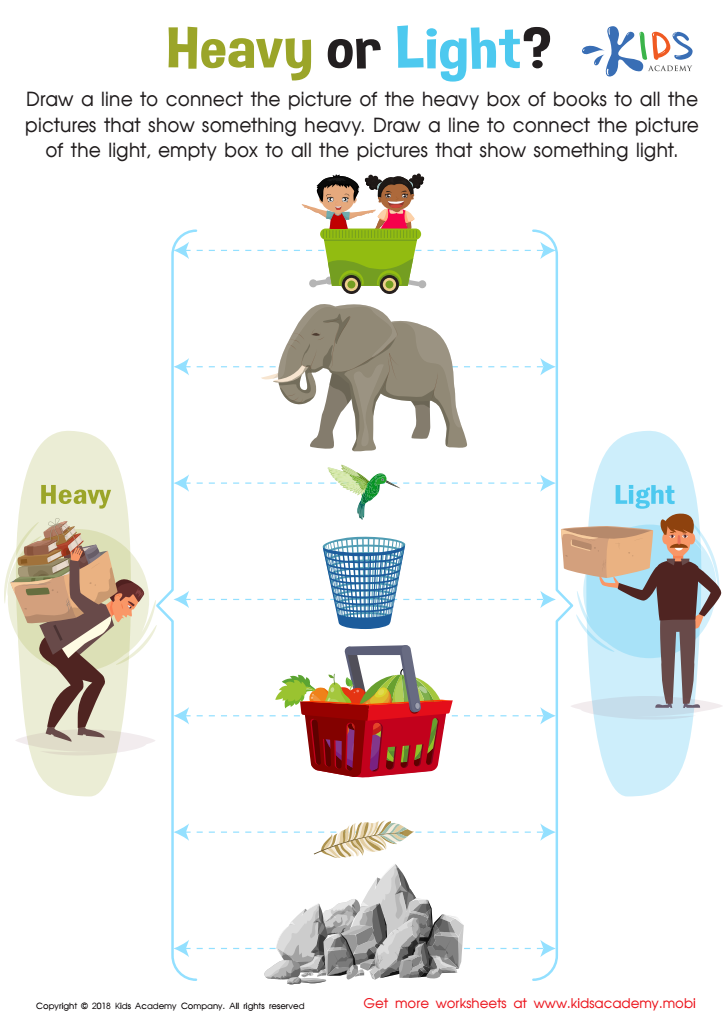
Heavy or Light? Worksheet
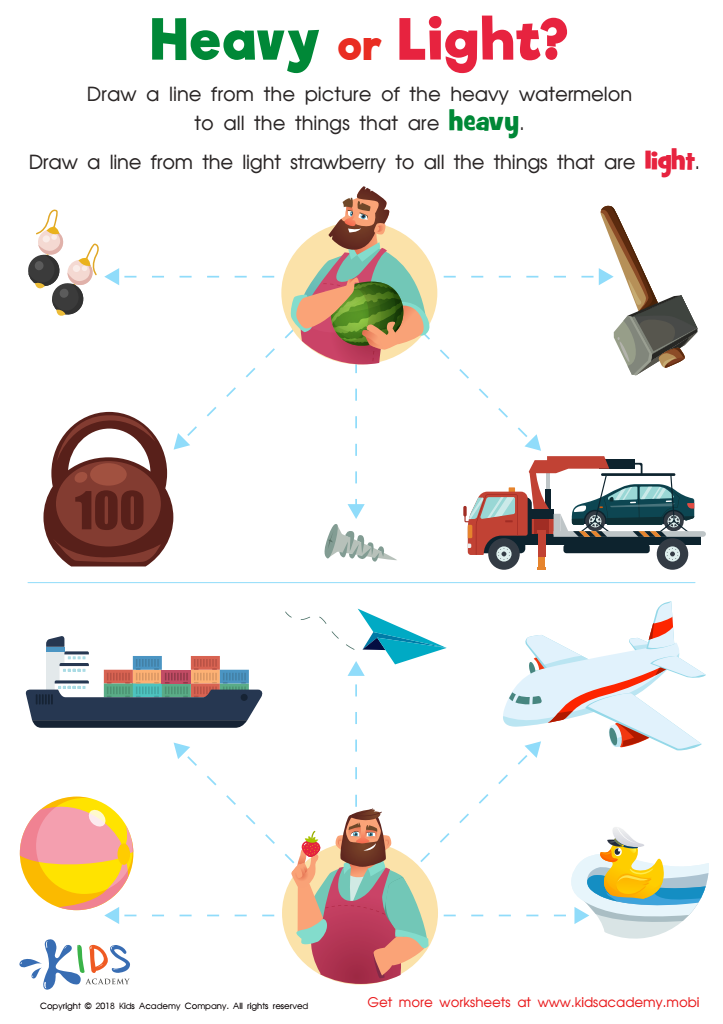
Heavy or Light? Worksheet








Comparing object weights is a crucial learning activity for 5-year-olds that fosters early math skills and scientific thinking. Engaging in weight comparison helps children develop a foundational understanding of measurement concepts, which are essential for later academic success. As they interact with various objects, children begin to grasp the idea of heavier and lighter, leading to improved vocabulary and reasoning skills.
Moreover, this type of hands-on learning boosts fine motor skills as children manipulate and balance objects. It encourages curiosity and inquiry, allowing children to ask questions and test hypotheses, which lays the groundwork for critical thinking. By participating in these activities, kids also learn about the properties of different materials and why some items weigh more than others, integrating science into their play.
In a broader context, learning to compare weights encourages teamwork and social interaction when children work together, enhancing their collaboration skills. This learning approach simultaneously addresses cognitive and social development, making it a valuable experience that parents and teachers should prioritize. Ultimately, understanding measurement through weight comparison prepares children for everyday life, helping them make sense of the world around them while instilling a love for learning.








