Basic math operations Word Problems Worksheets for 5-Year-Olds
3 filtered results
-
From - To
Explore our engaging Basic Math Operations Word Problems Worksheets for 5-Year-Olds, designed to enhance early math skills in a fun, interactive way. These worksheets focus on addition, subtraction, and simple problem-solving, tailored for young learners. Each worksheet features colorful illustrations and relatable scenarios to make learning enjoyable and effective. Ideal for home or classroom use, these resources help children practice essential math concepts, improve critical thinking, and build a strong math foundation. Suitable for both individual and group activities, our worksheets are the perfect tool to kickstart your child's mathematical journey.
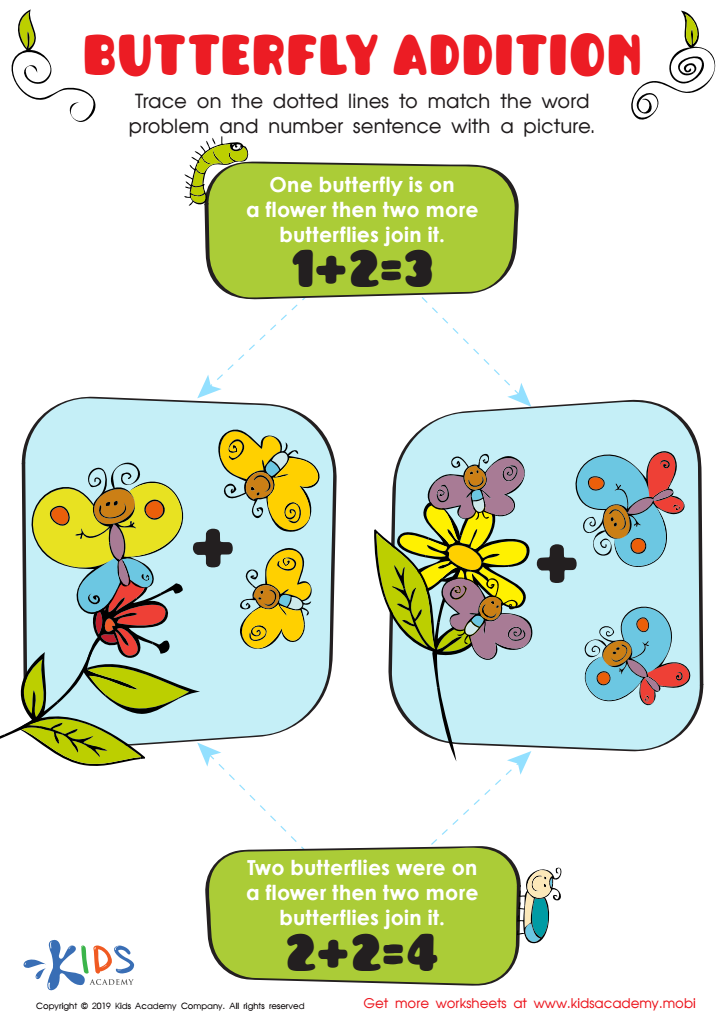
Butterfly Addition Worksheet
 Assign to My Students
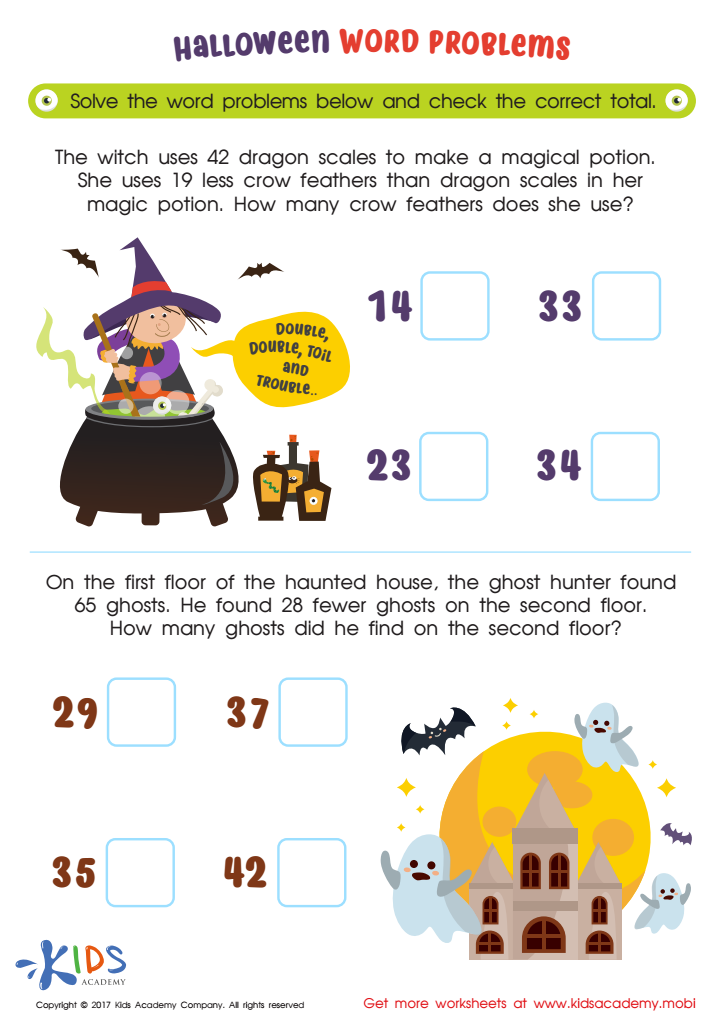
Halloween Word Problems Printable
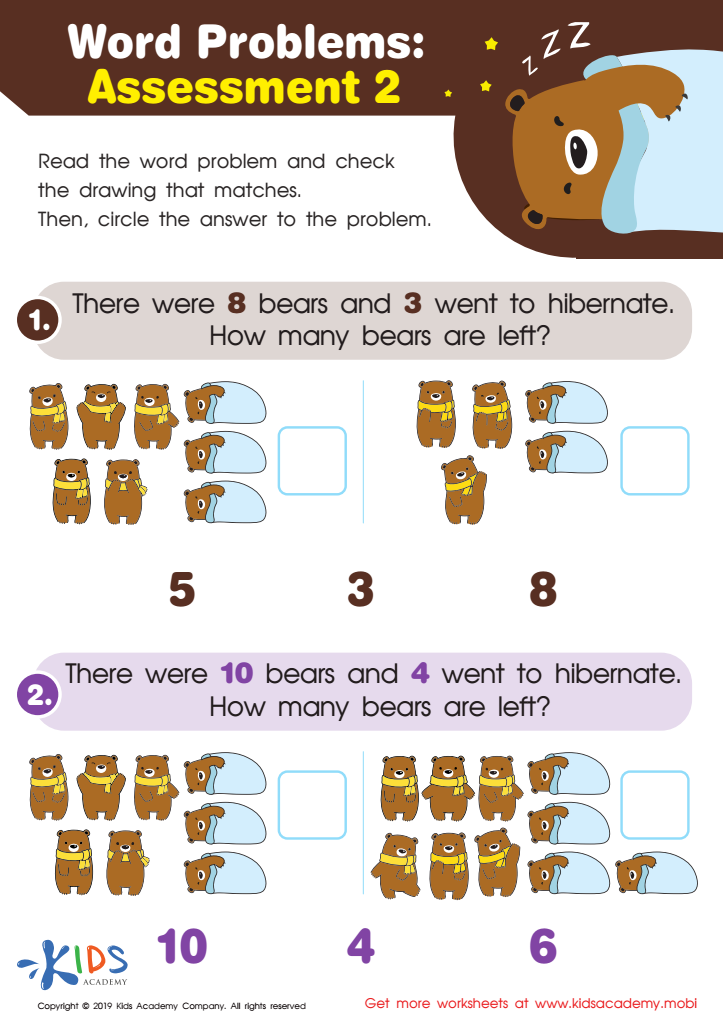
Word Problems: Assessment 2 Worksheet








Basic math operations word problems for 5-year-olds are essential because they build foundational skills that are crucial for a child’s overall intellectual development. First, introducing math through word problems helps in the development of critical thinking and problem-solving skills. Rather than just learning numbers and symbols, children learn to understand the real-world applications of math, which enhances comprehension and retention.
Additionally, word problems integrate literacy and mathematics. By requiring children to read or listen and then convert that information into a mathematical equation, they simultaneously improve their reading and numeracy skills. This dual focus fosters better cognitive development and encourages a more interdisciplinary way of learning.
Early exposure to solving word problems also boosts confidence. When children solve problems on their own, they gain a sense of accomplishment and develop a positive attitude toward math, making them more likely to excel in the subject in the future. Properly guided experiences with word problems can reduce math anxiety, setting up a strong foundation for more advanced math concepts later in their educational journey.
Furthermore, these problems offer parents and teachers an opportunity to engage actively with children’s learning processes, creating interactive and supportive learning environments. This can strengthen parent-child or teacher-student relationships, making the overall learning experience more enjoyable and effective.








