Improve counting skills Building Vocabulary Worksheets for 5-Year-Olds
3 filtered results
-
From - To
Enhance your child's counting skills while building their vocabulary with our specially designed worksheets for 5-year-olds. These engaging activities focus on integrating counting with relevant vocabulary, making learning both fun and effective. Each worksheet encourages young learners to practice counting objects, identifying numbers, and associating words with quantities, fostering a strong foundation in early math and language skills. Ideal for preschool and kindergarten learners, our resources are perfect for classroom or at-home reinforcement. Help your child explore the world of numbers and words with exciting, hands-on learning experiences that spark curiosity and boost confidence! Get started today!
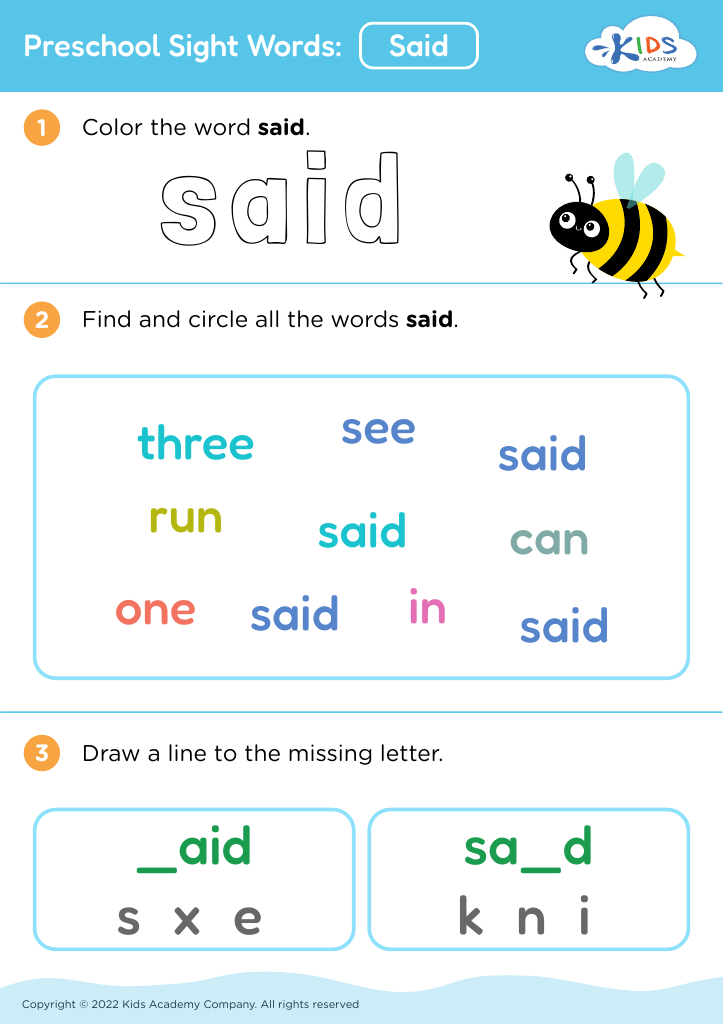











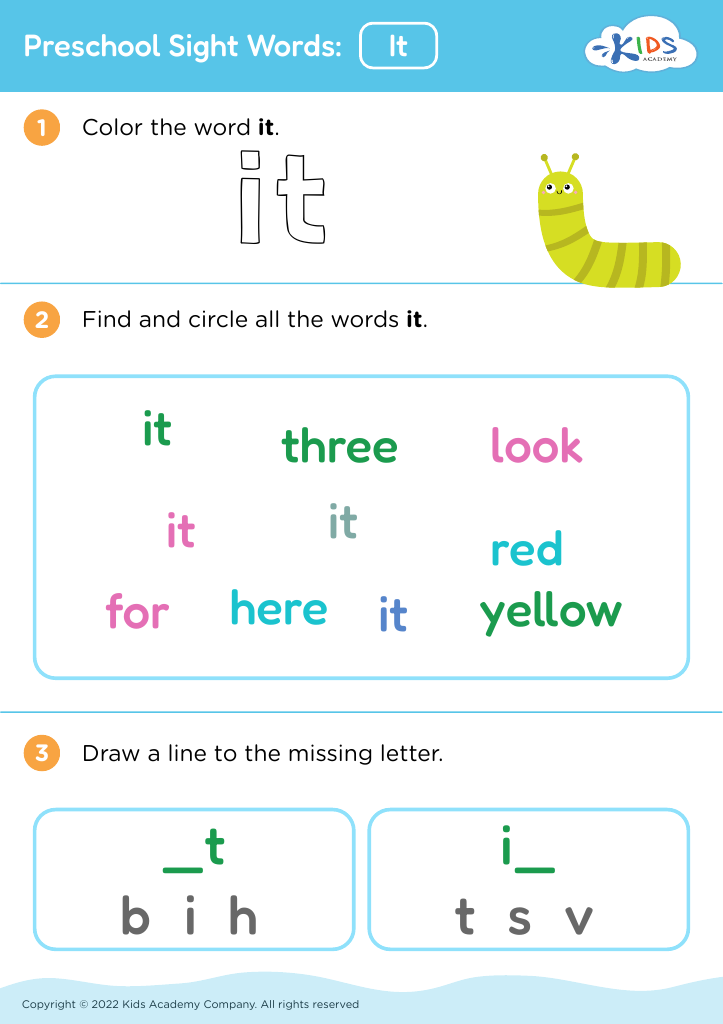
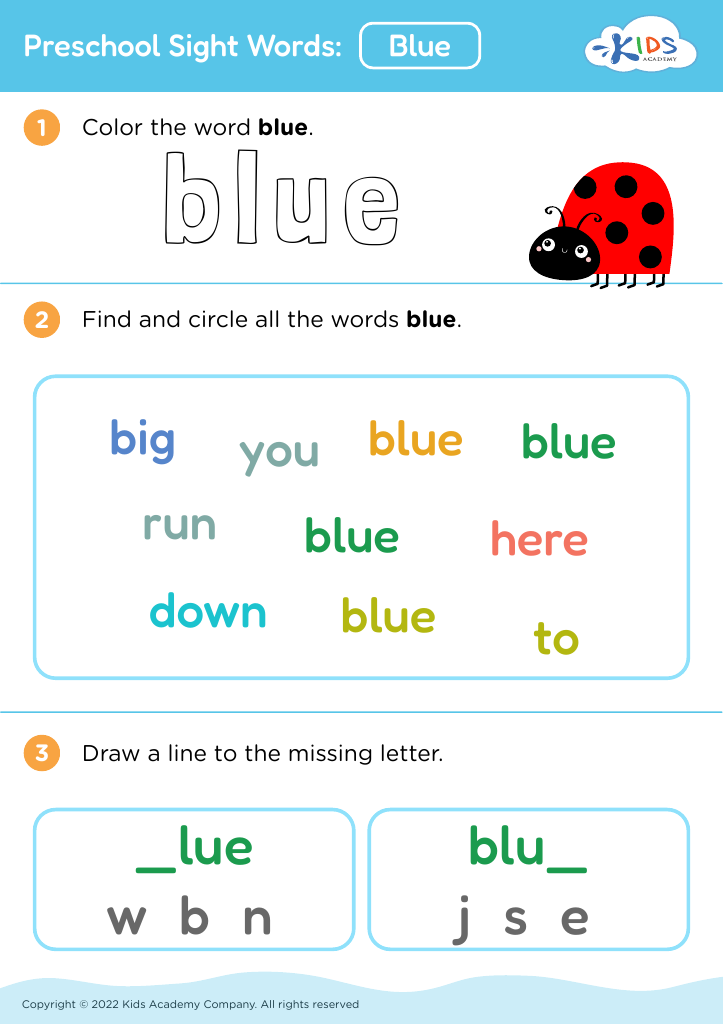








Improving counting skills and building vocabulary for 5-year-olds are essential components of a child's early education that have lasting impacts on their academic and social development. First, strong counting skills serve as the foundation for later mathematical understanding. Mastery of numbers and basic operations helps children engage with more complex math concepts in later grades, fostering a positive attitude towards mathematics.
Similarly, building vocabulary at this age lays the groundwork for reading and communication skills. A rich vocabulary enhances a child's ability to express thoughts and feelings, understand instructions, and engage in meaningful conversations. This foundational language proficiency not only supports literacy development but also boosts confidence in social interactions.
Moreover, integrating counting skills and vocabulary building creates opportunities for creativity, problem-solving, and critical thinking. Engaging activities that involve counting—like using blocks, sorting objects, or singing songs—can seamlessly incorporate new words, making learning enjoyable and holistic.
Parents and teachers play a crucial role in nurturing these skills through play, conversation, and collaborative learning experiences. By prioritizing counting and vocabulary enhancement, adults support the overall cognitive and emotional growth of children, setting them up for success in both academic endeavors and personal relationships.








