Enhance your 5-year-old's literacy skills with our engaging Sight Word Recognition Building Vocabulary Worksheets! Designed for early learners, these worksheets help children master essential sight words, fostering reading fluency and comprehension. Each activity creatively combines fun and learning, ensuring your child remains motivated and confident as they develop their vocabulary. Our resources support a variety of learning styles, encouraging repetition and practice in a playful manner. Help your little ones recognize reading patterns and gain a love for words, setting a solid foundation for future reading success. Explore our collection to enrich your child's language journey today!

Check out this FREE Trial Lesson on Building Vocabulary for age 5!

Sight words: You, Like

Favorites
With answer key
Interactive
  • 5
  • Sight word recognition
  • Building Vocabulary
Sight Words I Can Worksheet

Sight Words I Can Worksheet

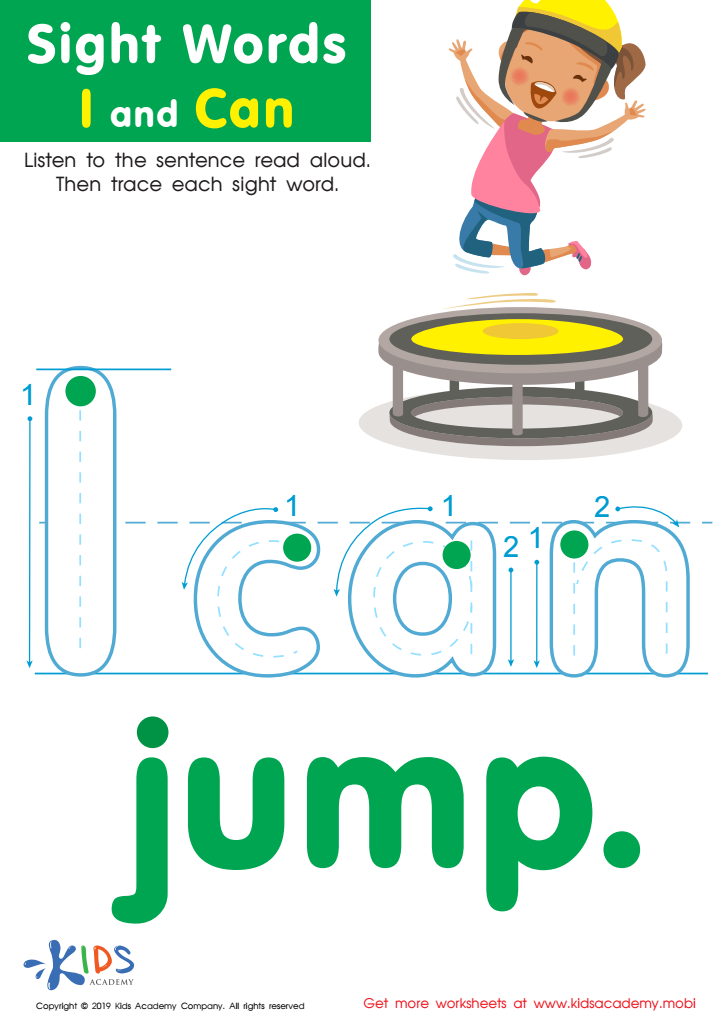
Emerging readers can build confidence and improve reading skills with this free worksheet! They'll trace the lines to complete the "I Can" phrase then use the picture clue to decode the last word. This activity encourages reading and writing, and is empowering for kids as they explore all the things they can do!
Sight Words I Can Worksheet
Worksheet
Sight Word Can Worksheet

Sight Word Can Worksheet

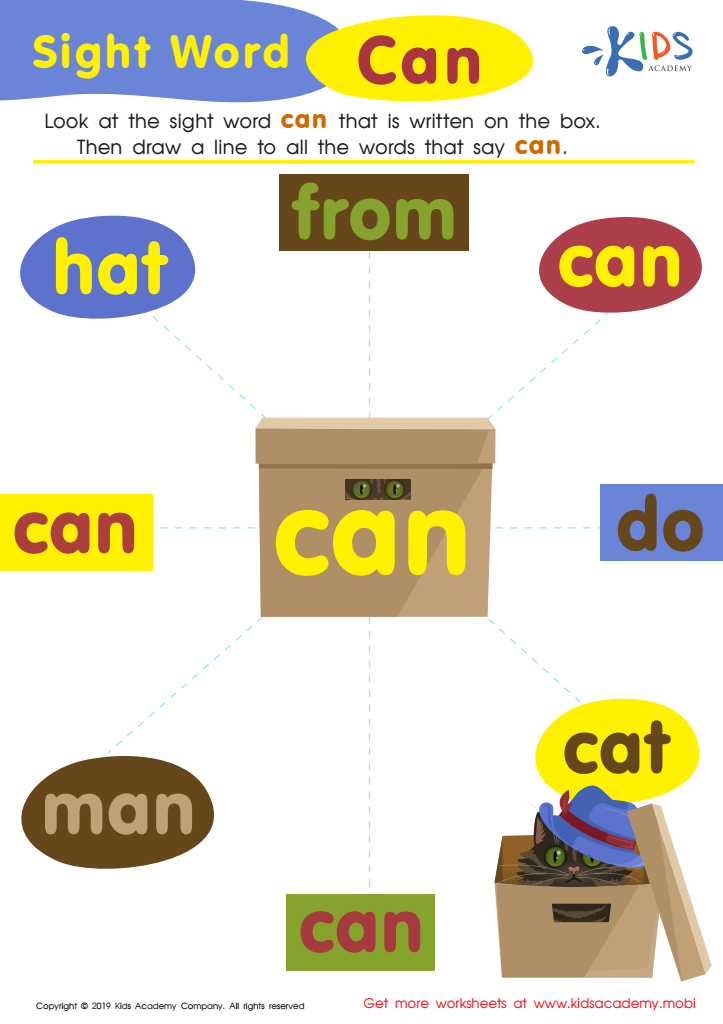
Learning sight words is key for strong readers. Kids with large word bases find reading simpler, since they don't have to decode words they already know. This free worksheet uses the word 'can' to help kids improve their visual discrimination and refine motor skills, while providing pictures to help them along.
Sight Word Can Worksheet
Worksheet
High Frequency Words: Assessment 1 Worksheet

High Frequency Words: Assessment 1 Worksheet

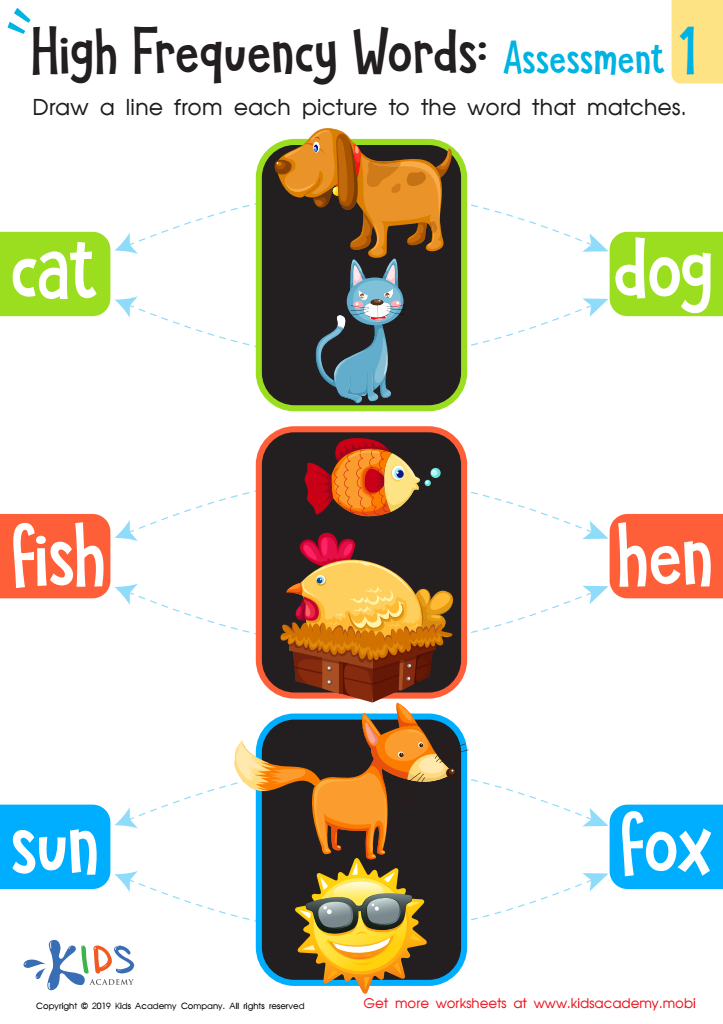
Emergent readers need to know high-frequency words accurately and quickly to develop fluency. Connecting these words to colorful, fun pictures helps reading prosody. This assessment worksheet uses traceable lines to help learners match pictures to words.
High Frequency Words: Assessment 1 Worksheet
Worksheet
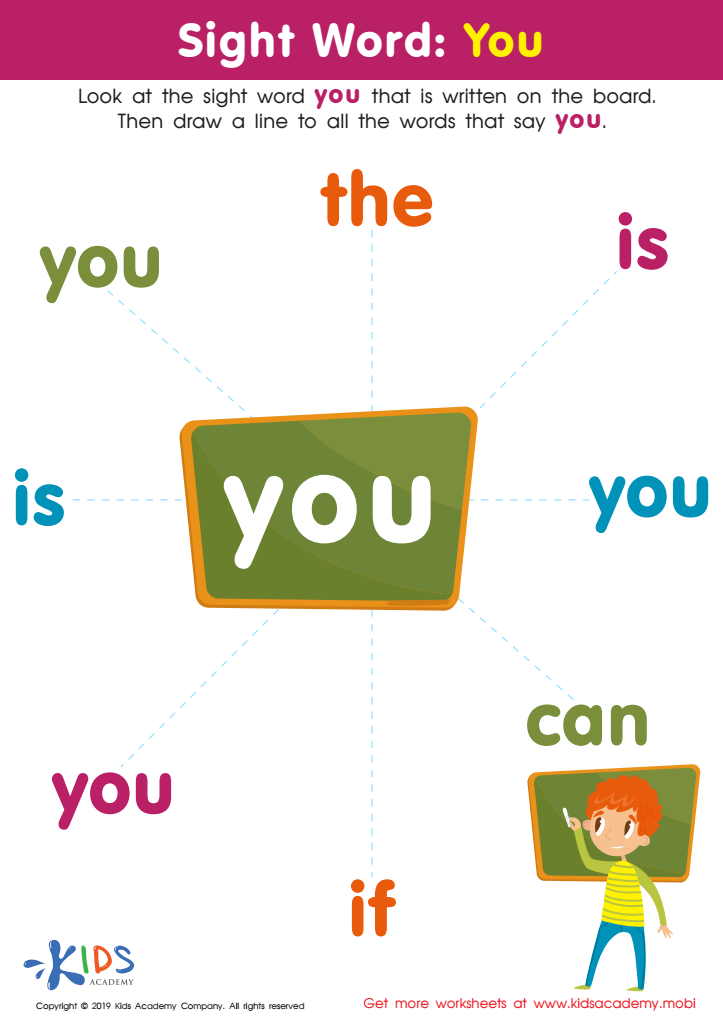
Sight Word You Worksheet

Sight Word You Worksheet

This free worksheet features the word 'you' and helps beginning readers practice visual-discriminatory skills. Using traceable lines and different colored words, it's an easy way to reinforce their identification of the word and build fluency.
Sight Word You Worksheet
Worksheet
Colored Sight Words Up or Down

Up or Down Printable Sight Words Worksheet
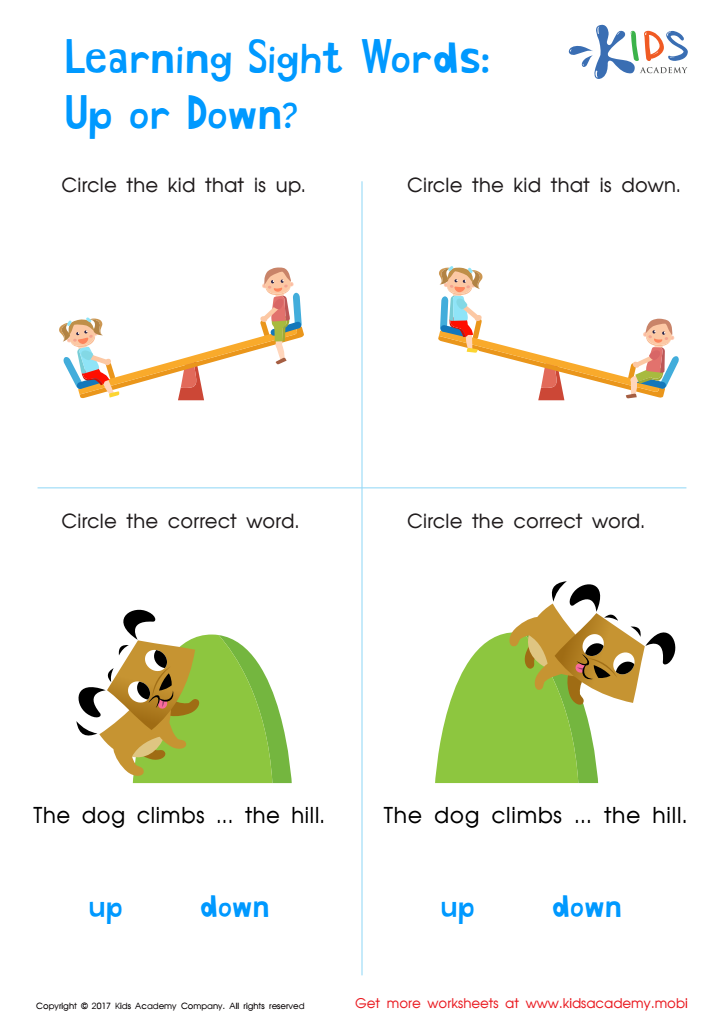
Help your child identify up and down in print with this sight words worksheet. It has simple sentences, vibrant images and easy-to-read language that allow your little learner to practice these essential sight words. Perfect for early readers! Help your early reader identify and read up and down with this sight words worksheet. It provides simple sentences, clear language and vibrant images to help them practice these essential sight words. Perfect for toddlers!
Up or Down Printable Sight Words Worksheet
Worksheet
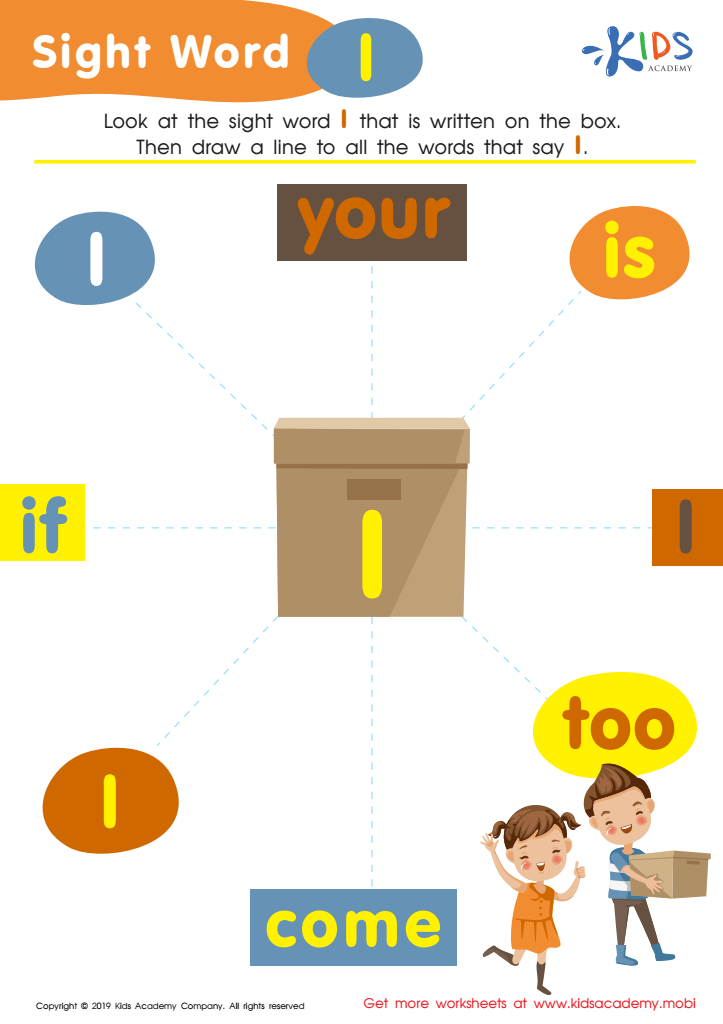
Sight Word I Worksheet

Sight Word I Worksheet

Recognizing the sight word 'I' is harder than it looks! When kids are learning to read, they understand 'I' by its sound, not as a word. This free worksheet gives them practice with 'I', letting them work on their fine motor skills too. They'll join 'I' to shapes containing the same letter. It's a great way to give kids confidence in their reading skills!
Sight Word I Worksheet
Worksheet


Sight word recognition and vocabulary building are crucial elements in the literacy development of 5-year-olds. Sight words, which are commonly used words that children are encouraged to recognize by sight rather than sound, help foster reading fluency. When children can quickly recognize these words, they can focus their cognitive resources on comprehension and thinking critically about what they read.

Building vocabulary goes hand-in-hand with sight word recognition. As children learn new words, they expand their ability to express themselves and understand others, enhancing their communication skills. A robust vocabulary supports reading comprehension, allowing young learners to grasp the context, infer meaning, and enjoy stories.

Teachers and parents should care about these skills because they lay the foundation for lifelong literacy and learning. Engaging in activities that promote sight word recognition—such as interactive games, flashcards, or engaging reading sessions—can significantly impact a child's literacy journey. Research indicates that early literacy skills strongly correlate with later academic success. By nurturing these skills at an early age, we equip children with essential tools for effective communication, critical thinking, and overall academic achievement as they progress through their education. Ultimately, investing time and effort into these areas enriches a child's learning experience and future opportunities.