Color recognition Reading Worksheets for 5-Year-Olds - Page 2
25 filtered results
-
From - To
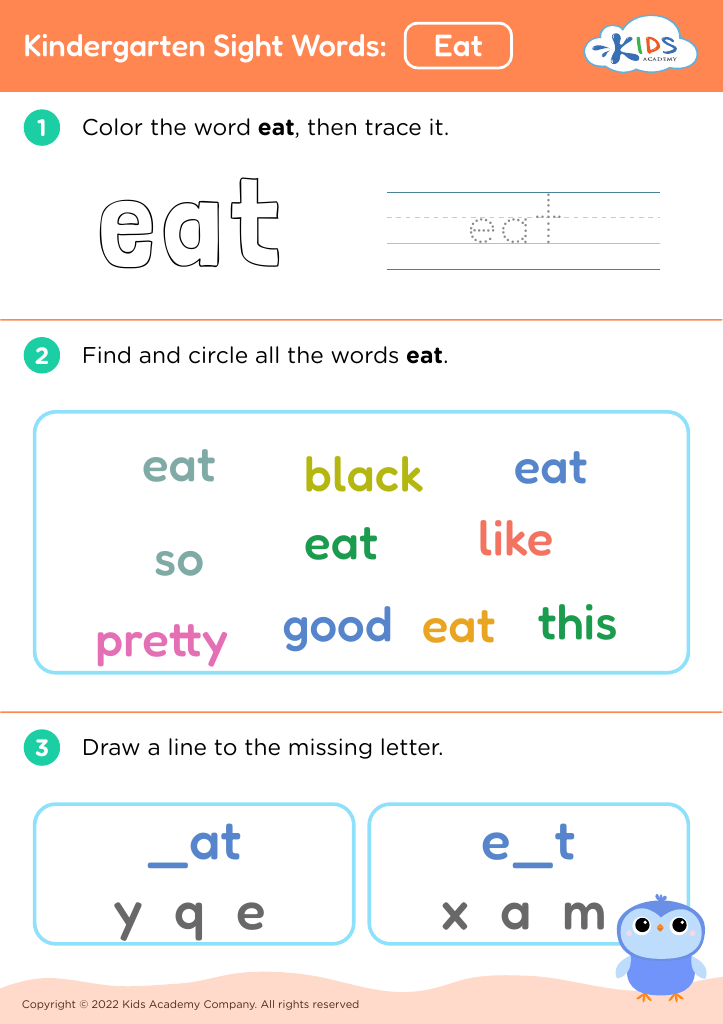







.jpg)
Color recognition is a fundamental skill that serves as a cornerstone for a child's cognitive development. For 5-year-olds, learning to identify and name colors is more than just expanding their vocabulary—it's a critical aspect of their overall growth. Parents and teachers should care about color recognition because it directly impacts the development of other crucial skills.
Firstly, recognizing and distinguishing colors enhances sensory development and improves attention to detail. It aids children in categorizing the world around them, making it easier for them to remember and organize information. Secondly, color recognition is closely tied to language development. As children learn the names of different colors, they expand their descriptive vocabulary and improve their communication skills. This foundation strengthens their ability to engage in more complex conversations and fosters language proficiency.
Additionally, color recognition lays the groundwork for later academic skills, particularly in math and science. Understanding patterns, sorting objects, and making comparisons based on color are early forms of analytical thinking. Furthermore, being able to follow directions that involve color cues enhances their ability to follow instructions, an important aspect of classroom learning and daily tasks.
In summary, prioritizing color recognition in early education equips children with essential cognitive, sensory, and language abilities, paving the way for comprehensive developmental growth.








