
Observation skills Reading Worksheets for 5-Year-Olds
3 filtered results
Difficulty Level
Grade
Age
-
From - To
Subject
Activity
Standards
Enhance your child's observation skills with our specially designed Reading Worksheets for 5-Year-Olds at Kids Academy! Our engaging and educational worksheets focus on developing the critical ability to notice and remember details in both pictures and texts. Through fun and interactive exercises, young readers hone their attention to detail, ensuring they improve their ability to discern subtle differences and patterns. These worksheets are crucial for fostering early literacy and cognitive development. Perfect for home or classroom use, these tools are a valuable resource for parents and educators seeking to give children a strong start in reading and observational proficiency.
Favorites
With answer key
Interactive
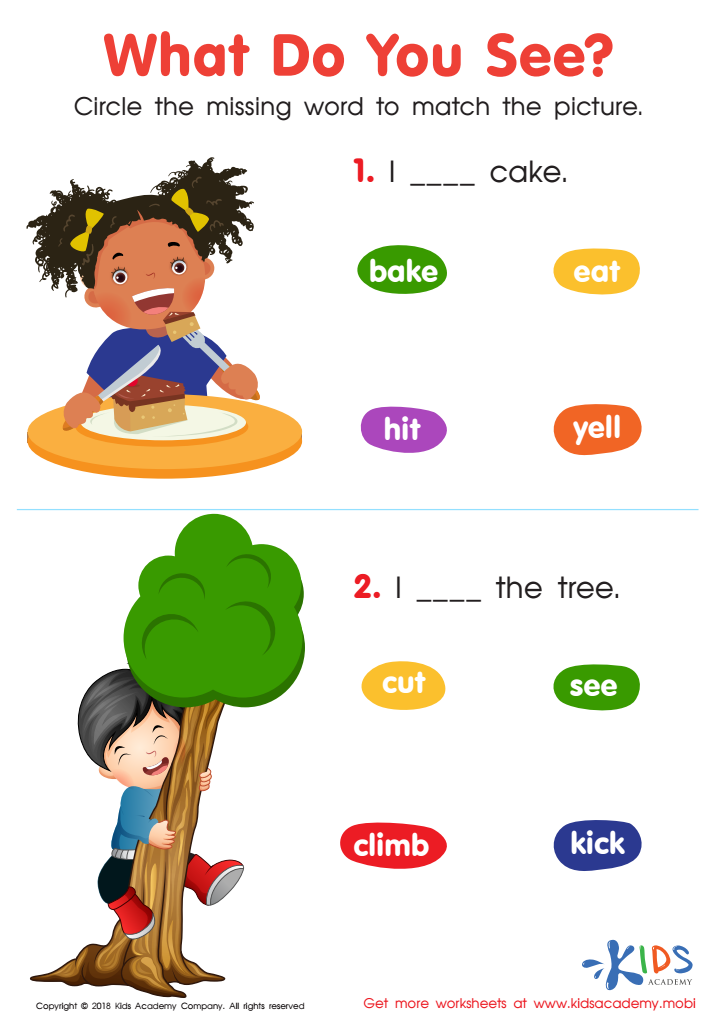
What Do You See? Reading Worksheet
New readers can use the attractive pictures and high-frequency words on this worksheet to practice expressive language skills and decode as they fill in the blanks. As they circle the correct words, they'll feel like reading superstars!
 Assign to My Students
What Do You See? Reading Worksheet
Worksheet
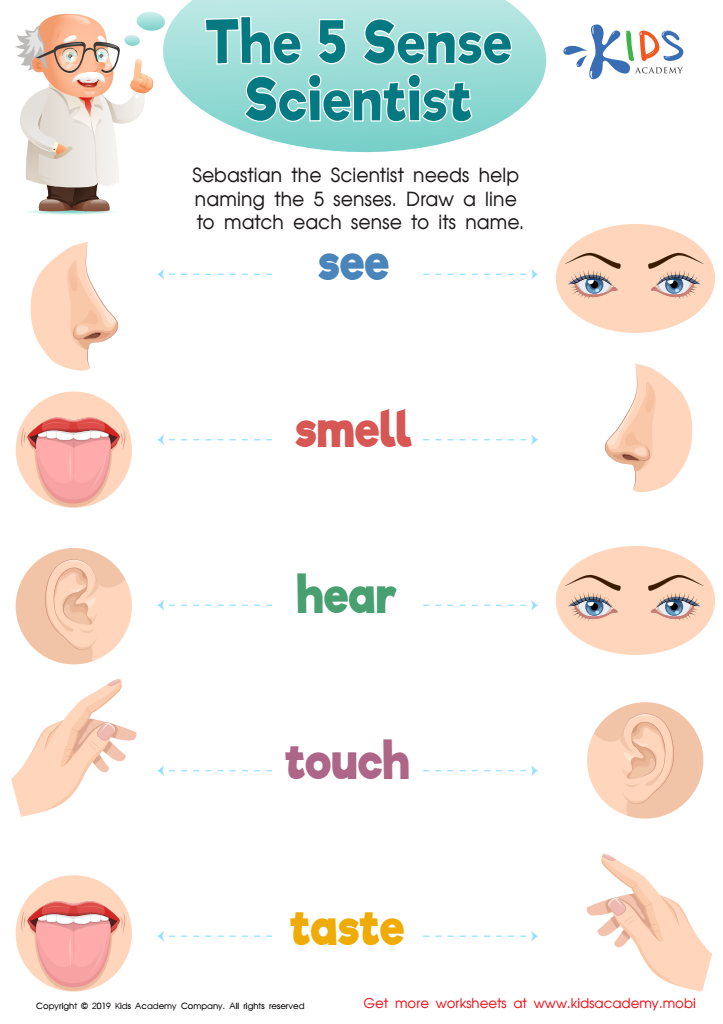
The 5 Sense Scientist Worksheet
Our young children will have fun learning about their five senses with this free Sense Scientist worksheet. Helping Sebastian the Scientist, they'll name the five senses and use traceable lines to connect each picture with its correct sense. Colorful words and pictures will create a memorable picture representation.
The 5 Sense Scientist Worksheet
Worksheet
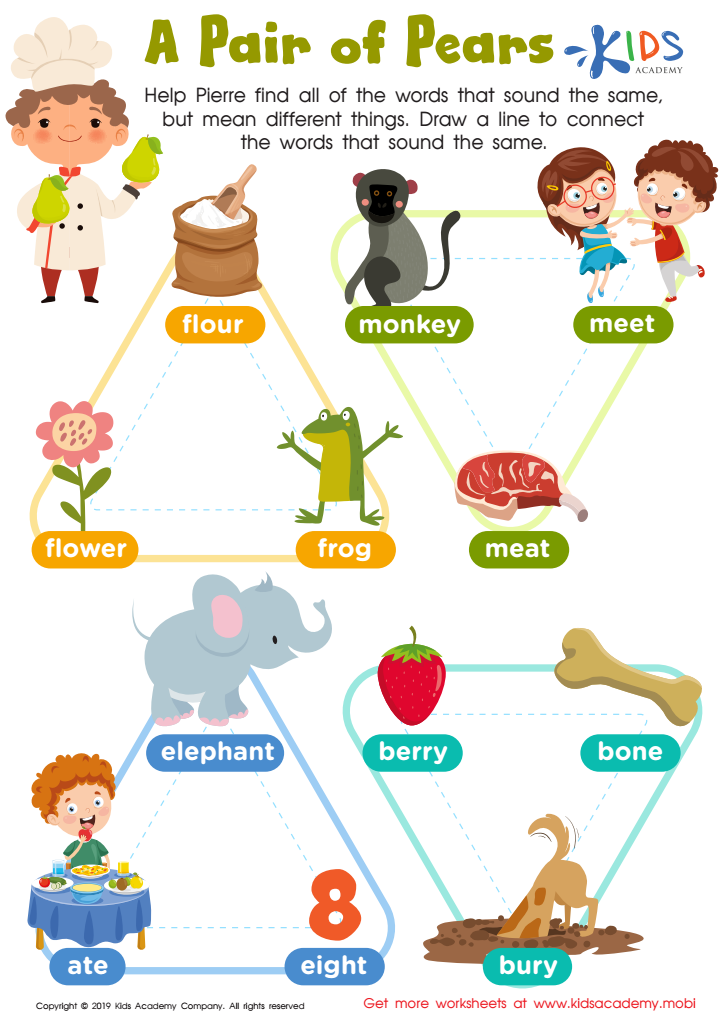
Pair Pears Worksheet
Young readers can have difficulty knowing when to use the right homophone. This free worksheet helps them use familiar imagery to understand better by connecting words that sound similar but are spelled and mean different things. Students will trace the lines to form a picture and have a reference image to differentiate between the different homophones.
Pair Pears Worksheet
Worksheet
Join Kids Academy for Free
Who is primarily going to use this learning content?





Observation skills play a critical role in the early development stages of children, particularly around the age of five. When parents or teachers focus on nurturing strong observation skills, they lay a foundational pillar for comprehensive learning and development in young children. Effective observation skills enhance a child’s capacity to notice, interpret, and understand the details around them, fostering curiosity and critical thinking.
At this critical age, children are like sponges, eager to absorb and make sense of their surroundings. By teaching and encouraging keen observation, parents and teachers support early literacy and numeracy skills, as children learn to identify letters, numbers, shapes, and patterns. This, in turn, aids in smoother transitions to reading and mathematical concepts.
Moreover, strong observation skills can also enhance social and emotional learning. Through observing facial expressions and body language, children begin to understand and empathize with others, fostering better interpersonal skills and emotional intelligence.
Implementing activities such as picture reading, simple science experiments, or nature walks further strengthens these skills, providing rich, engaging experiences that make learning enjoyable. By paying attention to developing observation skills, parents and teachers not only promote academic success but also contribute to holistic development, ensuring children are well-prepared to thrive in a dynamic world.








