Sound recognition Reading Worksheets for 5-Year-Olds
3 filtered results
-
From - To
Discover our engaging Sound Recognition Reading Worksheets designed specifically for 5-year-olds! These worksheets help young learners enhance their phonemic awareness by associating sounds with corresponding letters. Through fun and interactive activities, children will identify beginning sounds, match pictures to words, and develop essential reading skills. Our user-friendly printables cater to various learning styles, making reading enjoyable and accessible. With colorful illustrations and age-appropriate exercises, these worksheets promote memorable learning experiences. Perfect for classrooms or homeschooling, our sound recognition resources provide a strong foundation for early literacy. Empower your child’s reading journey today with our dynamic worksheets!
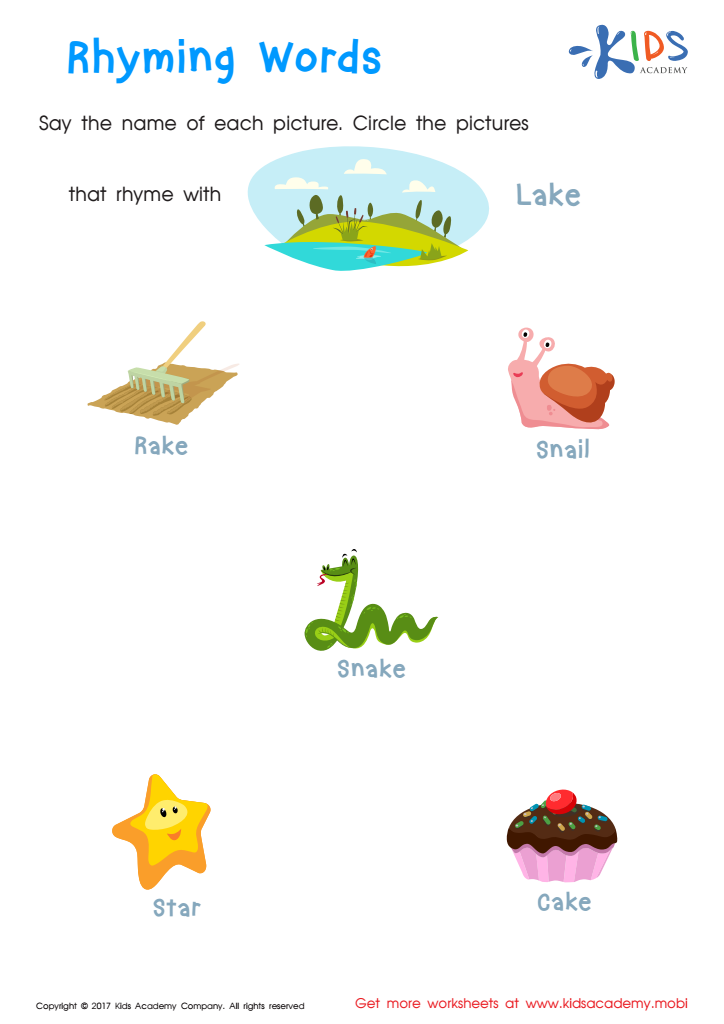
Rhyming Words Rhyming Worksheet

Long and Short U Worksheet
 Assign to My Students

First Words: Picture Rhymes Worksheet







Sound recognition reading, often referred to as phonemic awareness, is a critical foundational skill for young learners, particularly for 5-year-olds. This stage is essential for developing effective reading and writing skills. When parents and teachers focus on sound recognition, they help children learn to identify, isolate, and manipulate sounds in spoken words. This skill enables them to make connections between letters and their corresponding sounds, paving the way for successful decoding when they encounter new words.
Understanding sounds is crucial for all aspects of literacy. Children who grasp sound recognition tend to have stronger vocabulary enrichment, superior reading fluency, and improved comprehension skills. Furthermore, early emphasis on this aspect of literacy can increase a child's confidence, making learning to read a more enjoyable and engaging process.
In addition to cognitive benefits, sound recognition also supports emotional development. As children reach reading milestones, they experience a sense of achievement, fostering a positive attitude towards learning. Thus, both parents and teachers should prioritize sound recognition exercises, such as singing songs, playing rhyming games, and reading aloud, creating a nurturing environment where children can thrive academically and emotionally. This investment in their literacy journey ultimately sets the stage for lifelong learning and success.








