Rhyming skills development Rhyming Words Worksheets for 5-Year-Olds
3 filtered results
-
From - To
Enhance your child's language skills with our engaging Rhyming Words Worksheets designed specifically for 5-year-olds! These worksheets foster rhyming skills development through fun activities that promote playful interaction with sounds and words. Children will love identifying, matching, and creating rhyming pairs while improving their phonemic awareness. Our resources are perfect for early learners, focusing on reinforcing vocabulary and pronunciation in an enjoyable way. With colorful illustrations and easy instructions, your little ones will be inspired to explore the world of words. Empower your child's reading journey today by incorporating our accessible and effective rhyming exercises!
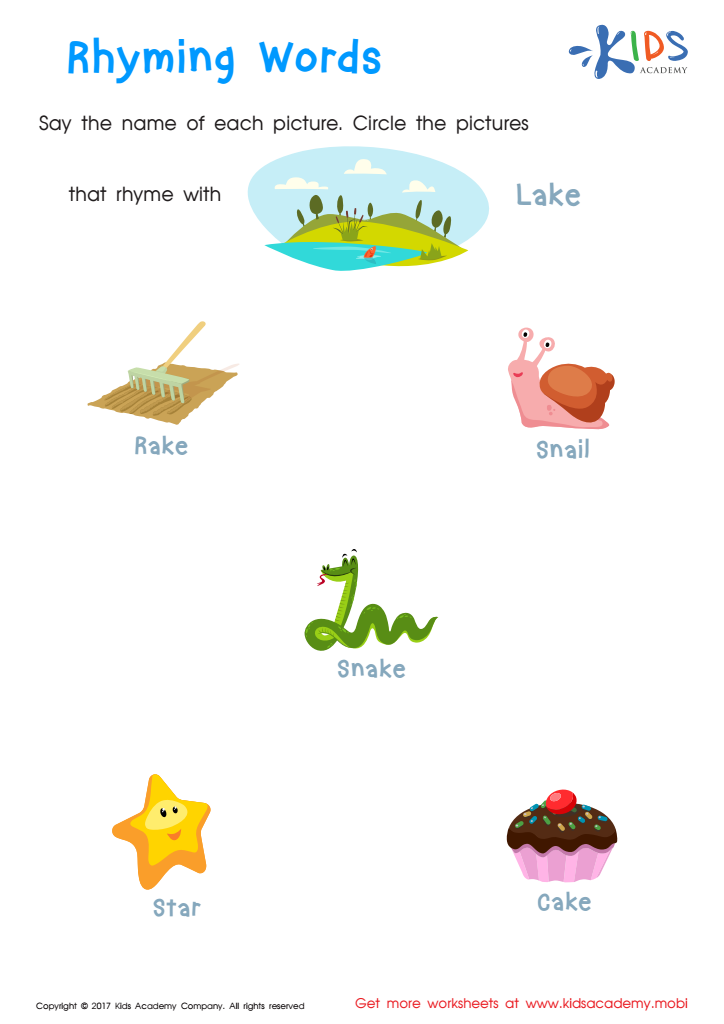
Rhyming Words Rhyming Worksheet
 Assign to My Students
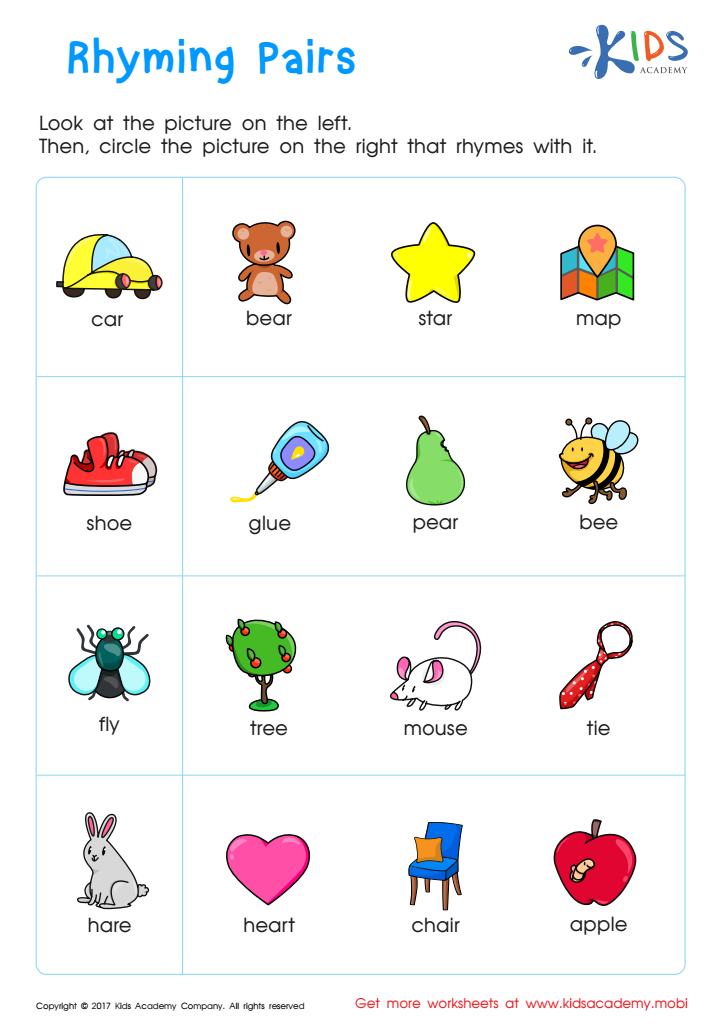
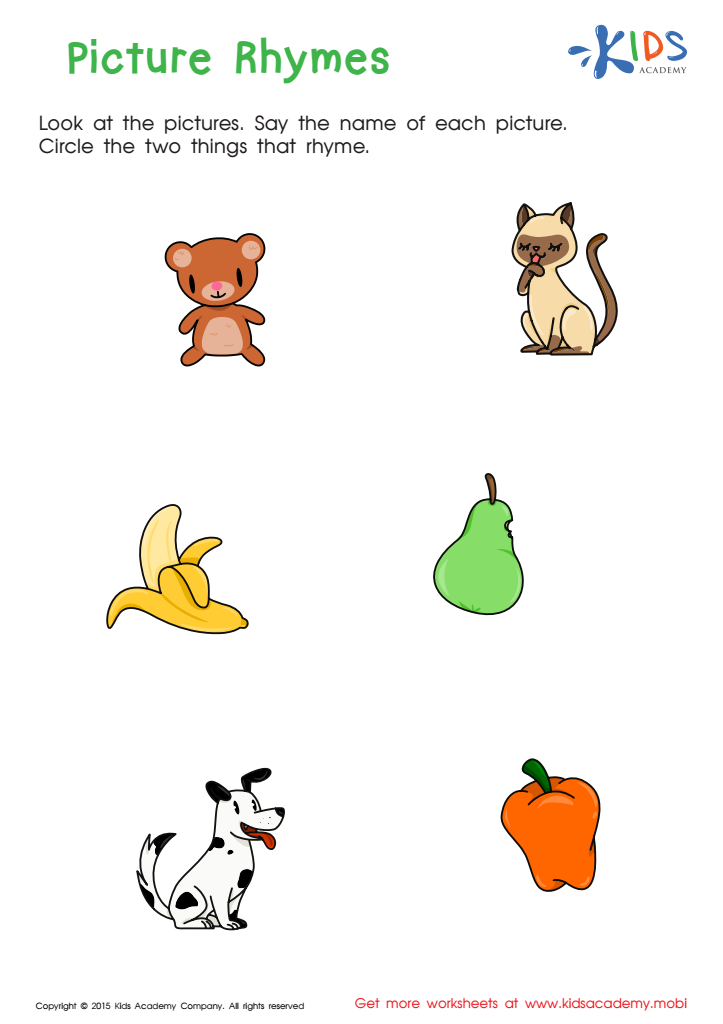
First Words: Picture Rhymes Worksheet








Rhyming skills are essential for children’s early literacy development, particularly for 5-year-olds. Engaging with rhyming words helps young learners develop phonemic awareness, which is the ability to hear, identify, and manipulate sounds in words. This skill is crucial for reading and writing since it lays the foundation for understanding how letters represent sounds.
Moreover, rhyming activities enhance vocabulary development by introducing children to new words in an enjoyable and memorable context. Exposure to rhythm and rhyme also supports children's auditory processing skills, making it easier for them to distinguish between similar sounds and improving their ability to decode words in the future.
Additionally, rhyming fosters cognitive skills such as memory, pattern recognition, and association—important aspects of problem-solving and critical thinking. It encourages creativity and language play, which can lead to increased engagement in literacy activities.
For teachers and parents, by incorporating rhyming games, songs, and stories into daily routines, they can create a rich language environment that positively impacts children's confidence and enthusiasm for reading. Thus, nurturing rhyming skills is not just about phonics; it's about fostering a lifelong love for literacy and learning.








