Weather Vocabulary Science Worksheets for 5-Year-Olds
3 filtered results
-
From - To
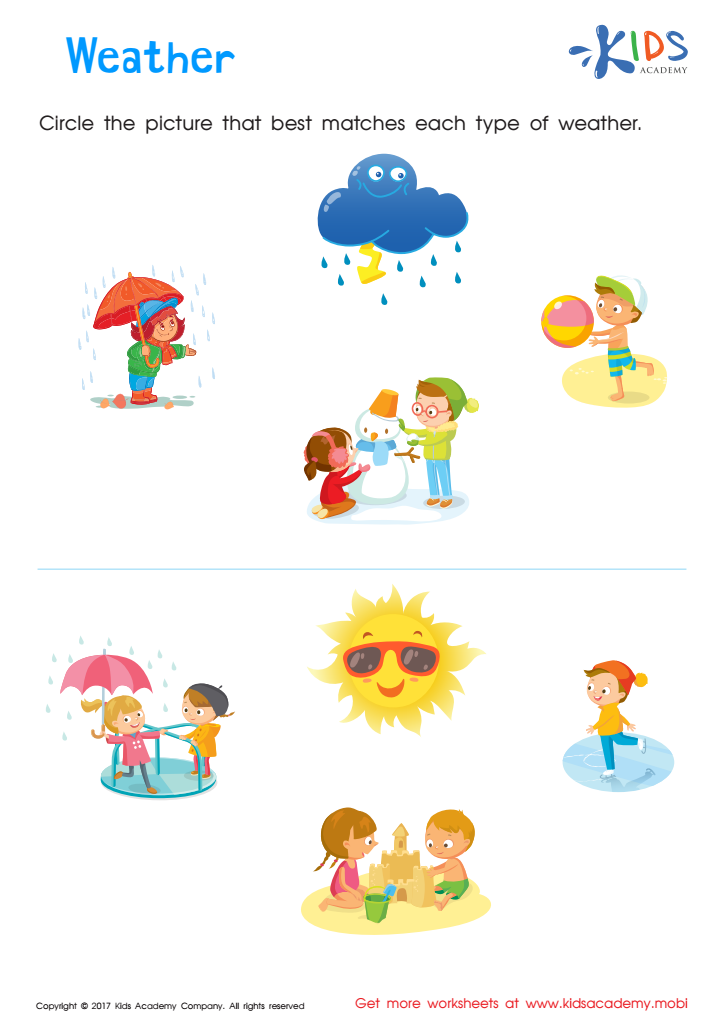
Unleash the joy of learning with our "Weather Vocabulary Science Worksheets for 5-Year-Olds!" Tailored to spark curiosity, these engaging and educational worksheets introduce young minds to essential weather terms, from sunny and rainy to snowy and windy. Perfectly designed for kindergarten learning, each printable worksheet offers fun activities like matching, tracing, and coloring that build foundational language and science skills. Foster your child's understanding of the world and set them on the path to academic success with this exciting and informative collection. Ideal for home or classroom use, make weather learning a breeze today!
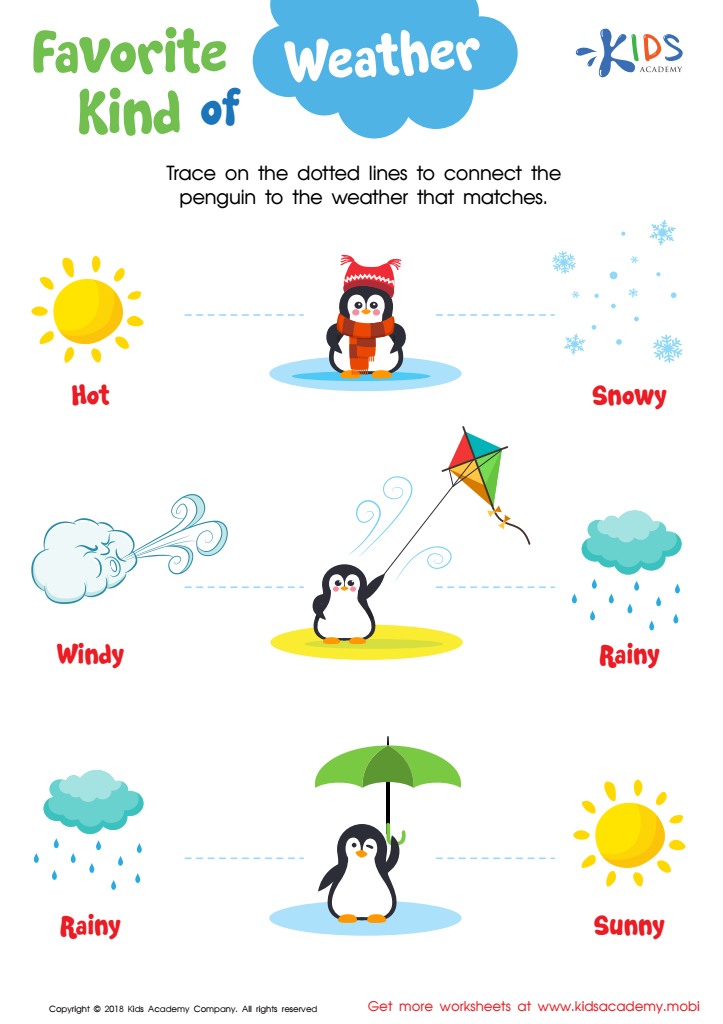
Favorite Kind of Weather Worksheet
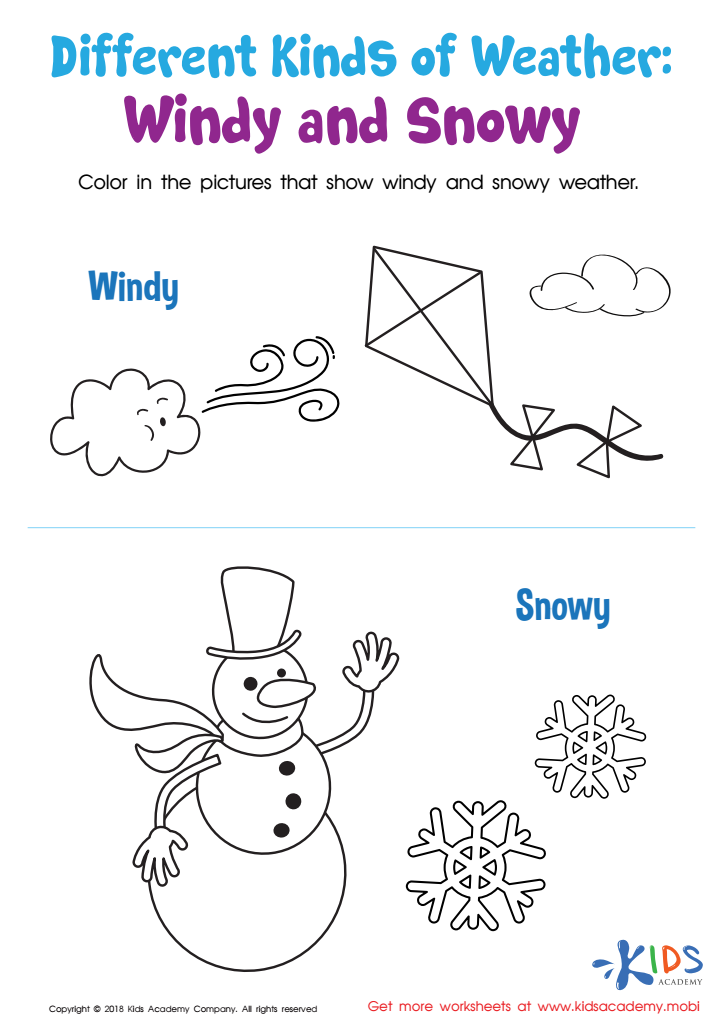
Different Kinds of Weather: Windy and Snowy Worksheet
 Assign to My Students








Understanding weather concepts and vocabulary at an early age is crucial for young children's development for several compelling reasons. First and foremost, it helps foster a sense of curiosity and connection to the natural world, encouraging children to observe and question their environment. This early exposure provides a solid foundation for future scientific learning, promoting critical thinking and inquiry skills.
Teaching weather vocabulary to 5-year-olds, such as "sunny," "rainy," "cloudy," or "stormy," enhances their language development, expanding their descriptive word bank and improving communication skills. It allows children to articulate their experiences and observations more effectively, boosting their confidence in expressing themselves.
Additionally, knowledge of weather concepts is important for safety and preparedness. Understanding basic weather phenomena helps children grasp the importance of weather safety practices, such as dressing appropriately for the conditions or knowing to seek shelter during a storm. This early education can significantly contribute to a child's autonomy and resilience.
Moreover, incorporating weather studies into early education supports interdisciplinary learning, integrating aspects of science, geography, and even mathematics, thereby creating a well-rounded learning experience. Overall, introducing weather vocabulary to young children sets a strong educational foundation while ensuring they are informed, expressive, and prepared individuals.







