Color Identification Writing Worksheets for 5-Year-Olds
3 filtered results
-
From - To
Discover our engaging Color Identification Writing Worksheets designed specifically for 5-year-olds! These worksheets provide a fun and interactive way for young learners to explore colors while enhancing their writing skills. Each activity encourages children to identify, trace, and write color words, reinforcing their understanding of color recognition and vocabulary. Perfect for both home and classroom use, these worksheets are an ideal resource for early grade educators. Foster creativity and language development in your child as they learn through play. Download our easy-to-use worksheets today and watch your little one's confidence flourish as they discover the vibrant world around them!
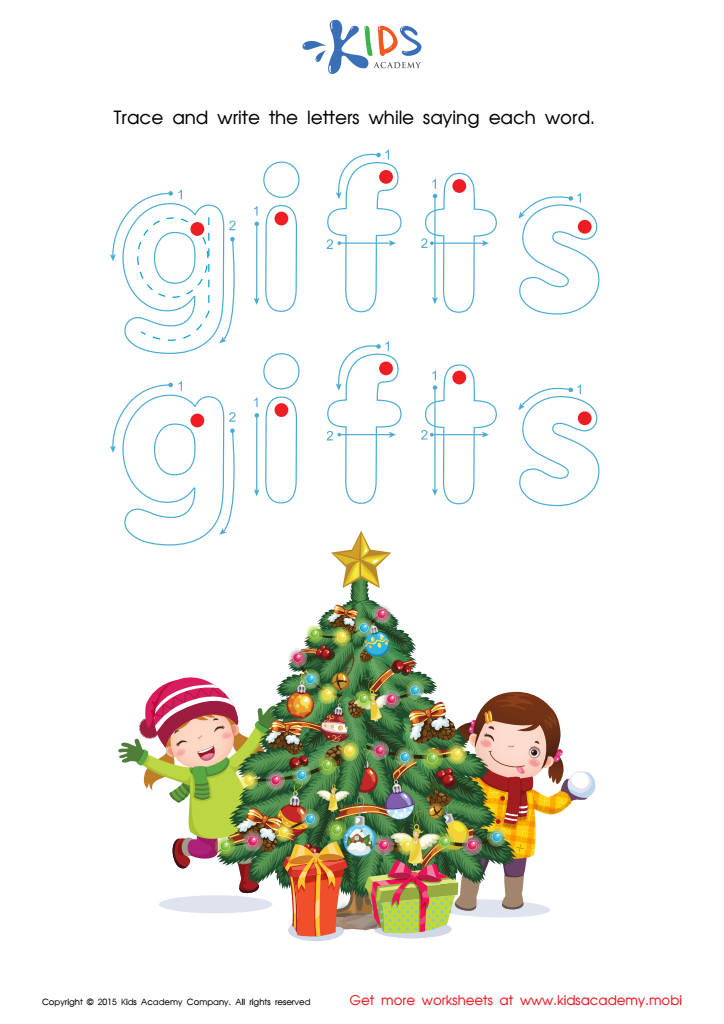
Christmas Tree Tracing Winter Words Worksheet
 Assign to My Students
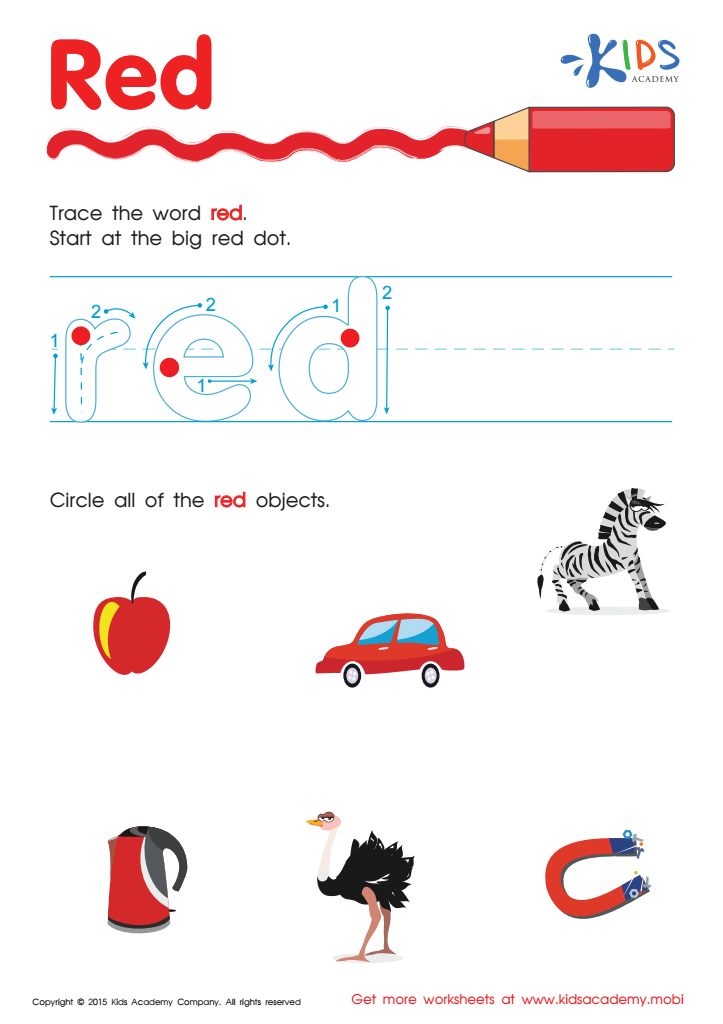
Red Tracing Color Words Printable
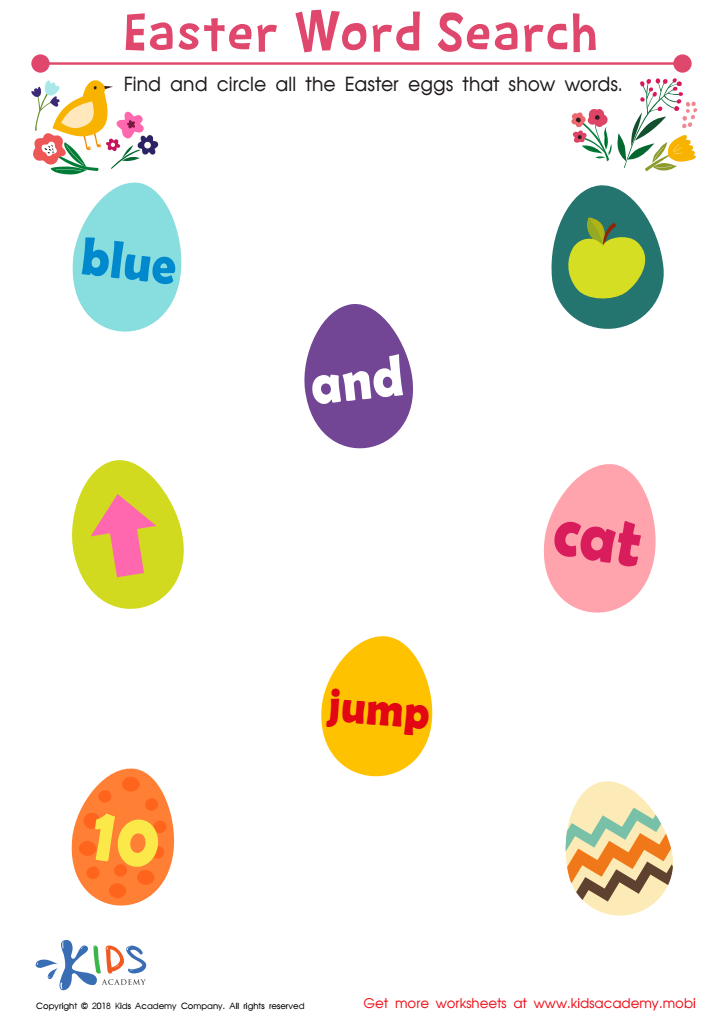
Easter Word Search Worksheet








Color identification is a fundamental skill for 5-year-olds that extends far beyond simply recognizing hues. For parents and teachers, fostering this skill is crucial for several reasons. Firstly, color identification aids in cognitive development; associating colors with objects enhances memory and categorization skills, essential building blocks for learning. When children can identify colors, they also improve their language and communication skills, as they learn to articulate their thoughts and experiences more effectively.
Moreover, recognizing colors plays a role in emotional and social development. Colors can convey feelings; for instance, children may learn that blue is calming while red can be exciting. Understanding these associations fosters emotional literacy, enabling them to express themselves better.
Color identification in writing activities further strengthens fine motor skills and encourages creativity. Children learn to use crayons, markers, and paints, linking color with artistic expression. Encouraging writing about colors also enhances their literacy skills, integrating visual art and written language.
Overall, emphasizing color identification is not just about aesthetics; it lays a foundation for essential academic skills, emotional understanding, and creative expression that benefits children’s holistic development. Parents and teachers play a vital role in nurturing these skills through engaging activities and open communication.








