Reading comprehension Punctuation Worksheets for 5-Year-Olds
4 filtered results
-
From - To
Unlock the magic of reading with our Reading Comprehension Punctuation Worksheets designed specifically for 5-year-olds! These engaging and educational worksheets help young readers understand the importance of punctuation in sentences, enhancing their reading comprehension skills. With colorful illustrations and simple exercises, your child will learn to identify and use punctuation marks like periods, commas, and question marks. Perfect for early learners, these worksheets make reading fun and interactive, setting the foundation for strong literacy skills. Support your child's educational journey with Kids Academy's targeted learning tools, turning reading practice into an exciting adventure.
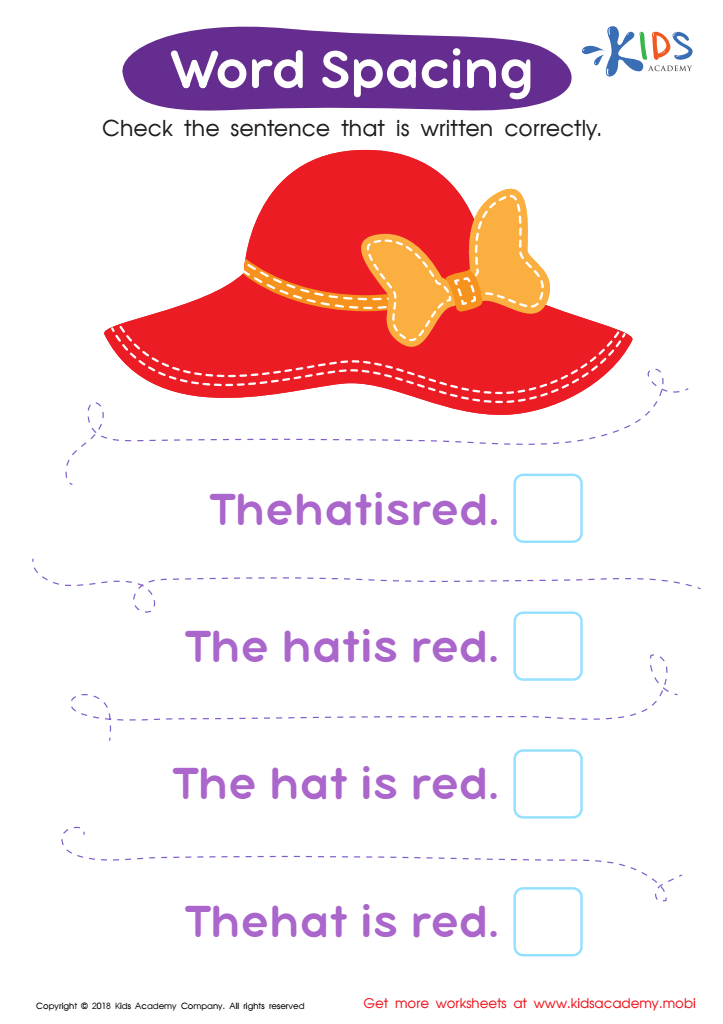
Word Spacing Worksheet
 Assign to My Students
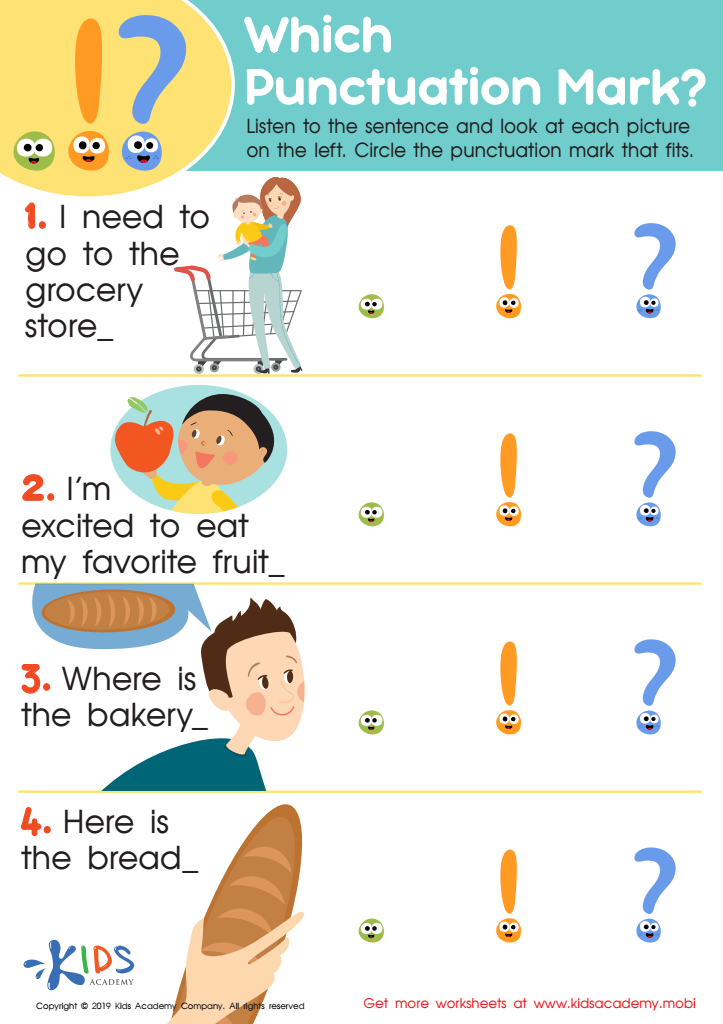
Which Punctuation Mark Worksheet
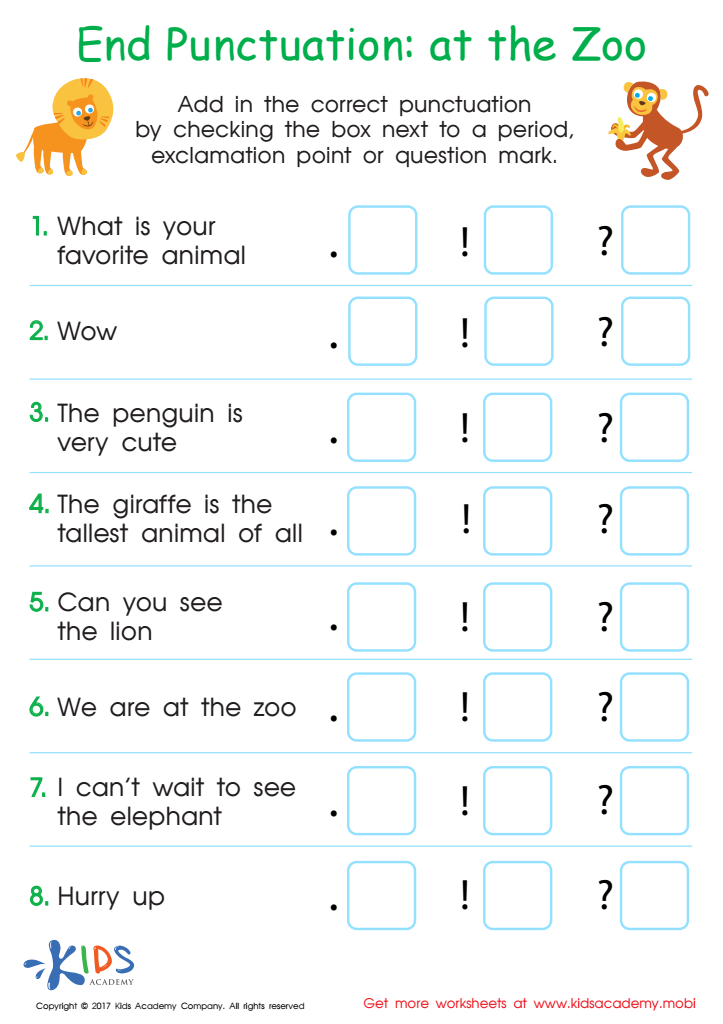
End Punctuation: At the Zoo Worksheet
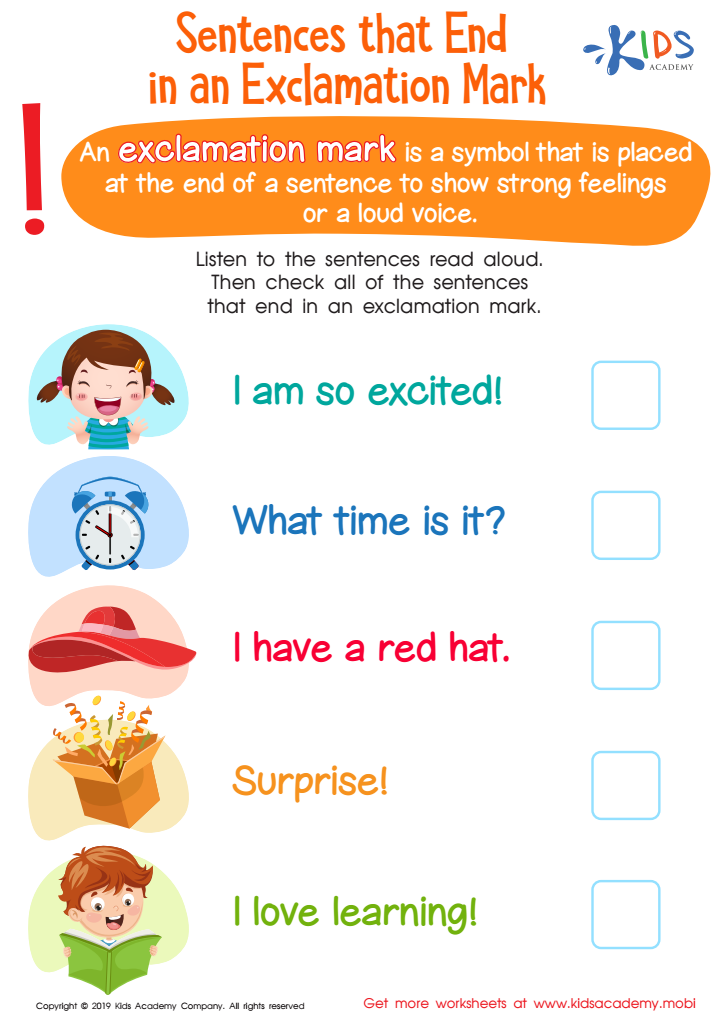
Sentences That End in an Exclamation Mark Worksheet


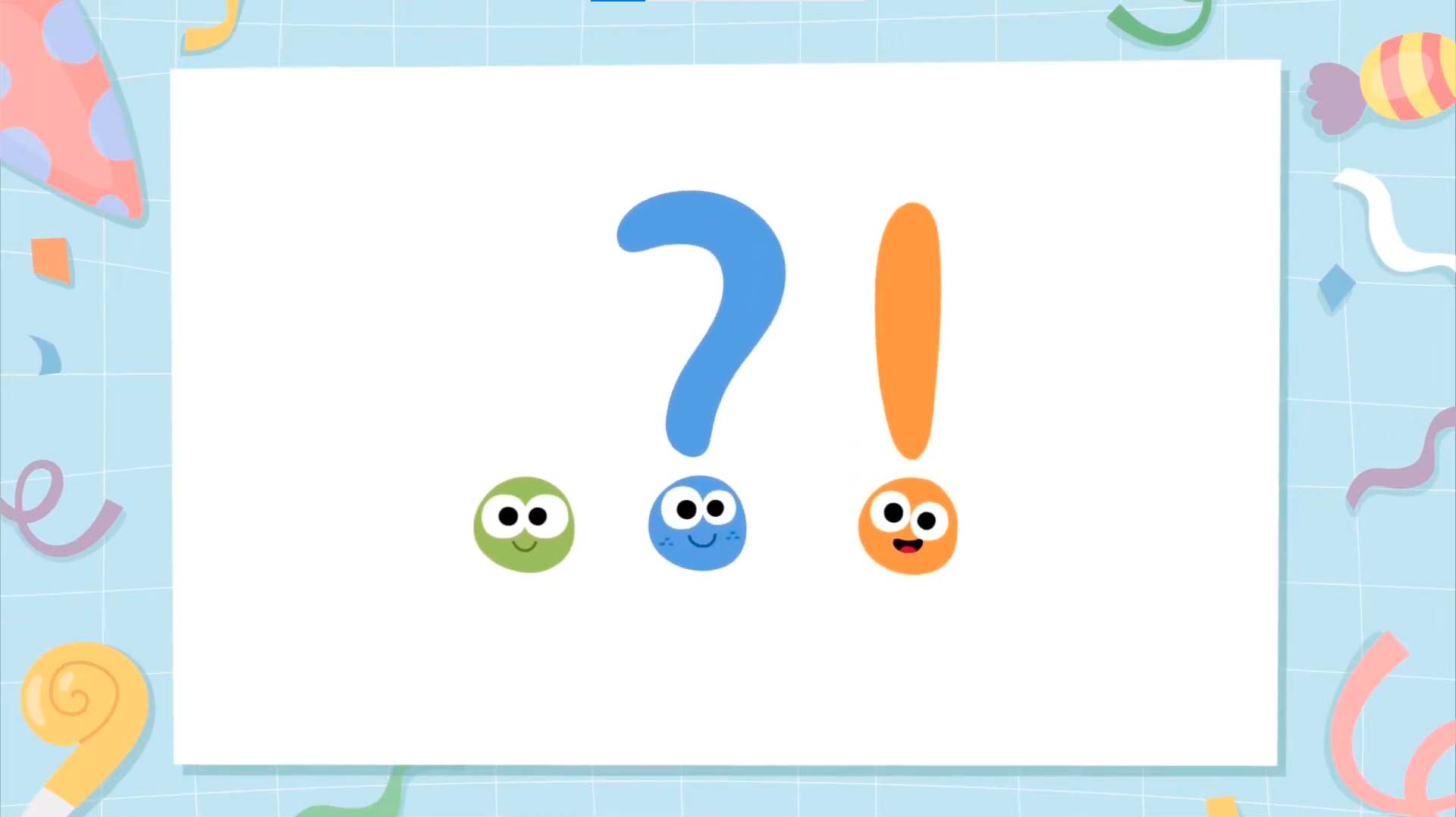





Reading comprehension and punctuation are foundational skills that significantly impact a child's lifelong learning and communication abilities. For 5-year-olds, understanding the basics of punctuation aids in their comprehension and clarity of reading and writing. Punctuation marks such as periods, commas, and question marks provide visual clues that help children understand the structure and meaning of sentences.
During the early years, children's brains are highly receptive and capable of learning new concepts quickly. Introducing punctuation at this stage not only makes reading more enjoyable and understandable but also supports cognitive development by teaching children how to process information systematically. Proper punctuation guides them through the rhythms and pauses in language, enhancing their ability to comprehend complex sentences and follow stories more effectively.
For parents and teachers, investing time in teaching these skills encourages a smoother academic journey for children. Reading comprehension, enriched by correct punctuation, lays the groundwork for future academic success, fostering critical thinking and coherent communication. By prioritizing these skills, we equip children with the tools they need to express themselves clearly and to interpret the written word accurately, setting a strong foundation for future educational endeavors and effective interpersonal communication. By promoting these skills early on, we ensure that children develop into confident readers and effective communicators.








