Phonics practice Beginning Sounds Worksheets for Ages 6-7
5 filtered results
-
From - To
Enhance your child’s phonics skills with our Beginning Sounds Worksheets, designed for kids aged 6-7! These engaging worksheets focus on phonemic awareness by helping young learners identify and practice the initial sounds of words. Through fun activities, including tracing and matching exercises, children will build confidence in their reading abilities. Each worksheet is thoughtfully crafted to make learning enjoyable, fostering a positive attitude toward educational activities. Perfect for classroom use or at-home practice, our phonics resources cater specifically to early learners, ensuring a strong foundation in literacy. Explore our collection and watch your child grow in their reading journey today!
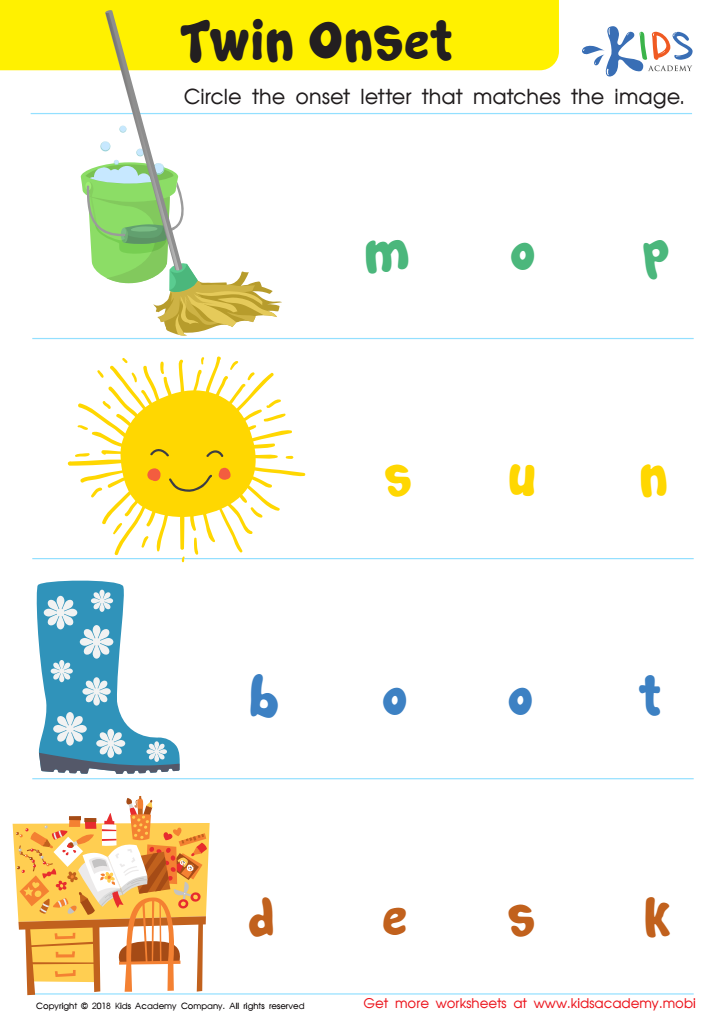
Twin Onset Worksheet
 Assign to My Students
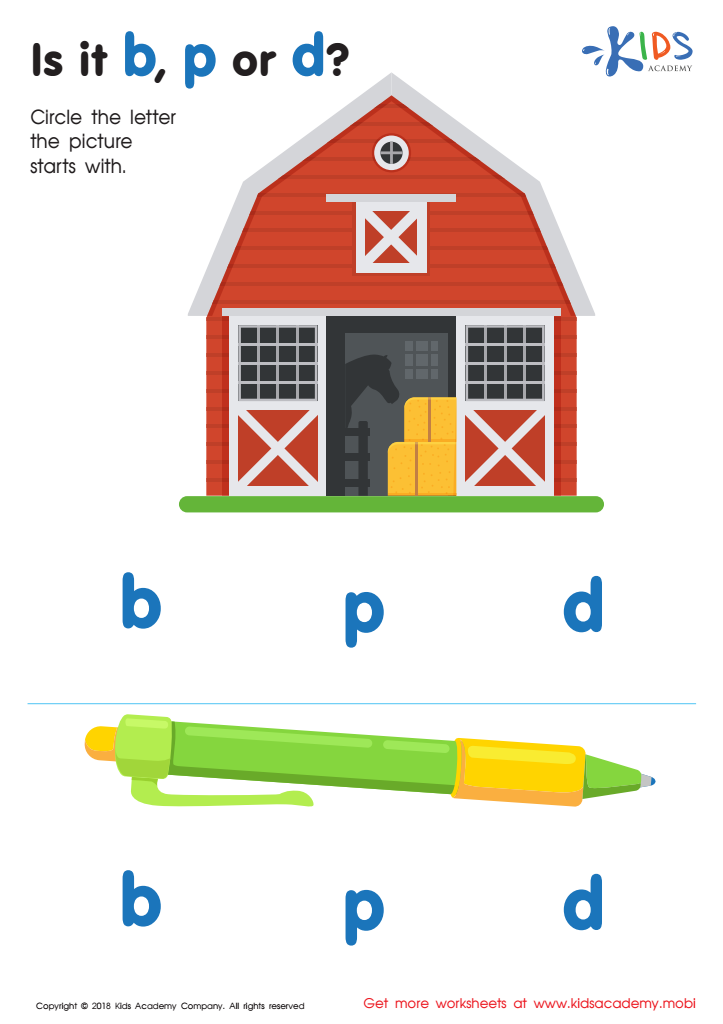
Is it b, p or d? Worksheet
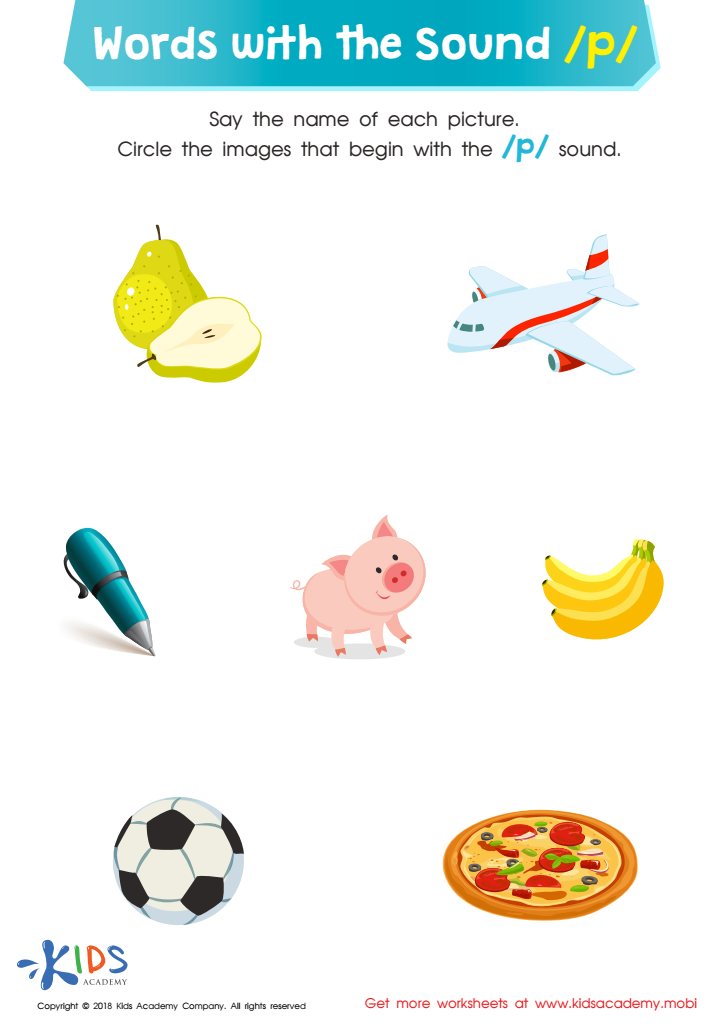
Words with sound p Reading Worksheet
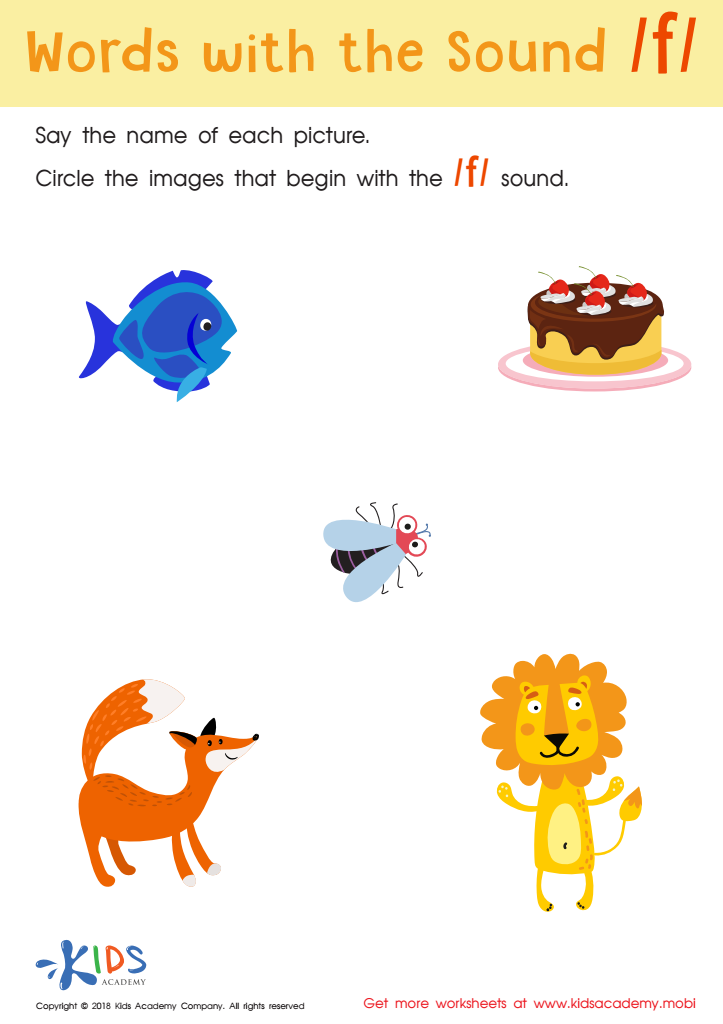
Words with sound f Reading Worksheet
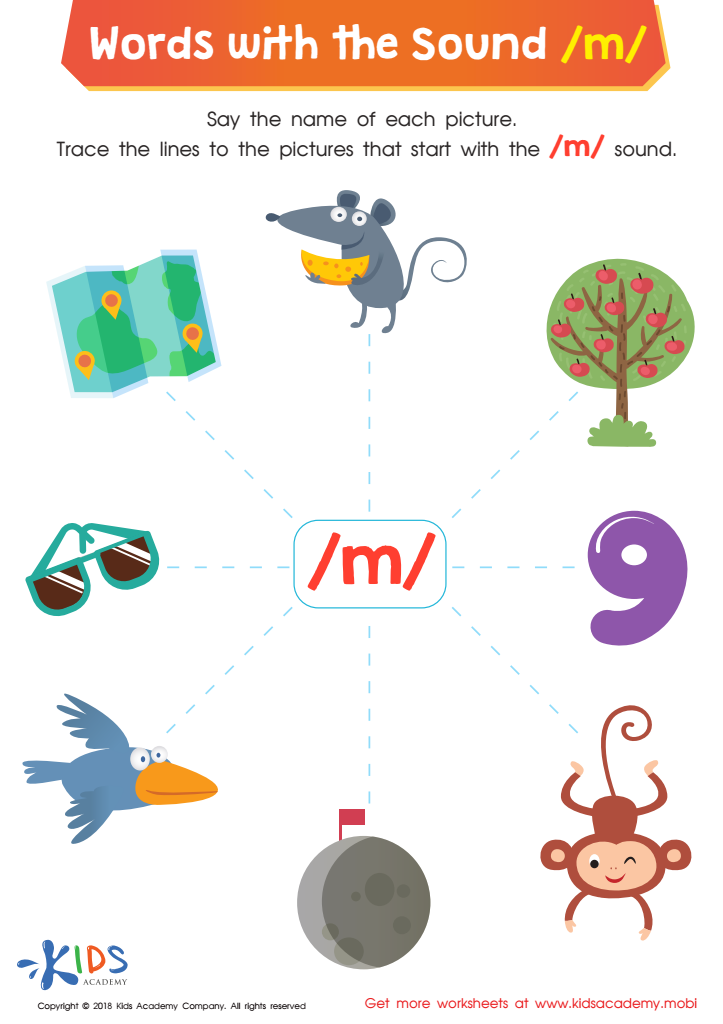
Words with Sound M Reading Worksheet








Phonics practice, particularly focusing on beginning sounds, is crucial for children aged 6-7 as it lays the foundation for effective reading and writing skills. At this age, children embark on more complex reading tasks, and a solid understanding of phonemic awareness helps them decode unfamiliar words, improving their overall literacy.
Beginning sounds are vital because they enable children to identify and manipulate individual sounds in words, an essential skill for both phonetic decoding and spelling. By recognizing phonemes, children become more confident readers and writers, which leads to greater enjoyment of literature and engagement in learning activities. This stage also heightens their ability to connect letters with sounds, fostering independence in reading.
Additionally, parents and teachers who emphasize beginning sounds play a pivotal role in supporting language development. Engaging in phonics practice not only strengthens a child’s literacy skills but can also enhance their vocabulary and comprehension, crucial components of academic success.
Ultimately, investing time in phonics practice offers long-term benefits, empowering children with the skills needed for proficient reading and writing as they progress in their education. Fostering these skills at a young age nurtures lifelong connectedness to learning and the joys of literacy.







