
Reading practice Alphabet Worksheets for Ages 6-7
3 filtered results
Difficulty Level
Grade
Age
-
From - To
Subject
Activity
Standards
Boost your child’s reading skills with our engaging Alphabet Worksheets designed for ages 6-7! Our reading practice exercises promote letter recognition, phonemic awareness, and vocabulary development through fun and interactive activities. Each worksheet provides a variety of challenges that encourage children to sound out letters, match words to pictures, and develop essential decoding skills. Designed by educators, these worksheets cater to young learners at different levels, ensuring a personalized learning experience. Download and print our vibrant, easy-to-use formats to make reading a joyful adventure for your little ones. Start their reading journey today with our comprehensive alphabet resources!
Favorites
With answer key
Interactive
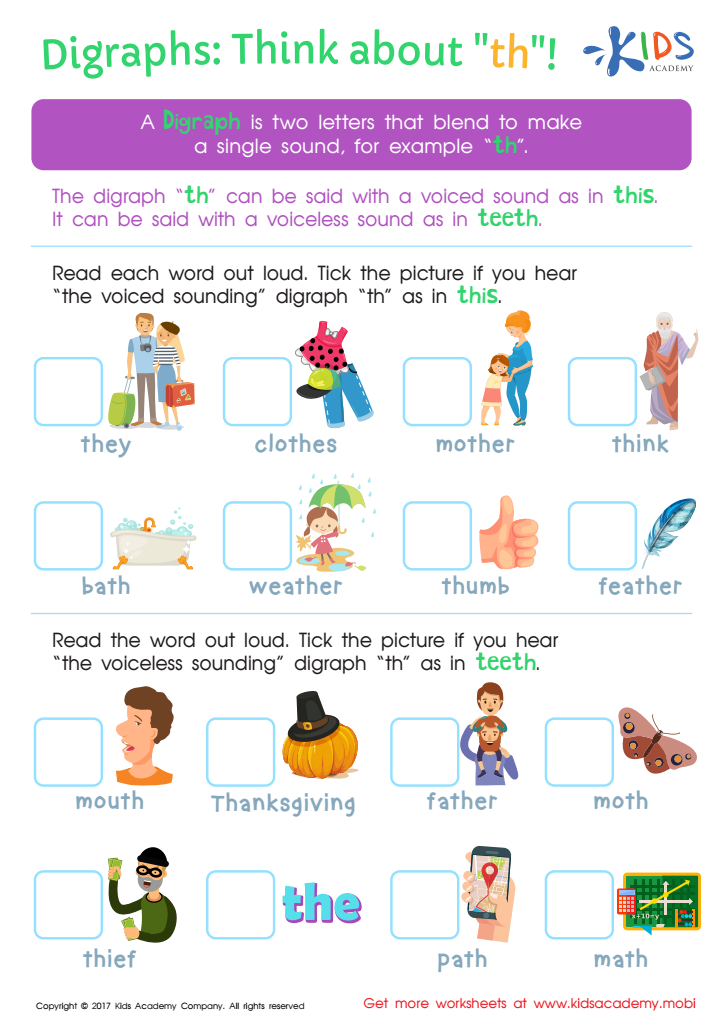
Digraphs: Think About "th" Worksheet
Help your child master phonics with this illustrated digraph Th printable worksheet. It will help recognize "Th" words, differentiate voiced and voiceless sounds and understand key concepts. Use similar words while they work to reap its full benefits!
 Assign to My Students
Digraphs: Think About "th" Worksheet
Worksheet
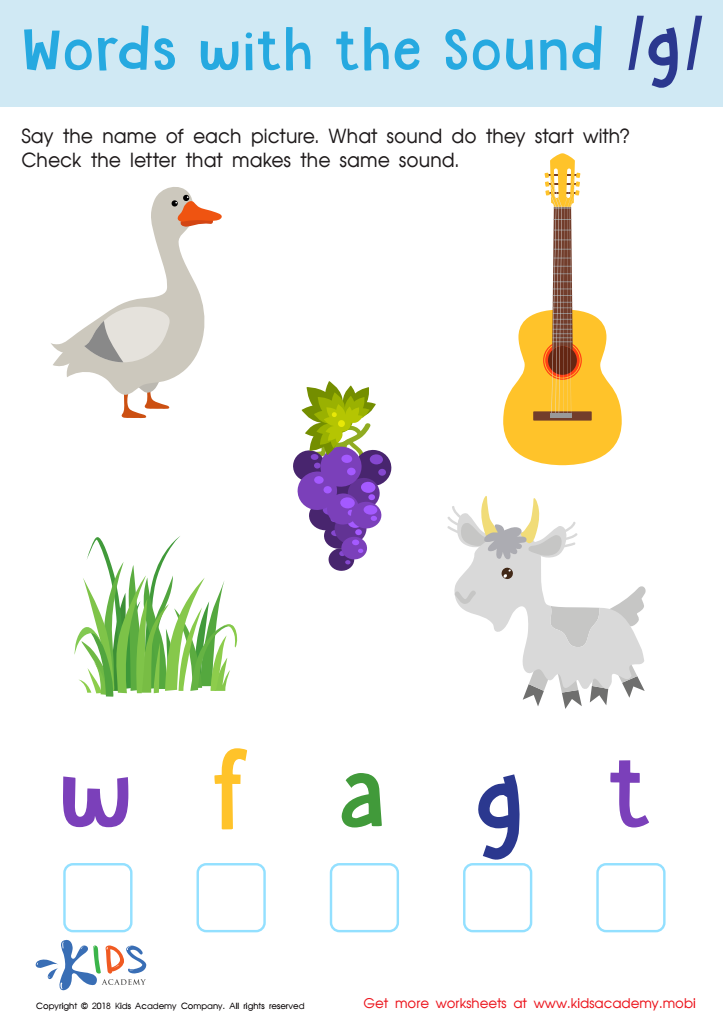
Words with sound g Reading Worksheet
Help your child learn the soft "g" sound with this phonics worksheet. Ask them to name each picture, then identify the letter sound it begins with. If it's "g", they can check the box. Have them repeat each word, listening for the soft "g" sound before moving on to the next page.
Words with sound g Reading Worksheet
Worksheet
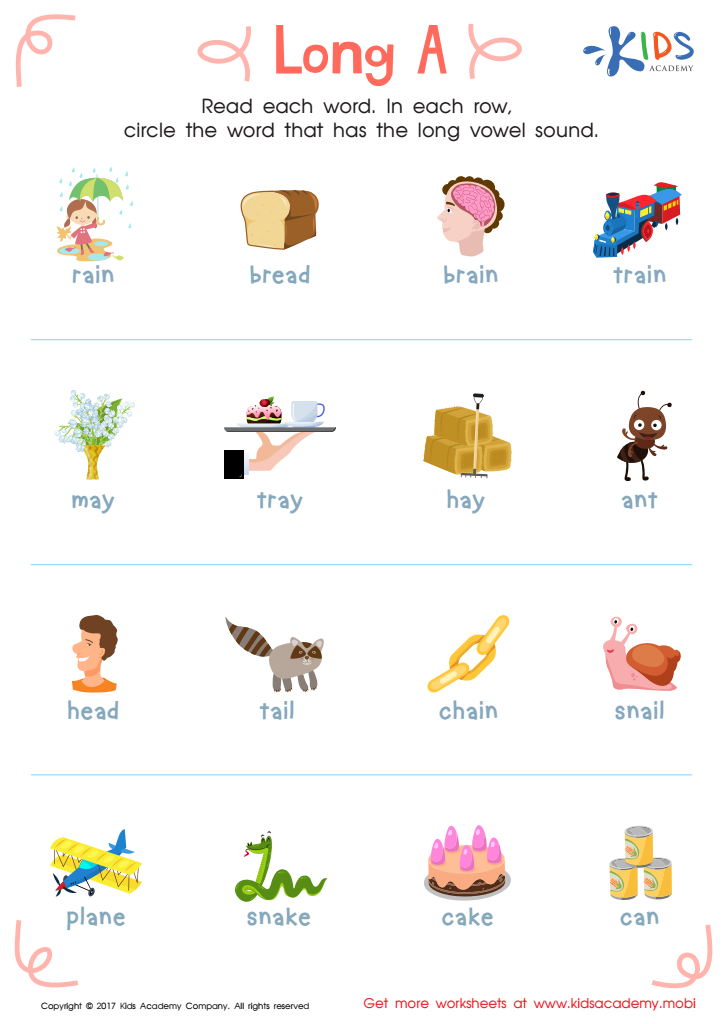
Join Kids Academy for Free
Who is primarily going to use this learning content?








Reading practice with the alphabet is essential for children aged 6 to 7, as it lays the foundation for literacy development. At this age, children transition from learning to read to reading to learn, making alphabet knowledge crucial for their academic success. Understanding the alphabet equips students with the ability to decode new words, which enhances their overall vocabulary and comprehension skills.
Moreover, strong reading skills foster confidence, encouraging children to engage with a variety of texts, from storybooks to informational content. This exposure not only aids their understanding of language but also nurtures their imagination and critical thinking abilities. Early reading practice can significantly impact a child's motivation and enthusiasm for learning, encouraging lifelong reading habits.
Teachers and parents play a pivotal role in creating an environment that promotes phonemic awareness and letter recognition. Simple activities such as letter games, reading aloud, and using flashcards can transform learning into an enjoyable experience, making reading a natural part of a child's daily routine. Ultimately, supporting reading practice during these formative years not only prepares children for future academic challenges but also cultivates a love for reading that can provide lifelong benefits.







