Alphabet Recognition Letter C Worksheets for Ages 6-7
3 filtered results
Difficulty Level
Grade
Age
-
From - To
Subject
Activity
Standards
Introduce your little learners to the captivating world of the letter C with our "Alphabet Recognition Letter C Worksheets" designed for ages 6-7. These engaging, educator-crafted worksheets help children identify, trace, and write the letter C while developing their phonemic awareness. Featuring fun activities like coloring, matching, and finding objects that begin with C, these worksheets ensure practice is enjoyable and effective. Integrate them seamlessly into your child's learning routine to improve alphabet recognition, enhance fine motor skills, and build a lifelong love for reading and writing. Discover the perfect blend of education and fun at Kids Academy!
Favorites
With answer key
Interactive
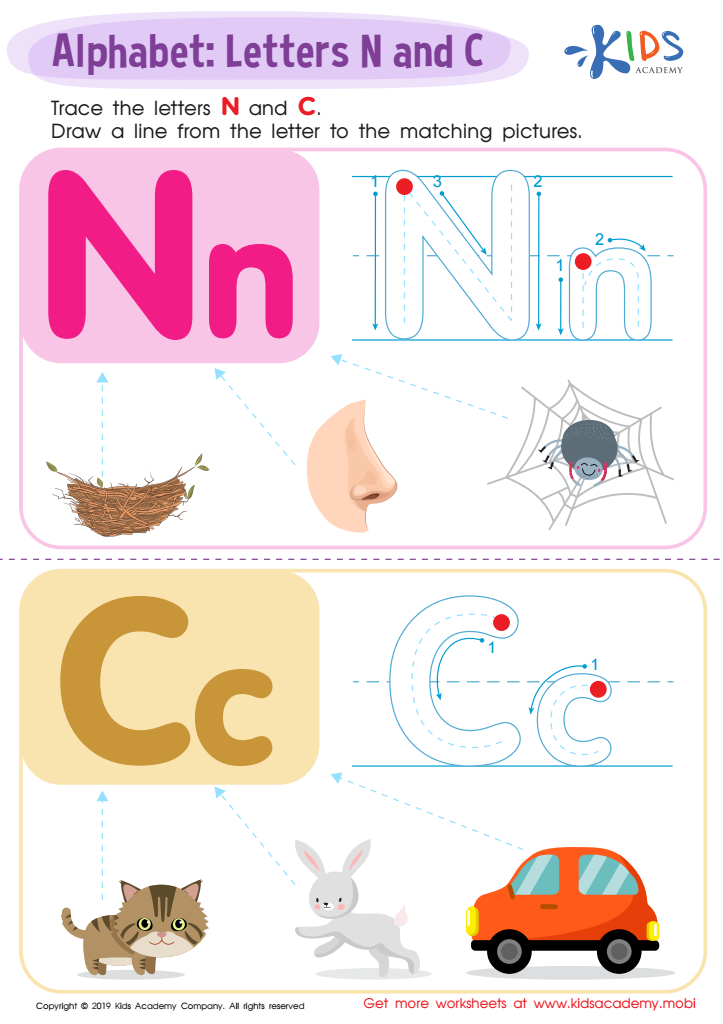
Letter N and C Tracing Worksheet
Kids can trace the letters N and C, then draw a line to the words starting with each letter. This worksheet helps them practice letter writing, distinguish capital and lowercase letters, and match pictures with the right letter. It also teaches essential skills for learning letters efficiently.
Letter N and C Tracing Worksheet
Worksheet

Letter C Tracing Page
Trace and write the letter 'C'! Put the pencil at the red dot then follow the lines – the capital letter first then the lowercase one. Cats love it and so will you! Get more free printables to practice tracing and writing.
Letter C Tracing Page
Worksheet
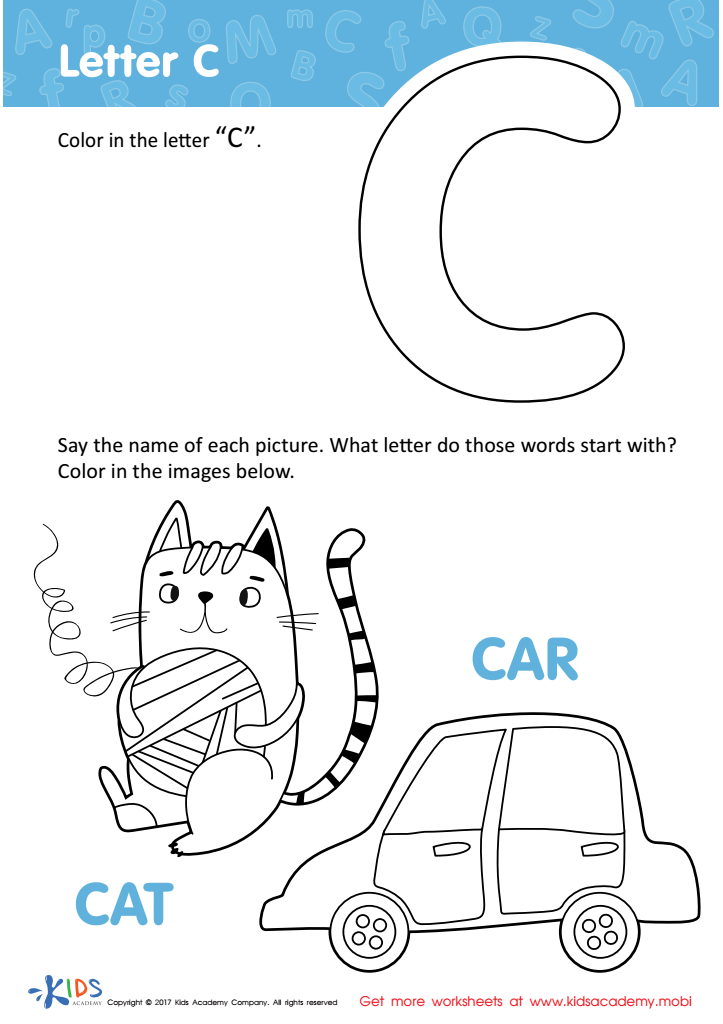
Letter C Coloring Sheet
Introduce kids to the letter 'C' with this fun coloring page! Exposing little ones to letters, words, and sounds helps them learn long before they can read. Start with simple words like 'cat' and 'car' - these are great first sight words for young children.
Download (PDF)
 Assign to My Students
Assign to My Students
Letter C Coloring Sheet
Worksheet
Join Kids Academy for Free
Who is primarily going to use this learning content?







Alphabet recognition is a fundamental building block for early literacy, and focusing on individual letters like "C" plays a significant role in this process. For ages 6-7, a strong proficiency in recognizing and understanding the alphabet greatly influences their reading and writing skills. Specifically, recognizing the letter "C" (both uppercase and lowercase) aids children in phonemic awareness, which is the ability to hear, identify, and manipulate phonemes—the smallest units of sound that can differentiate meaning in language.
When children become familiar with the letter "C," they can better understand how it links to sounds in words. For instance, knowing that "C" can represent a hard sound as in "cat" or a soft sound as in "city" helps them decode new words, enriches their vocabulary, and improves spelling accuracy. This positional and contextual awareness is vital for children to develop word attack skills, which empower them to read and comprehend more complex texts with confidence.
Additionally, alphabet recognition is intertwined with writing skills. Correctly identifying and writing the letter "C" from memory enhances fine motor skills, which are crucial for legible handwriting. By mastering the foundational elements of literacy such as alphabet recognition, children build the confidence and competence required to succeed in higher grades, laying a strong foundation for lifelong learning.