Lowercase letter writing Letter Recognition Worksheets for Ages 6-7
3 filtered results
-
From - To
Transform letter learning into a fun adventure with our Lowercase Letter Writing and Letter Recognition Worksheets, specially designed for children aged 6-7. These engaging resources help reinforce essential writing skills by allowing kids to practice forming lowercase letters while enhancing their alphabet recognition. Interactive activities, colorful illustrations, and step-by-step guidance make learning enjoyable and effective. Ideal for classroom or at-home use, our worksheets foster fine motor skills, letter familiarity, and confidence in young learners. Watch as your child navigates through letters with creativity and excitement, paving the way for future reading and writing success! Download yours today and inspire a love for learning!
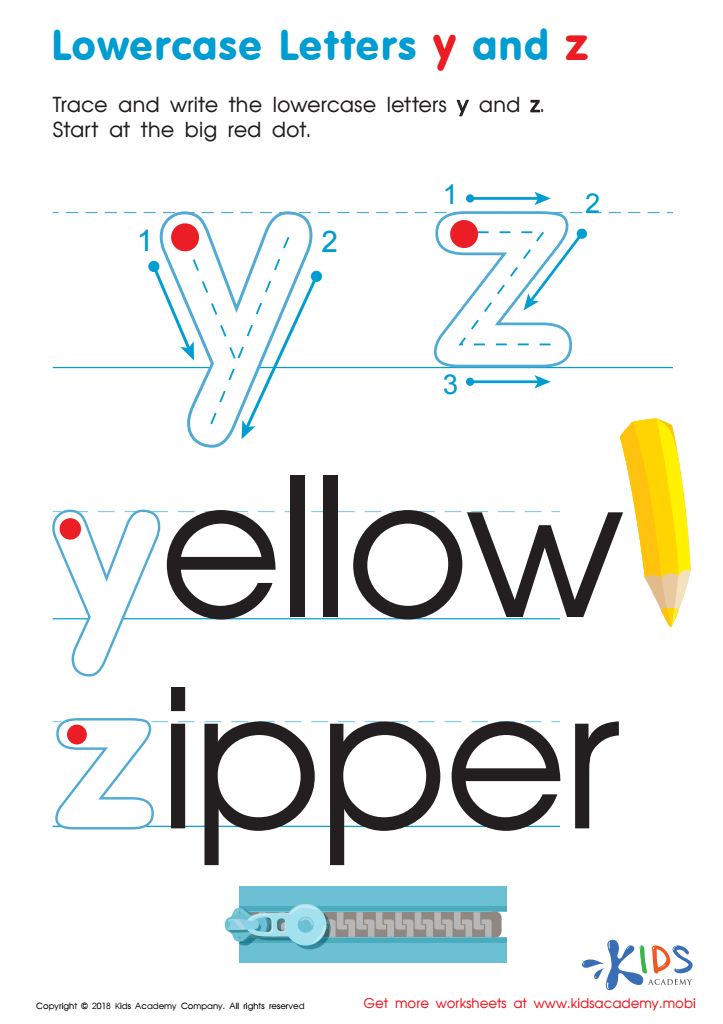
Lowercase Letters y z Worksheet
 Assign to My Students

Lowercase Letters j k l Worksheet
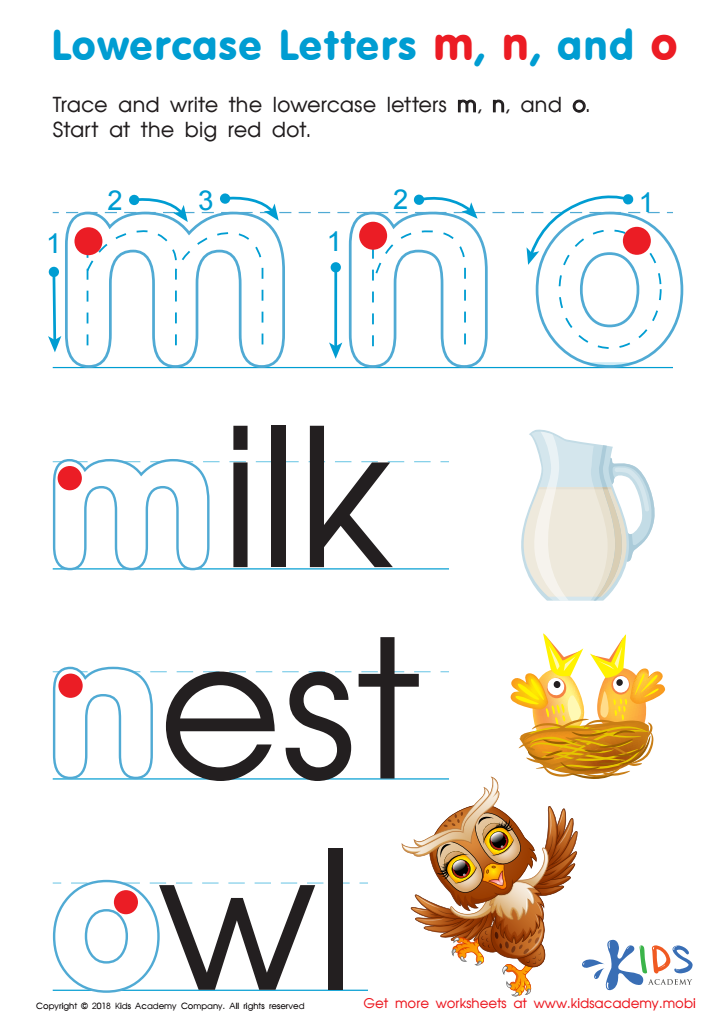
Lowercase Letters m n o Worksheet








Lowercase letter recognition and writing is a crucial aspect of early literacy that parents and teachers should prioritize for children aged 6-7. At this developmental stage, children are transitioning from learning letters in isolation to understanding their function within words and sentences. Mastery of lowercase letters equips children with the fundamental skills necessary for reading and writing, allowing them to express their thoughts effectively and engage with texts.
Recognizing and writing lowercase letters helps in developing fine motor skills, hand-eye coordination, and spatial awareness, all of which are critical for successful writing later on. Additionally, understanding the significance of lowercase letters sets the foundation for grasping phonetics and encourages stronger spelling capabilities.
Supporting lowercase letter writing fosters a child's confidence in their literacy skills, promoting a lifelong love for reading and writing. It lays the groundwork for more advanced language skills, enabling children to decode and understand more complex materials as they progress in school.
By actively engaging with children in recognizing and practicing these letters at home or in classroom settings, parents and educators can nurture their cognitive and emotional development, paving the way for academic success and stimulating intellectual curiosity.







