Sound Association Letter Sounds Worksheets for Ages 6-7
6 filtered results
-
From - To
Boost your child's literacy skills with our engaging Sound Association Letter Sounds Worksheets, specifically designed for ages 6-7. These engaging resources help young learners understand the correlations between letters and their corresponding sounds, fostering essential phonemic awareness. Each worksheet offers fun activities that promote sound recognition, letter formation, and critical thinking. By associating sounds with letters through colorful illustrations and interactive exercises, children will develop confidence in reading and writing. Perfect for homeschooling or classroom use, these worksheets provide a solid foundation for future literacy success. Explore our collection and watch your child embark on an interactive learning journey today!
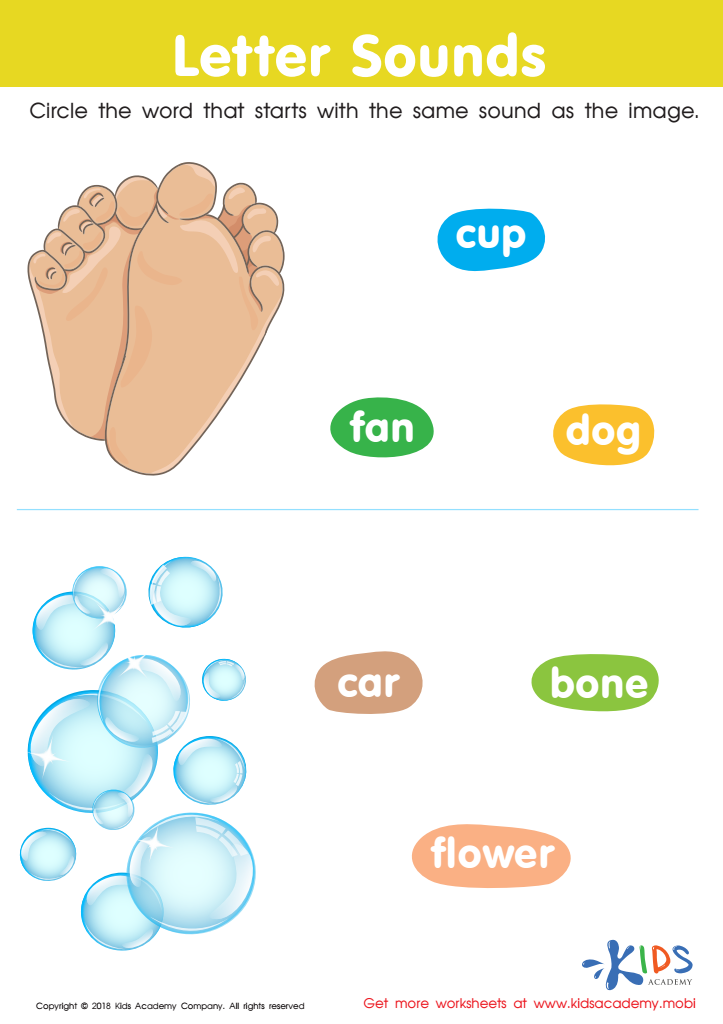
letter sounds Worksheet
 Assign to My Students
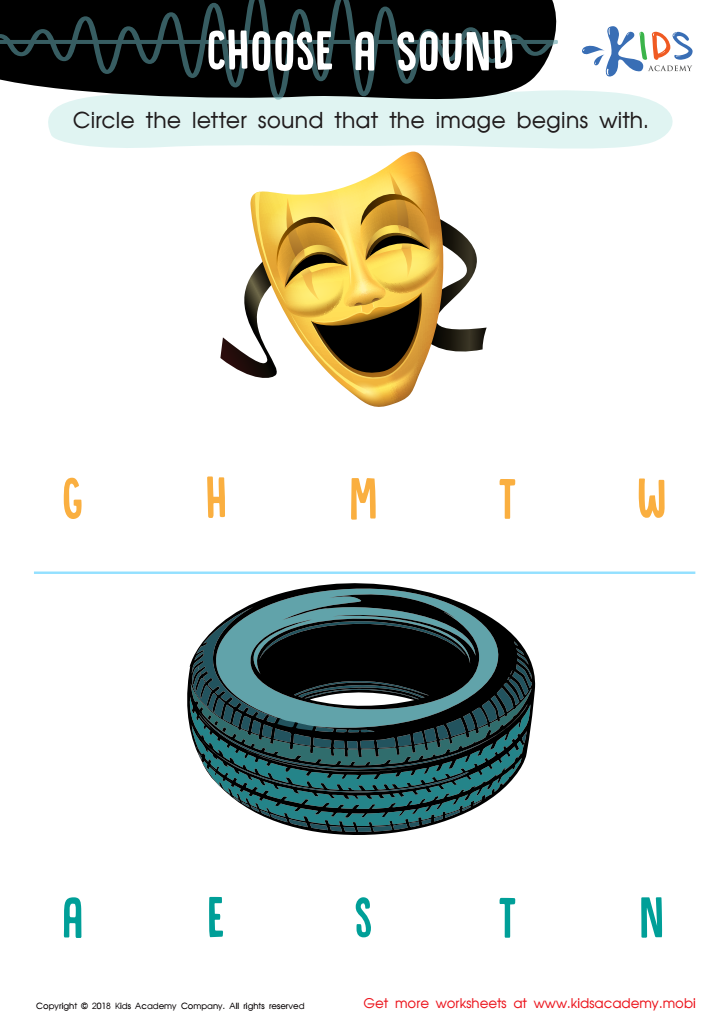
Choose a Sound Worksheet
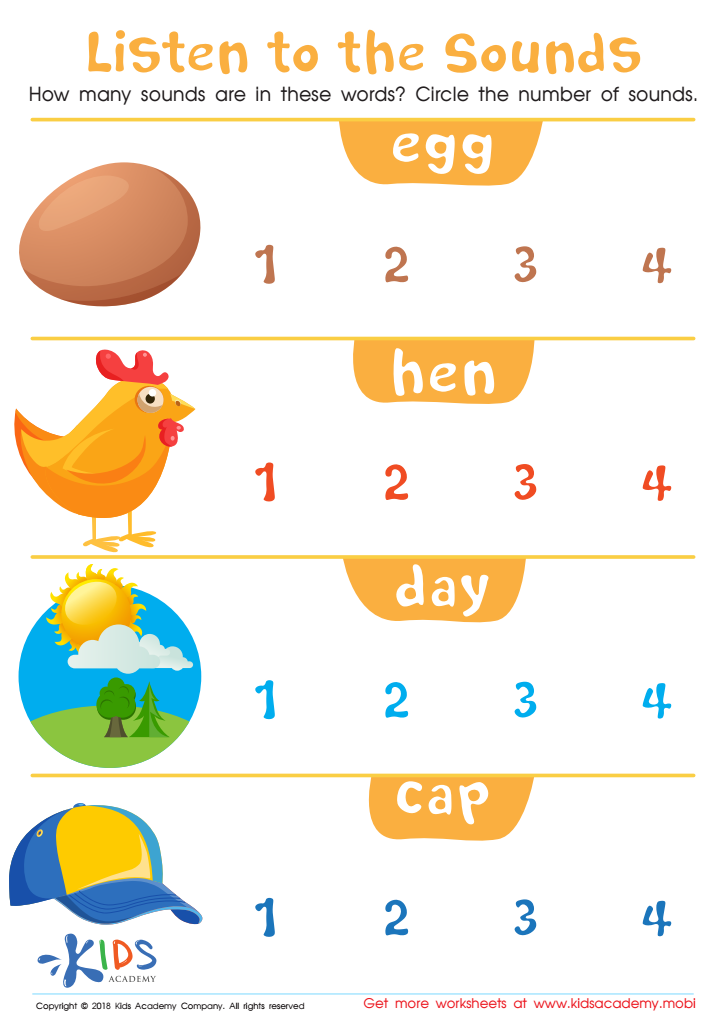
Listen to the Sounds Worksheet
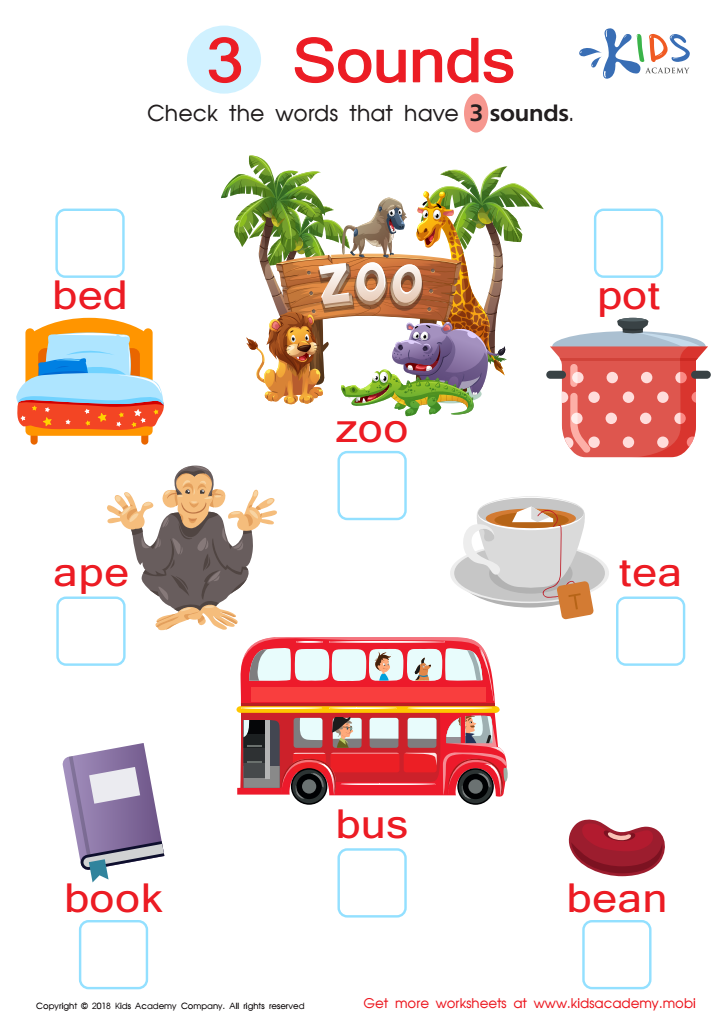
3 Sounds Worksheet
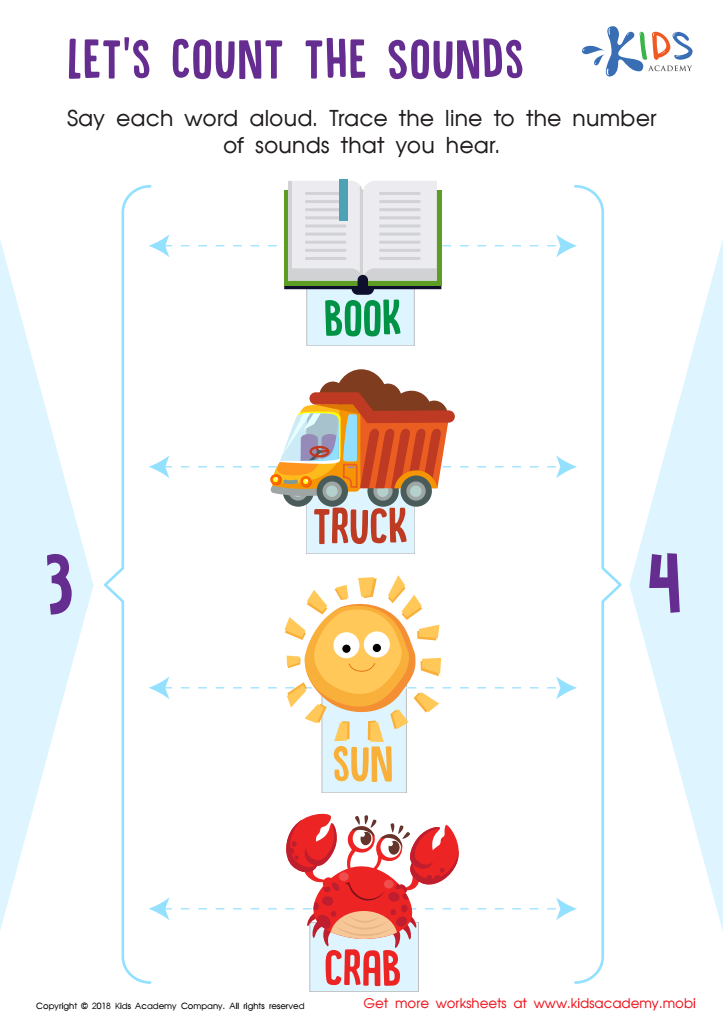
Let's Count the Sounds Worksheet
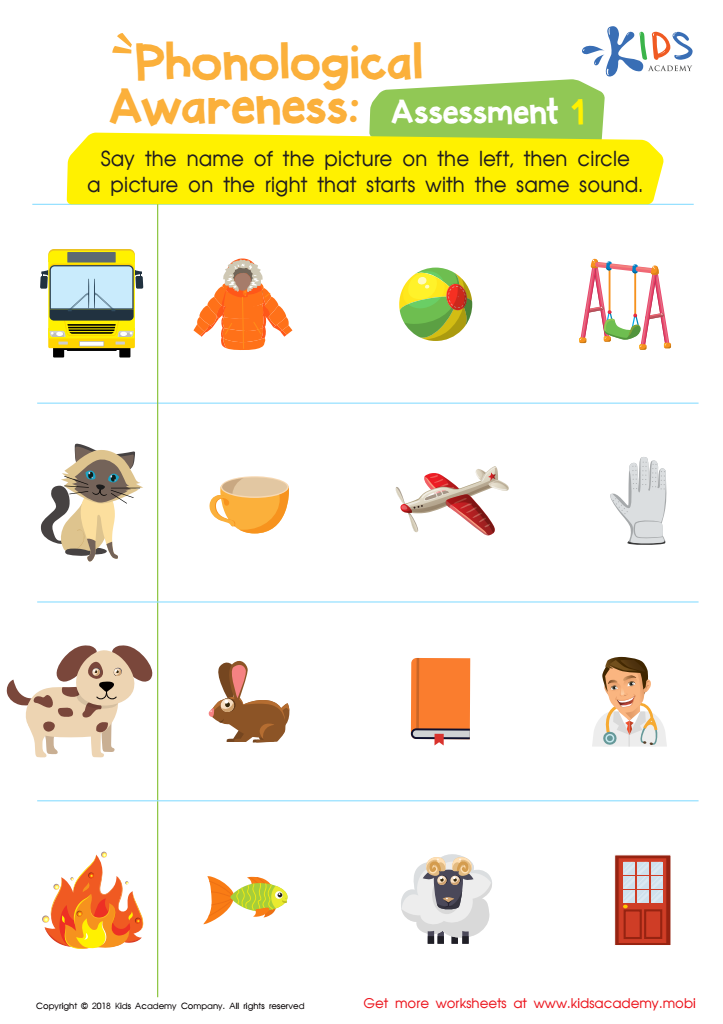
Phonological Awareness: Assessment 1 Worksheet








Sound association letter sounds are crucial for children aged 6-7 as they form the foundation of reading and writing skills. At this stage, children are developing phonemic awareness—the ability to recognize and manipulate the sounds in words. Mastery of letter sounds helps children decode words, making reading smoother and more enjoyable. This is especially important because strong reading skills lead to better comprehension and academic achievement across subjects.
Parents and teachers should care about this development because it fosters not only literacy but also critical thinking and creativity. When children learn to associate sounds with letters, they gain the confidence to tackle new words independently, which promotes self-efficacy and resilience in learning. Furthermore, early literacy skills are linked to future success; students who struggle with reading often face challenges in other academic areas.
Additionally, activities that promote sound-letter association are engaging and can be integrated into daily routines—making learning fun through games, songs, or stories. By prioritizing this developmental milestone, parents and teachers create a supportive environment that nurtures a love for reading, ensuring that children are well-prepared for lifelong learning and communication. In essence, caring about sound association is investing in children's educational futures.







