Vocabulary enhancement Rhyming Worksheets for Ages 6-7
6 filtered results
-
From - To
Discover an engaging collection of Vocabulary Enhancement Rhyming Worksheets tailored for children ages 6-7! Our thoughtfully designed worksheets foster language skills while making learning fun. Each activity encourages young learners to explore rhyme, build vocabulary, and develop phonemic awareness through playful exercises. With vibrant illustrations and relatable examples, kids will enjoy practicing their communication skills as they rhyme and identify new words. Perfect for early grade teachers and parents, these worksheets promote essential reading and writing competencies in a creative manner. Enhance your child’s vocabulary and ignite their love for language with our interactive rhyming resources today!
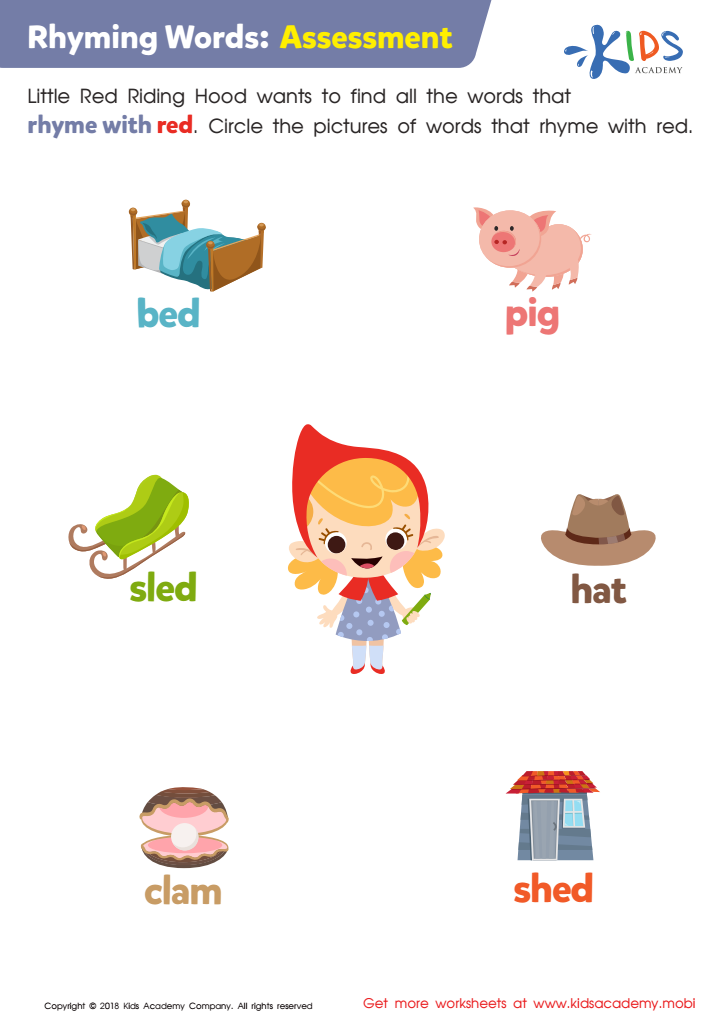
Rhyming Words: Assessment Worksheet
 Assign to My Students
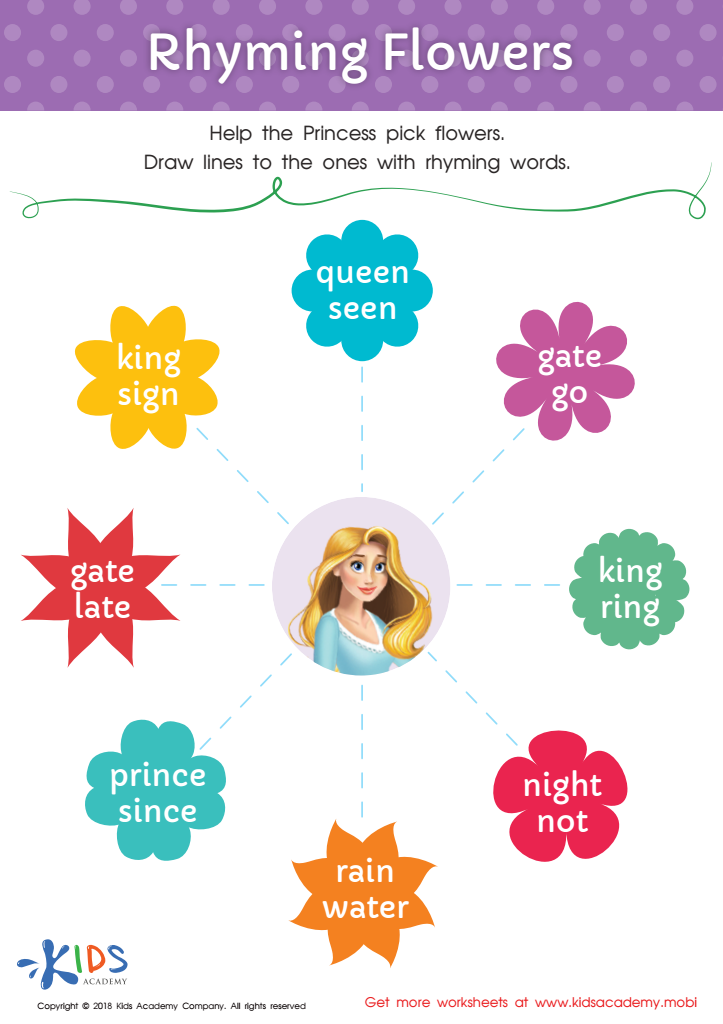
Rhyming Flowers Worksheet
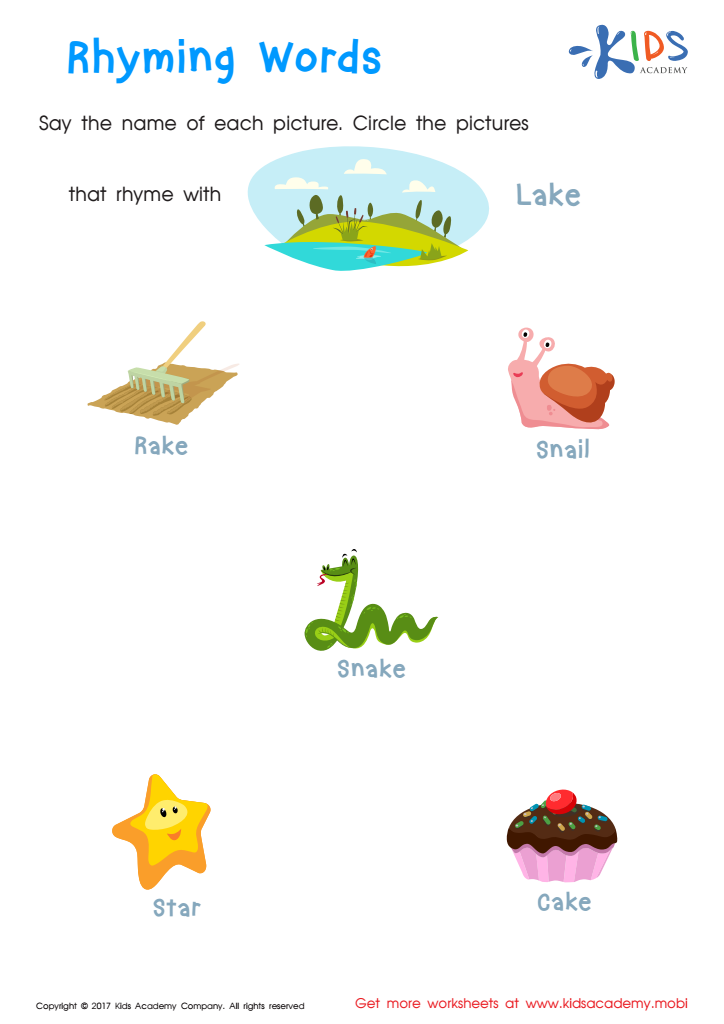
Rhyming Words Rhyming Worksheet
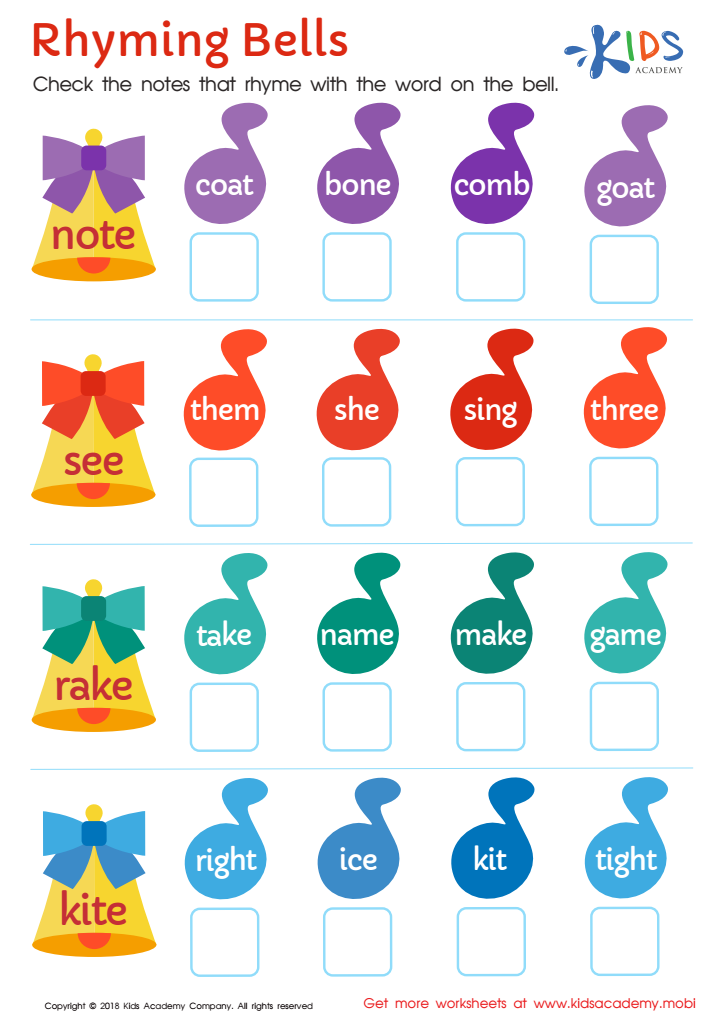
Rhyming Bells Worksheet
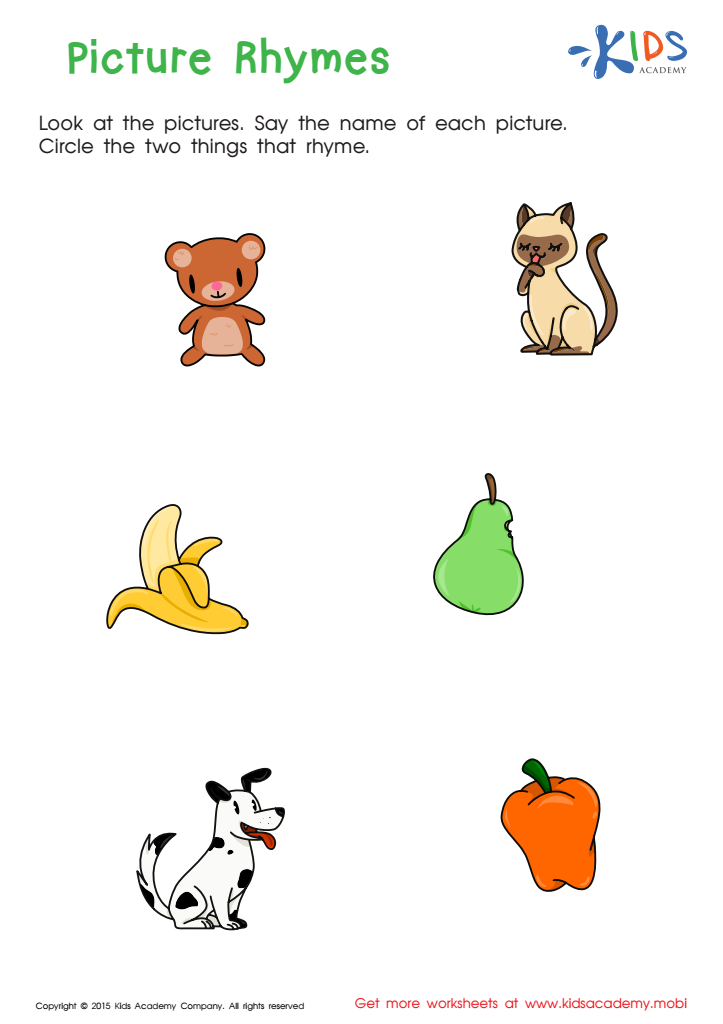
First Words: Picture Rhymes Worksheet








Vocabulary enhancement through rhyming for children ages 6-7 is crucial for several reasons. At this developmental stage, children are rapidly expanding their language skills and cognitive abilities. Rhyming activities engage young learners, making the process of vocabulary building fun and interactive. When children hear and create rhymes, they become more attuned to the sounds and structures of language, reinforcing phonemic awareness—a foundational skill for reading success.
Rhyming also enhances memory retention. The repetitive nature of rhymes helps children remember new words more easily, aiding in vocabulary recall when they read or communicate. Moreover, it encourages creativity and imagination, allowing children to play with language, fostering a love for reading and writing.
Teachers and parents play a vital role in this process; by incorporating rhyming games, songs, and stories into daily activities, they can promote an enriched language environment. Additionally, explicit teaching of rhyming patterns facilitates better comprehension of word relationships, ultimately supporting literacy development.
Investing time in vocabulary enhancement through rhyming not only improves language skills but also builds a strong foundation for academic success, social interactions, and confidence in communication as children navigate their educational journey.







