Letter recognition Tracing Letters Worksheets for Ages 6-7 - Page 2
26 filtered results
-
From - To
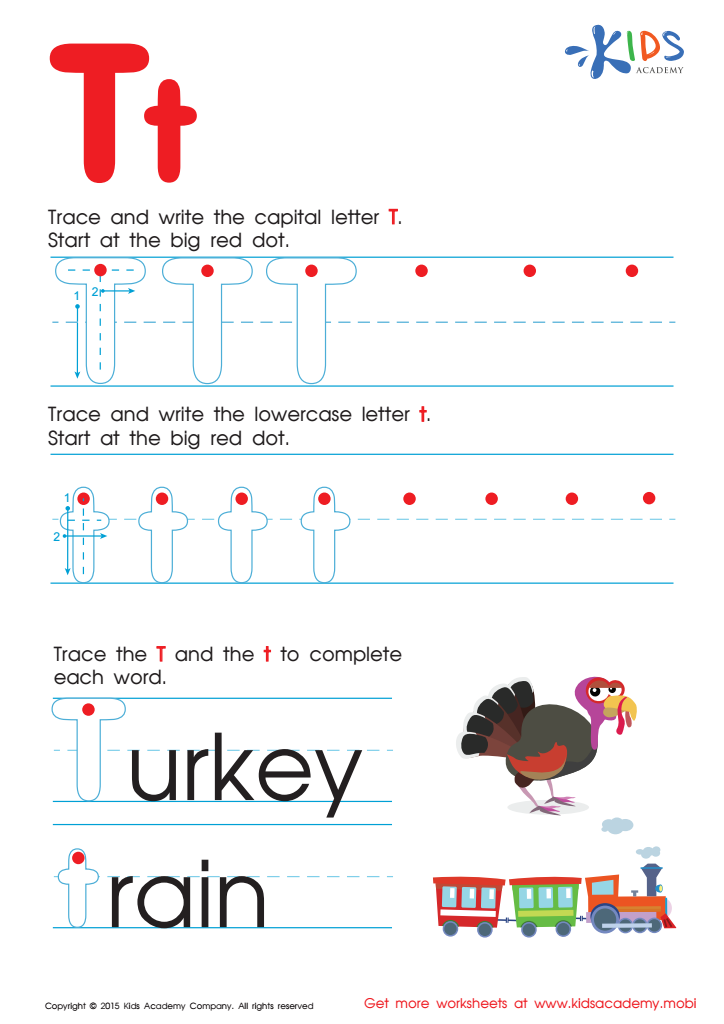
Letter T Tracing Page
 Assign to My Students

Letter D Tracing Page







Letter recognition and tracing are crucial skills for children aged 6-7, serving as fundamental stepping stones in their literacy journey. At this stage, children are transitioning from learning letters to reading and writing independently. Favorable letter recognition assists them in identifying letters and sounds, which directly aids comprehension and spelling. When children trace letters, they develop fine motor skills and hand-eye coordination, which are essential not just for writing but for numerous daily tasks.
Moreover, tracing letters reinforces memory through tactile engagement, enabling young learners to visualize and solidify their understanding of letter shapes and forms. This kinesthetic experience can make learning more enjoyable and effective, fostering a positive relationship with education.
Parents and teachers play a pivotal role in creating an environment that promotes these skills. By engaging in letter tracing activities, they provide both the guidance and encouragement essential for building children's confidence in their abilities. Furthermore, strong foundational skills in literacy during these ages are linked to improved academic performance in later years. Ultimately, a solid grasp of letter recognition and writing can pave the way for a successful educational experience, making it critical for adults to prioritize these activities in a child's early learning environment.








