Lowercase letter writing Tracing Letters Worksheets for Ages 6-7
3 filtered results
-
From - To
Introduce your child to the joy of handwriting with our Lowercase Letter Writing Tracing Letters Worksheets for Ages 6-7. These worksheets are designed to promote fine motor skills and letter recognition in young learners. Each sheet provides ample tracing practice to help children master the correct formation of every lowercase letter. Engaging activities, fun illustrations, and easy-to-follow instructions make learning enjoyable and effective. Perfect for classroom use or home practice, our tracing worksheets set the foundation for confident, legible handwriting. Embrace this essential educational tool and watch your child's writing skills flourish! Get started today and make learning fun.
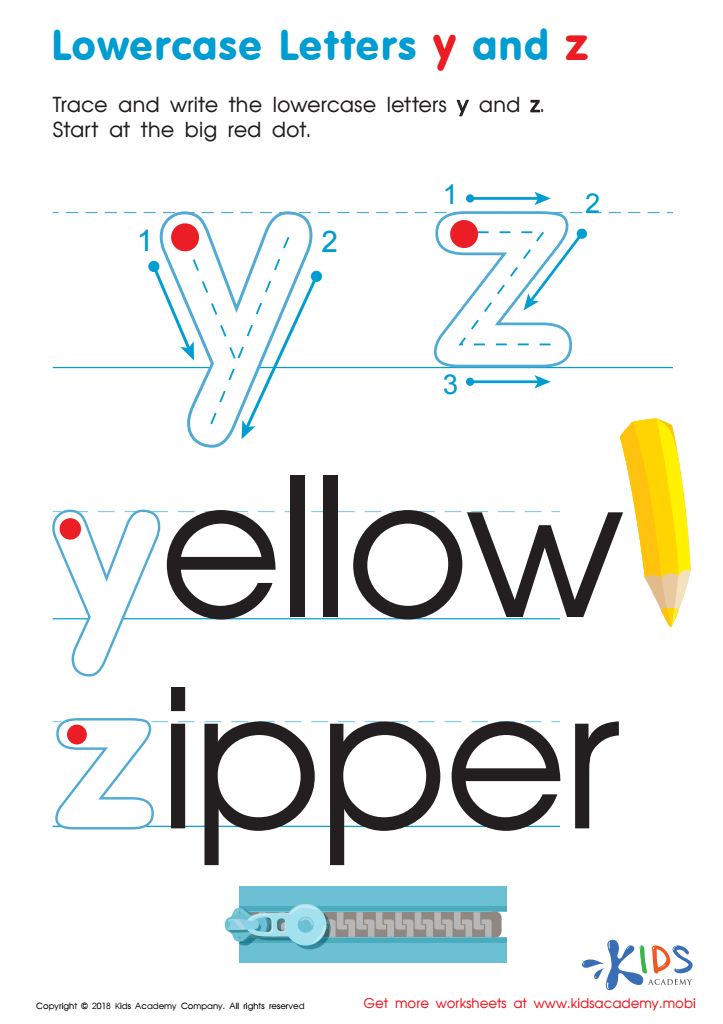
Lowercase Letters y z Worksheet
 Assign to My Students
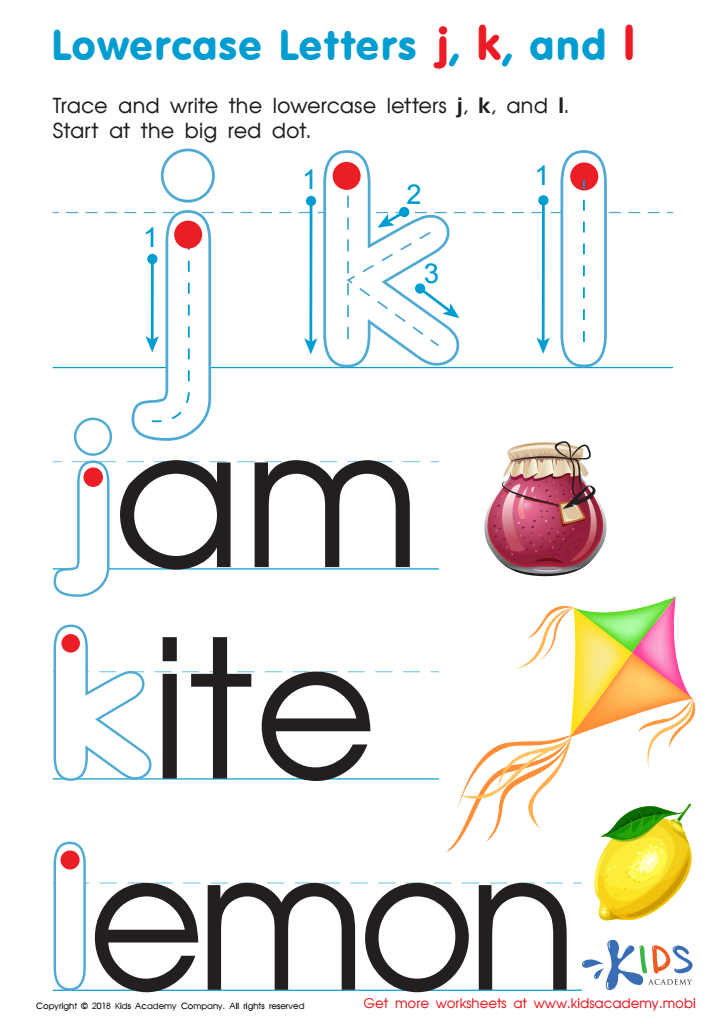
Lowercase Letters j k l Worksheet
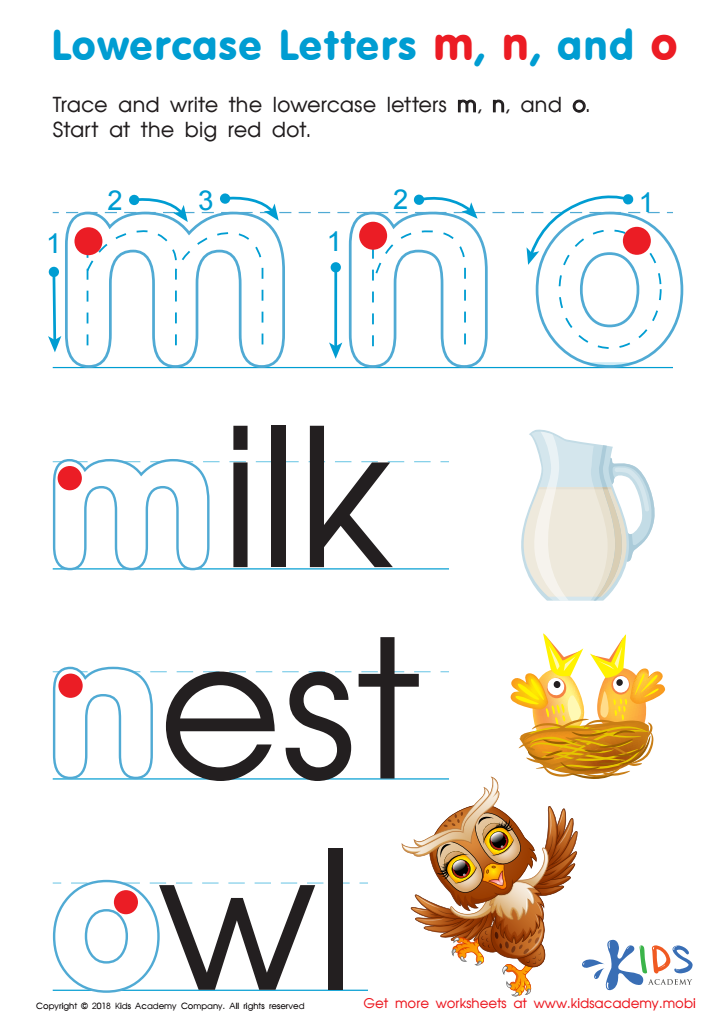
Lowercase Letters m n o Worksheet








Parents and teachers should care about lowercase letter writing tracing for children aged 6-7 because it forms a fundamental part of literacy development at a critical learning stage. At this age, children typically transition from recognizing to writing letters with proficiency. Tracing lowercase letters aids in refining their fine motor skills, which are crucial for writing accuracy and legibility. It fosters muscle memory while helping children understand letter shapes, sizes, and the correct stroke order, ensuring that they can reproduce letters independently in future tasks.
Furthermore, efficient writing skills underpin many academic milestones. Clear letter formation impacts reading fluency as children better recognize and differentiate letter forms. Additionally, this practice can enhance cognitive abilities, like attention to detail and concentration.
Socially, enhanced writing competence boosts children’s confidence. They’re more likely to engage in class activities and less likely to become frustrated with writing tasks. This sets up a positive learning feedback loop, making them more enthusiastic learners.
In sum, by prioritizing lowercase letter tracing, parents and teachers provide children with the essential tools needed for academic success and boosted self-esteem, laying down a solid foundation for not only writing but broader educational achievements.








