
Hand-eye Coordination Upper & Lowercase Letters Worksheets for Ages 6-7
3 filtered results
Difficulty Level
Grade
Age
-
From - To
Subject
Activity
Standards
Enhance your child's hand-eye coordination with our engaging Upper & Lowercase Letters Worksheets designed specifically for ages 6-7. These fun and interactive activities help young learners master letter recognition while improving their fine motor skills. Each worksheet combines creative illustrations with various exercises, encouraging children to trace, match, and identify uppercase and lowercase letters in an enjoyable way. By integrating hand-eye coordination practice into letter learning, your child will build confidence and fluency in reading and writing. Explore our vibrant worksheets to inspire a love for learning and develop essential skills that lay the foundation for future academic success!
Favorites
With answer key
Interactive
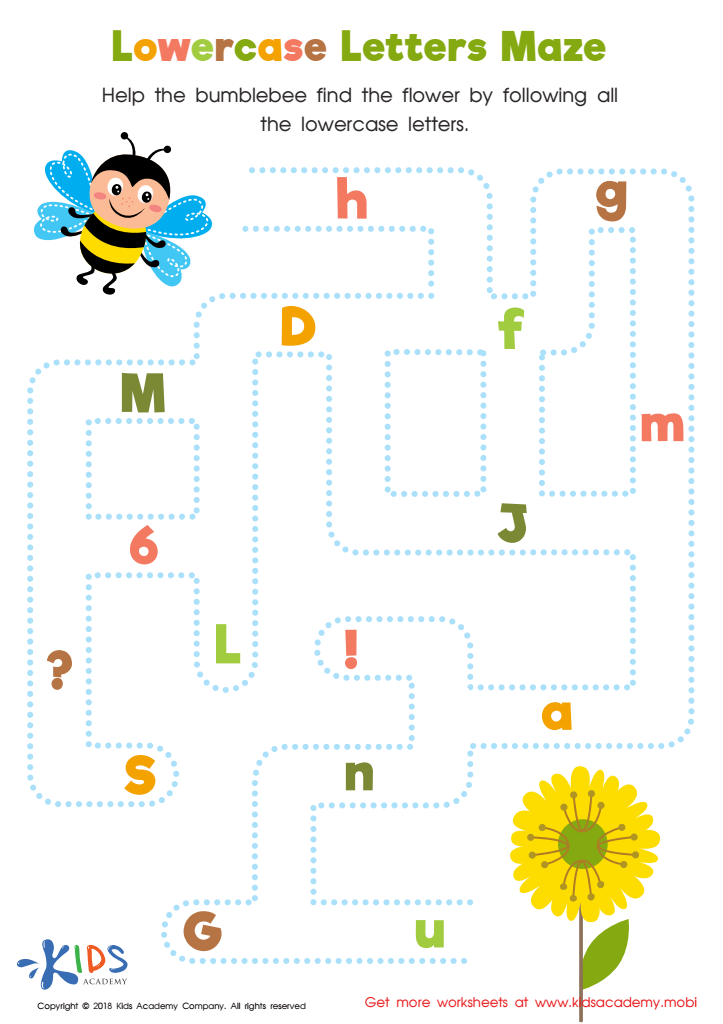
Lowercase Letters Maze Worksheet
Traceable pages can be great learning tools for children. For example, have them trace the path of lowercase letters to help a bumblebee pollinate flowers. Students will quickly learn the difference between uppercase and lowercase letters and numbers, and have fun doing it!
 Assign to My Students
Lowercase Letters Maze Worksheet
Worksheet





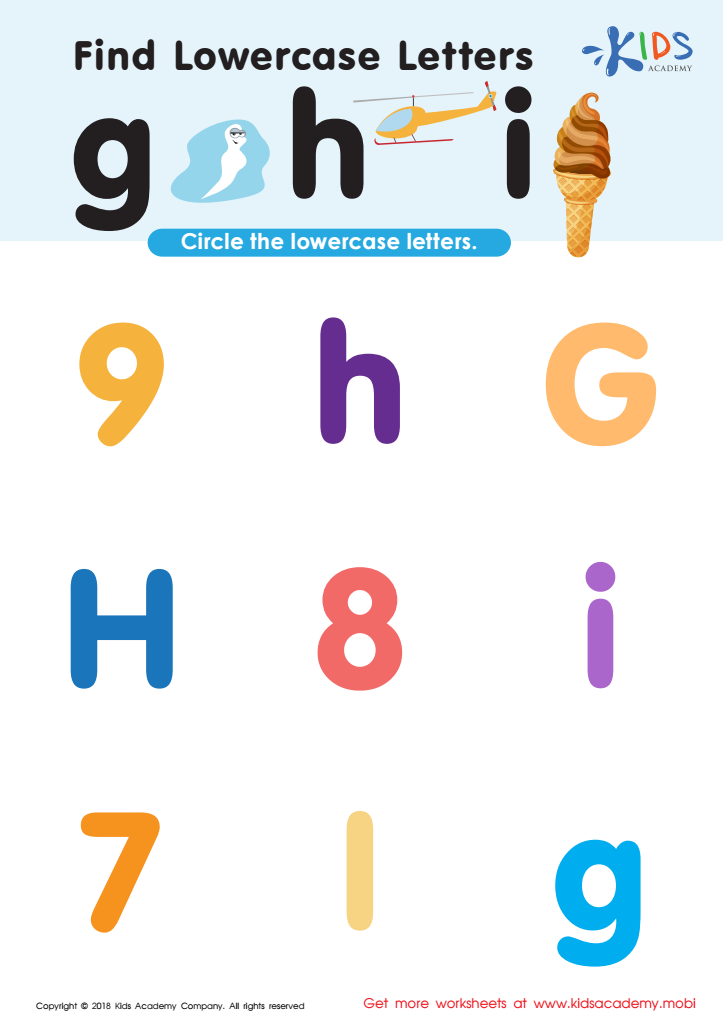
Find Lowercase Letters g h i Worksheet
Turn learning into a fun journey with your child! Use this free worksheet to find and circle the lowercase letters hidden amongst uppercase letters and numbers. Your child will understand what you're teaching them as they enjoy the search.
Find Lowercase Letters g h i Worksheet
Worksheet
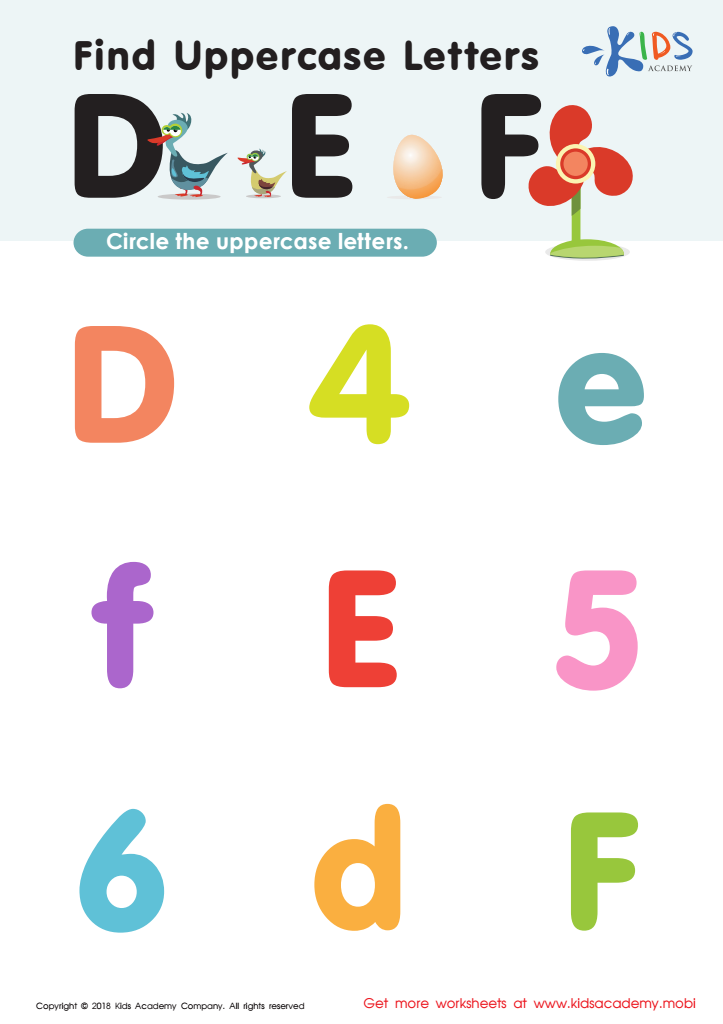
Find Uppercase Letters D, E, and F Worksheet
Follow the duckling and mom to find the capital letters D, E and F on this fun alphabet worksheet! Kids learn to read and recognize letters, while differentiating them from numbers. For extra challenge, don't let the numbers fool them. The pictures above remind them of each letter's sound. Have fun and get letter-savvy!
Find Uppercase Letters D, E, and F Worksheet
Worksheet
Join Kids Academy for Free
Who is primarily going to use this learning content?






Hand-eye coordination is a vital skill for children, especially for ages 6-7, as it plays a significant role in writing and literacy development. At this age, children are learning to form both uppercase and lowercase letters, a foundational skill in reading and writing. Improving hand-eye coordination enhances their ability to write legibly and with confidence. When children develop strong hand-eye coordination, they can better control their pencil movements, leading to neat handwriting and proper letter formation.
Furthermore, mastering uppercase and lowercase letters is crucial for literacy. Capital letters signal the beginning of sentences, while lowercase letters are the foundation of reading fluency. By fostering these skills through engaging activities like tracing, drawing, and fun games, parents and teachers can create an enjoyable learning experience that captures children's interest.
Encouraging this development also promotes fine motor skills, which are essential for everyday tasks beyond writing. Ultimately, investing time and effort in enhancing hand-eye coordination related to uppercase and lowercase letters sets the stage for academic success, boosting self-esteem in young learners as they navigate early literacy challenges with ease. Thus, prioritizing these skills benefits not only children's writing abilities but also their overall learning journey.







