Letter Tracing Practice Upper & Lowercase Letters Worksheets for Ages 6-7
3 filtered results
-
From - To
Introduce your child to the joy of writing with our "Letter Tracing Practice Upper & Lowercase Letters Worksheets." Designed specifically for ages 6-7, these worksheets provide an engaging way to master the alphabet. Each sheet encourages young learners to trace both uppercase and lowercase letters, enhancing fine motor skills and reinforcing letter recognition. Ideal for beginners, these printable resources offer a fun, educational, and hands-on method to build a strong foundation in writing. Perfect for home or classroom use, our worksheets make learning letters a delightful and productive activity for kids. Start tracing today for confident, capable writers tomorrow!
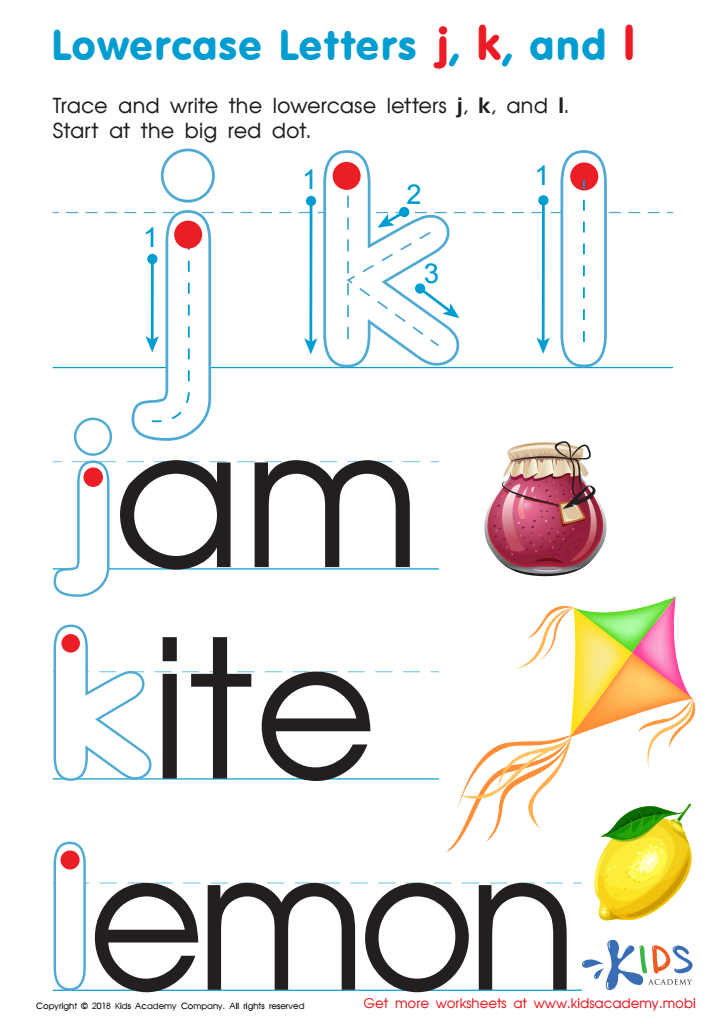
Lowercase Letters j k l Worksheet
 Assign to My Students




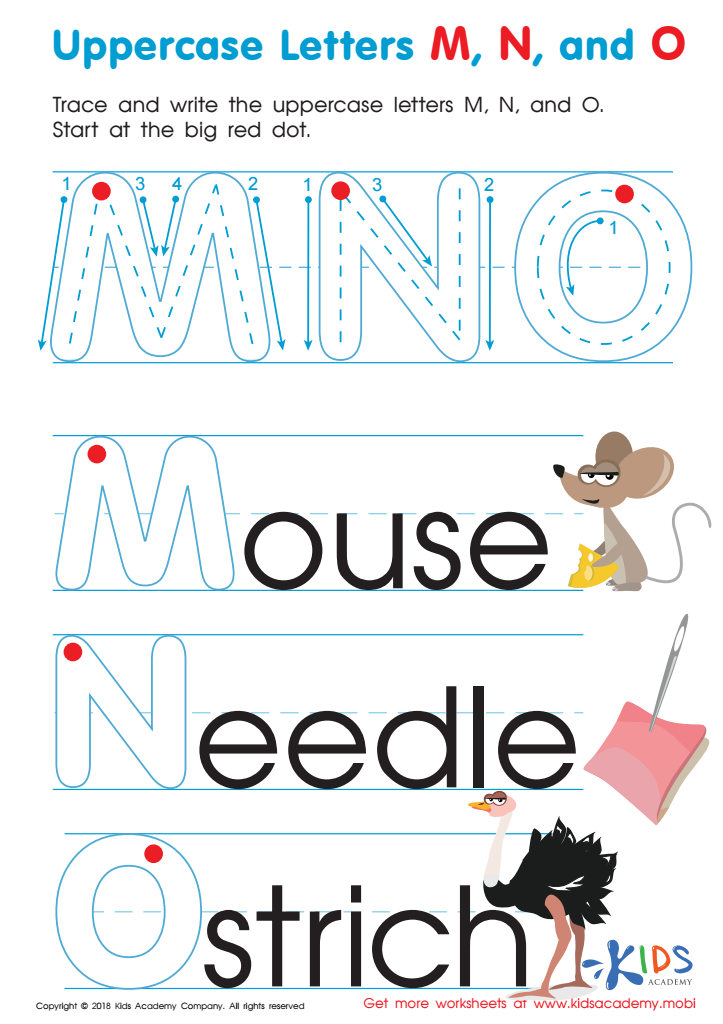
Uppercase Letters M, N, and O Worksheet
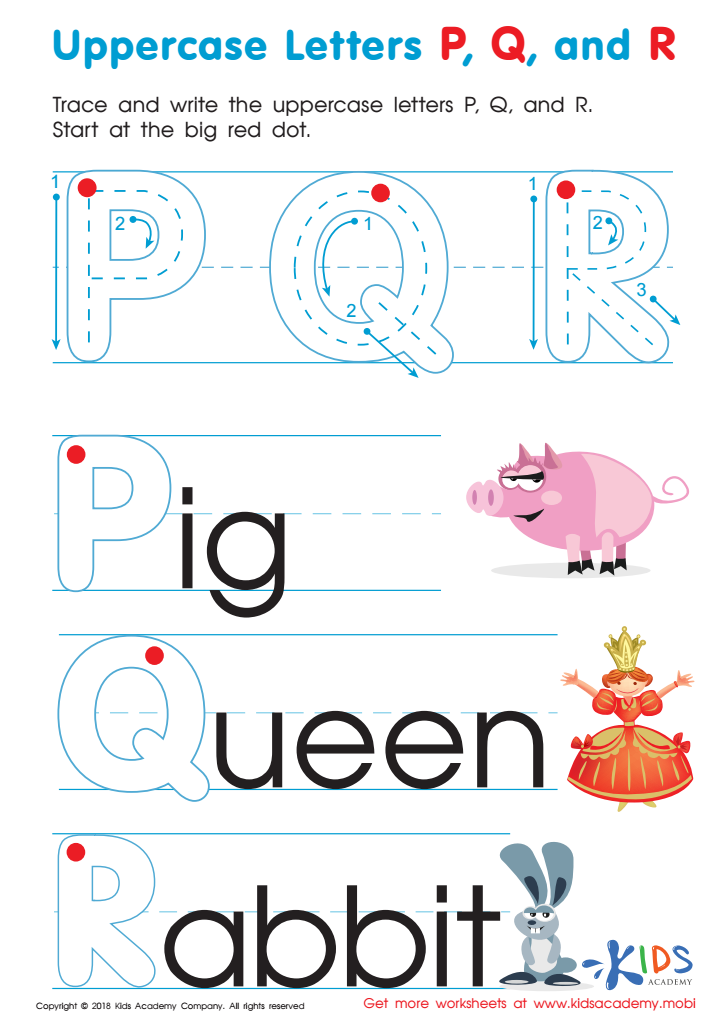
Uppercase Letters P, Q, and R Worksheet






Parents and teachers should prioritize letter tracing practice for children aged 6-7 because it plays a critical role in early literacy and fine motor development. At this age, children are transitioning from recognizing letters to writing them independently, which is foundational for reading and overall academic success. By practicing both uppercase and lowercase letters, children gain a solid understanding of the alphabetic system, enabling them to form words and sentences effectively.
Tracing letters helps refine fine motor skills, crucial for writing accuracy and legibility. It strengthens hand-eye coordination and finger dexterity, setting the stage for other writing activities. Consistent tracing practices build muscle memory, making it easier for children to write efficiently and comfortably.
Moreover, early exposure to tracing fosters a positive and confident attitude towards writing. Children who feel competent in their writing skills are more likely to engage enthusiastically in school tasks, boosting their overall learning experience. Additionally, letter tracing can help identify and address any emerging difficulties early, ensuring timely support.
For educators and parents, letter tracing activities provide insight into a child's grasp of literacy concepts and progression. Investing time in these practices sets the foundation for lifelong learning, supporting children's cognitive growth, confidence, and competency in critical academic skills.







