Lowercase letter writing Upper & Lowercase Letters Worksheets for Ages 6-7
3 filtered results
-
From - To
Welcome to our collection of engaging Upper & Lowercase Letters Worksheets designed specifically for ages 6-7! These interactive resources focus on lowercase letter writing, helping young learners develop essential handwriting skills while having fun. Our worksheets feature a variety of activities that include tracing, coloring, and practicing each letter in a supportive and stimulating environment. Perfect for both classroom and home use, these worksheets aim to bolster children’s confidence in their writing abilities. Explore our unique exercises to enhance fine motor skills and letter recognition, empowering your child to master lowercase letters with ease. Start their writing journey today!
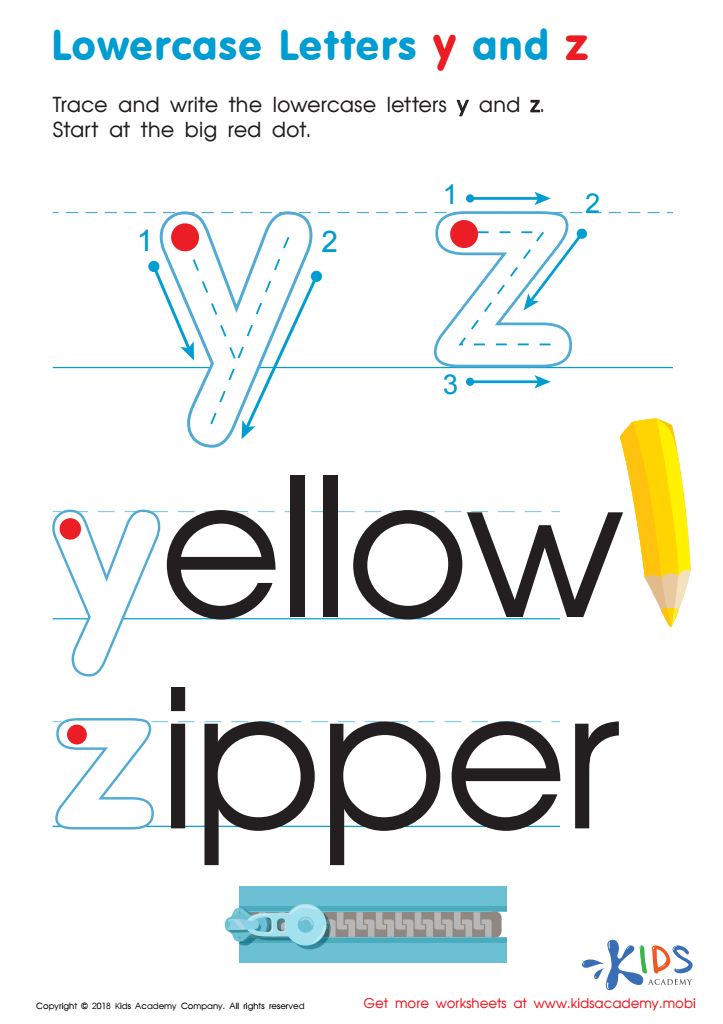
Lowercase Letters y z Worksheet
 Assign to My Students

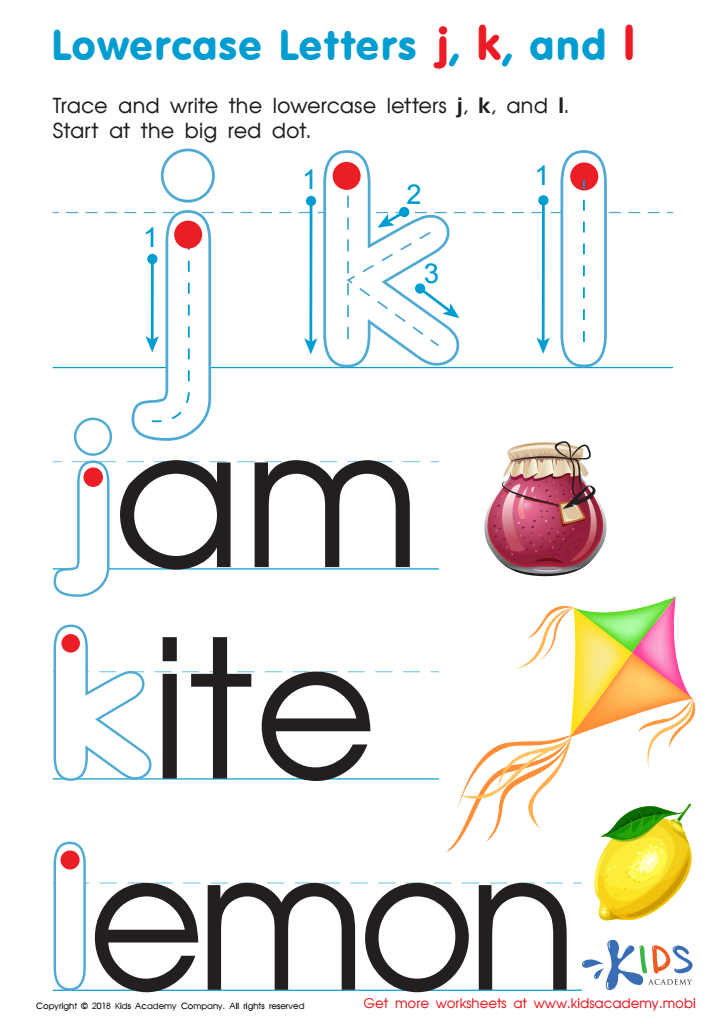
Lowercase Letters j k l Worksheet
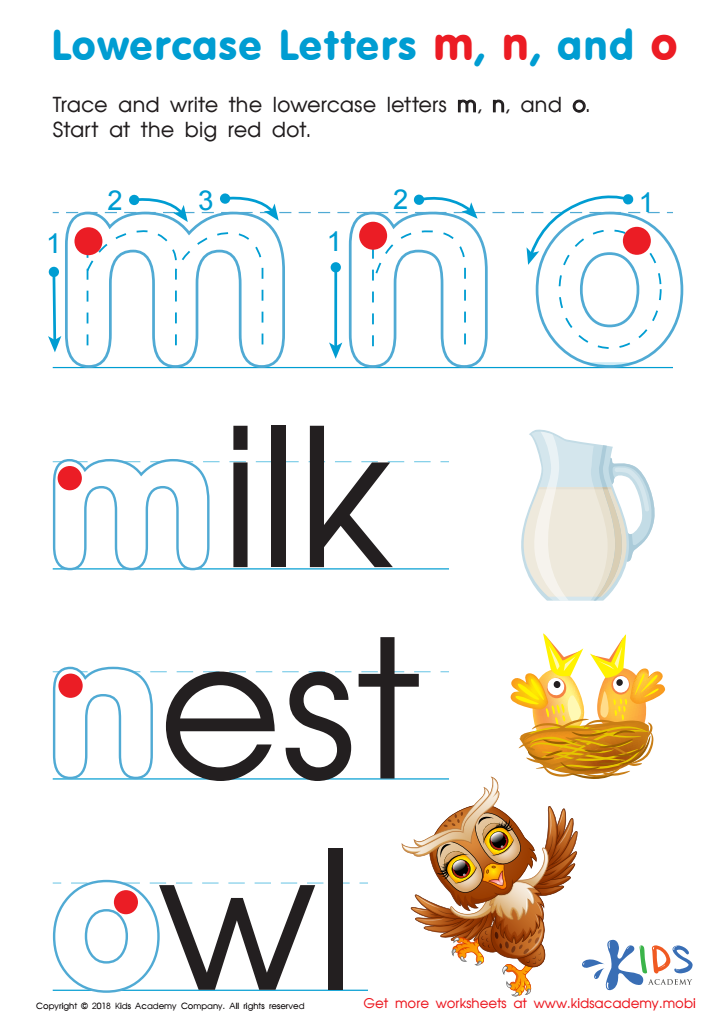
Lowercase Letters m n o Worksheet






Teaching lowercase and uppercase letter writing to children aged 6-7 is crucial for several reasons. At this developmental stage, children are honing their fine motor skills, and learning to properly form letters is fundamental to their cognitive and writing development. Mastery of both forms of letters enhances their ability to read and write fluently, as many words in the English language combine both upper and lowercase letters.
Correctly understanding the distinction between uppercase and lowercase letters also plays a central role in promoting literacy. Uppercase letters signal the beginning of sentences and proper nouns, while lowercase letters make up the bulk of written text. Grasping this concept helps children decode writing more effectively, leading to improved reading comprehension.
Moreover, neat and correct letter formation fosters confidence in students. They are more likely to feel assured in their writing efforts, which can encourage a love for learning. Lastly, good handwriting is vital for future academic success; legibility affects how teachers perceive a child's work and can influence assessment. Therefore, investing time and effort into teaching children about lowercase and uppercase letters sets the foundation for their future reading, writing, and communication skills.







