Uppercase identification Upper & Lowercase Letters Worksheets for Ages 6-7
5 filtered results
-
From - To
Enhance your child's reading skills with our "Uppercase Identification Upper & Lowercase Letters Worksheets" designed for ages 6-7. These engaging, printable worksheets help young learners differentiate between uppercase and lowercase letters, fostering strong foundational literacy skills. Perfect for classroom use or at-home practice, each activity uses fun visuals and interactive exercises to make learning enjoyable and effective. Kids will identify, match, and color letters to boost their recognition capabilities. Start preparing your child for reading success with our expertly crafted resources, available for instant download. Explore more at Kids Academy and support your child's learning journey today!
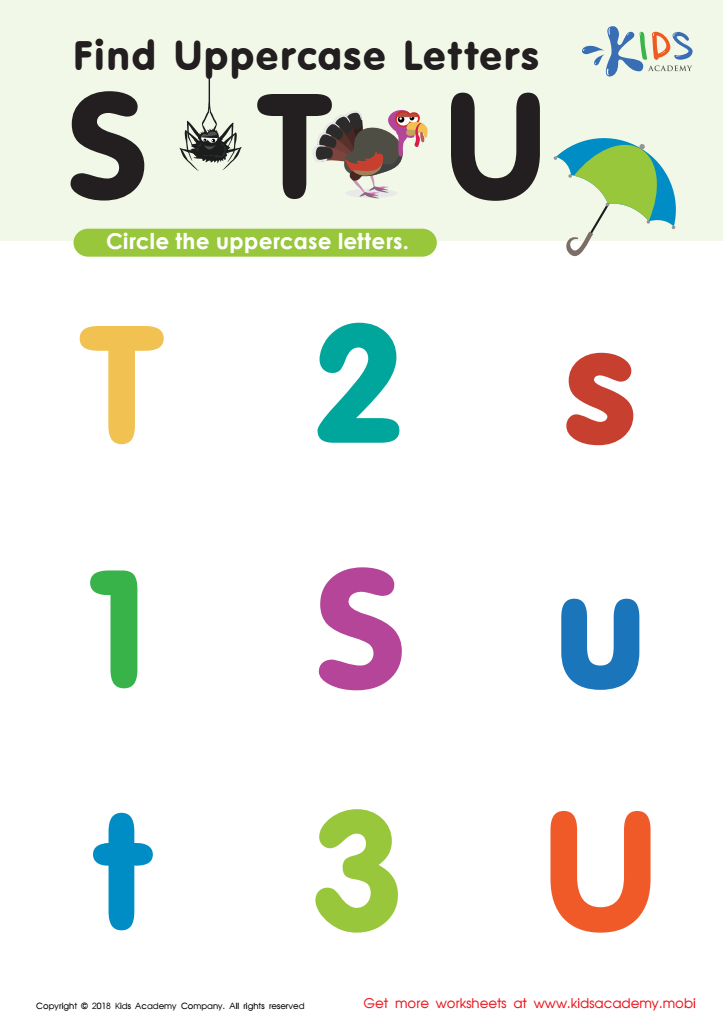
Find Uppercase Letters Worksheet
 Assign to My Students

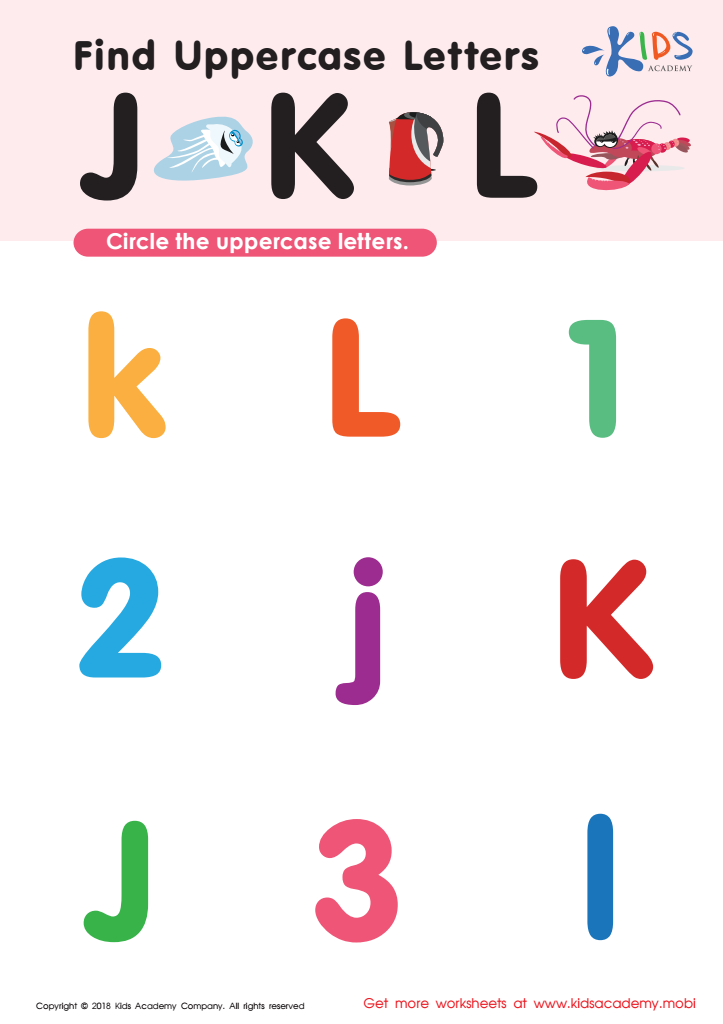
Find Uppercase Letters J, K, and L Worksheet

Find Uppercase Letters A, B, and C Worksheet
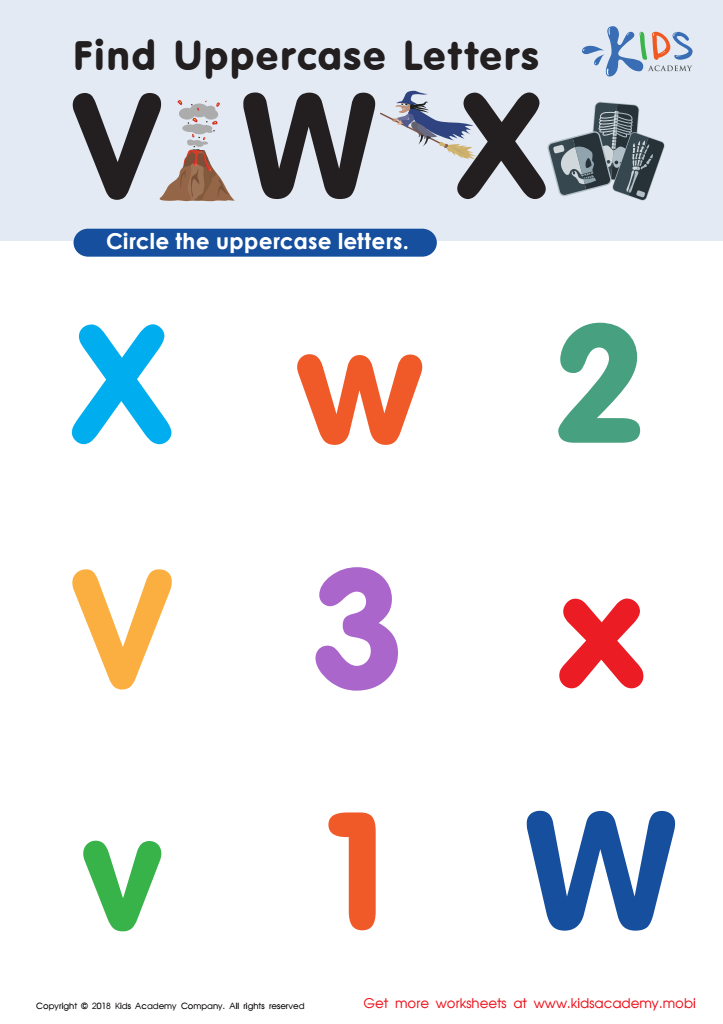
Find Uppercase Letters V, W, X Worksheet
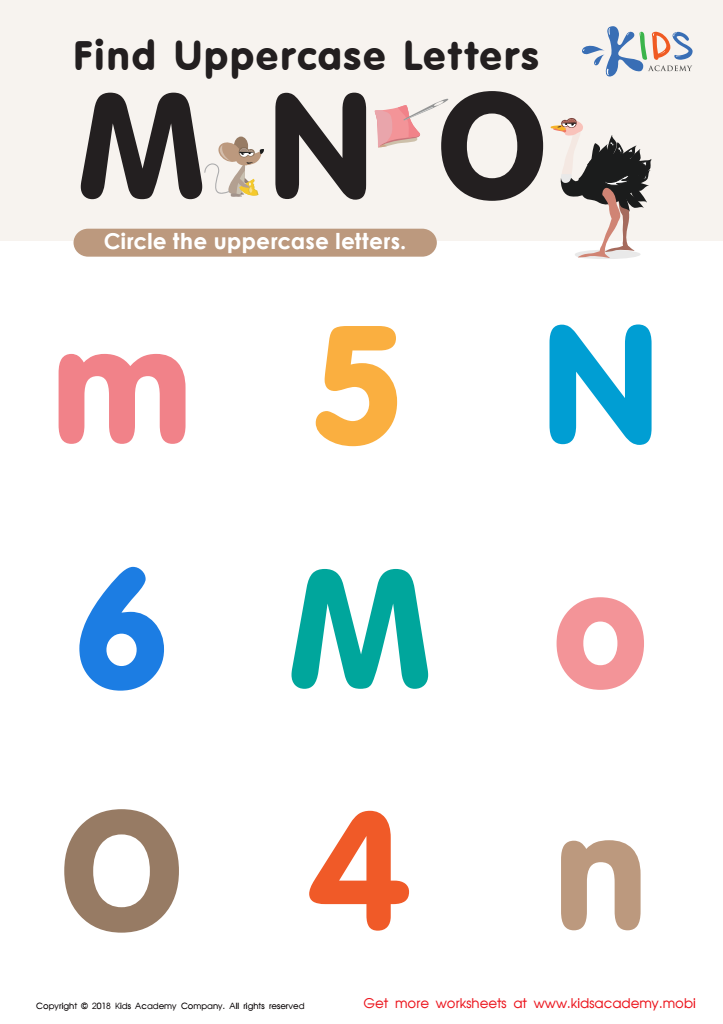
Find Uppercase Letters M, N, and O Worksheet






Understanding uppercase and lowercase letter identification is crucial for children aged 6-7 because it lays the foundation for literacy skills essential for their educational development. At this stage, children are transitioning from recognizing letters individually to combining them to form words and sentences. Proficiency in distinguishing between uppercase and lowercase letters enhances their reading fluency and writing accuracy.
Firstly, recognizing both cases aids in proper grammar usage, which is fundamental in comprehending written text and expressing ideas clearly. For instance, children learn that names and the beginning of sentences start with uppercase letters, which helps in developing coherent writing skills.
Secondly, uppercase and lowercase distinctions are vital for phonics. This helps children match sounds to the corresponding letters, thereby improving their ability to decode new words, which is a critical component of early reading.
Additionally, familiarizing children with both forms of letters can bolster their confidence in a learning environment, reducing frustration and increasing engagement. Parents and teachers should provide consistent practice through interactive activities, games, and reading exercises to reinforce these skills.
Investing attention in teaching uppercase and lowercase identification at ages 6-7 sets a robust framework for advanced literacy, academic success, and effective communication skills, making it an imperative focus for any child's early learning journey.







