Visual discrimination Upper & Lowercase Letters Worksheets for Ages 6-7
4 filtered results
-
From - To
Enhance your child's visual discrimination skills with our engaging Upper & Lowercase Letters Worksheets, designed specifically for ages 6-7. These worksheets provide a fun and interactive way for young learners to distinguish between uppercase and lowercase letters, reinforcing their understanding of the alphabet. Our carefully curated activities include matching exercises, tracing, and letter identification tasks, helping children develop essential literacy skills while enjoying the learning process. Ideal for classroom or home use, these worksheets support strong foundational skills necessary for reading and writing. Download now and watch your child's confidence and proficiency in recognizing letters flourish!
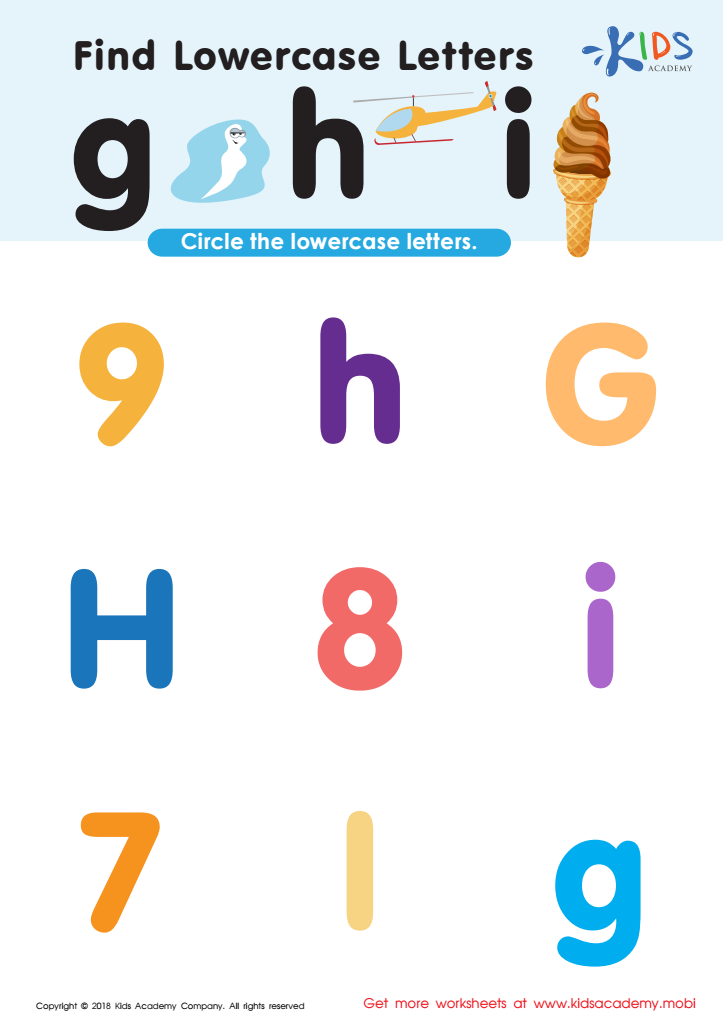
Find Lowercase Letters g h i Worksheet
 Assign to My Students

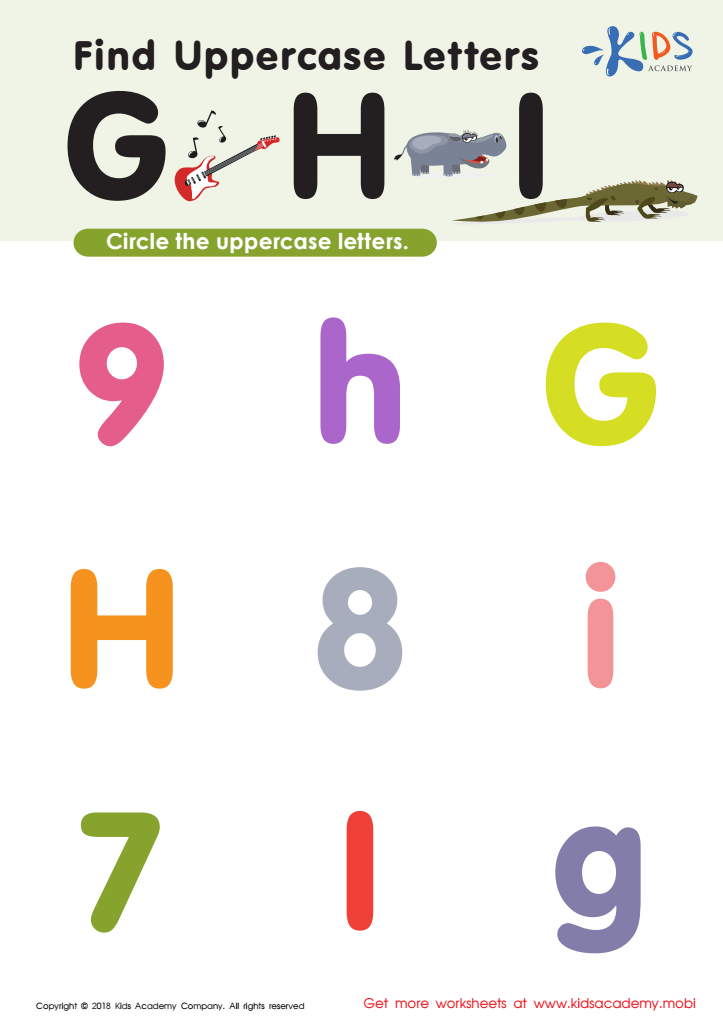
Find Uppercase Letters G, H, and I Worksheet
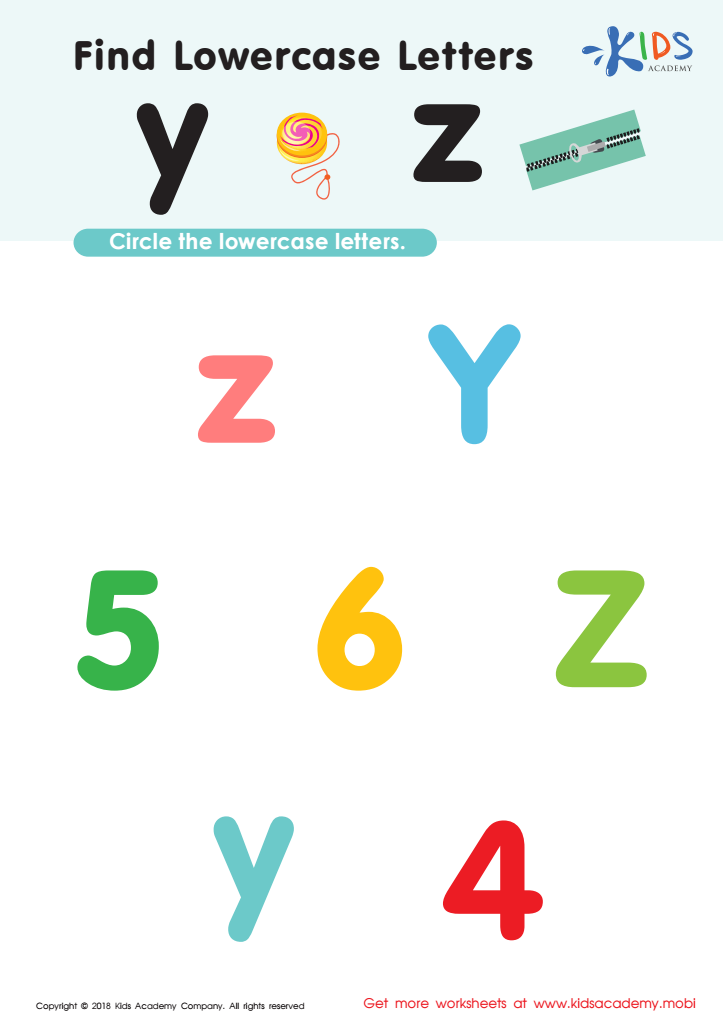
Find Lowercase Letters y z Worksheet

Find Uppercase Letters V, W, X Worksheet






Visual discrimination is a crucial skill for young learners, especially when it comes to recognizing uppercase and lowercase letters. For children aged 6-7, mastering letter recognition forms the foundation for reading and writing. Parents and teachers should care about this skill because it directly impacts a child's literacy development.
At this age, students start to engage in more complex reading and writing activities. Recognizing the differences between similar-looking letters, such as 'b' and 'd' or 'p' and 'q', is essential for them to avoid confusion and misunderstanding in text. A strong visual discrimination skill set enhances their ability to decode words, leading to better comprehension and fluency.
Moreover, visual discrimination extends beyond literacy; it develops critical thinking and attention to detail. By nurturing this capability, educators help foster confidence and independence in students' learning journeys. Parents can support this at home through engaging activities like letter sorting games or interactive reading exercises.
In sum, encouraging visual discrimination of letters contributes to a child's overall academic success, emotional well-being, and lifelong learning habits. Recognizing its importance ensures that parents and teachers can provide targeted support, facilitating a seamless transition into more advanced language skills.







