Sound Association Vowels Worksheets for Ages 6-7
3 filtered results
-
From - To
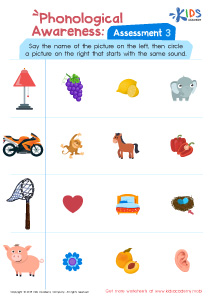
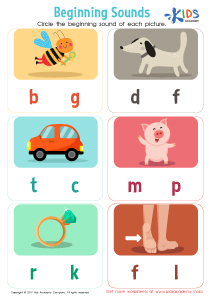
Unlock your child's phonetic potential with our "Sound Association Vowels Worksheets" designed specifically for ages 6-7! These engaging worksheets aim to reinforce vowel recognition and sound association through fun and interactive activities. Each worksheet combines colorful illustrations and clear instructions to make learning enjoyable, helping young learners connect vowel sounds with familiar words. As children practice, they build foundational literacy skills essential for reading and writing success. Perfect for at-home practice or classroom activities, our worksheets ensure that your child not only learns but enjoys the process. Set the stage for academic achievement with these vibrant, skill-building resources today!
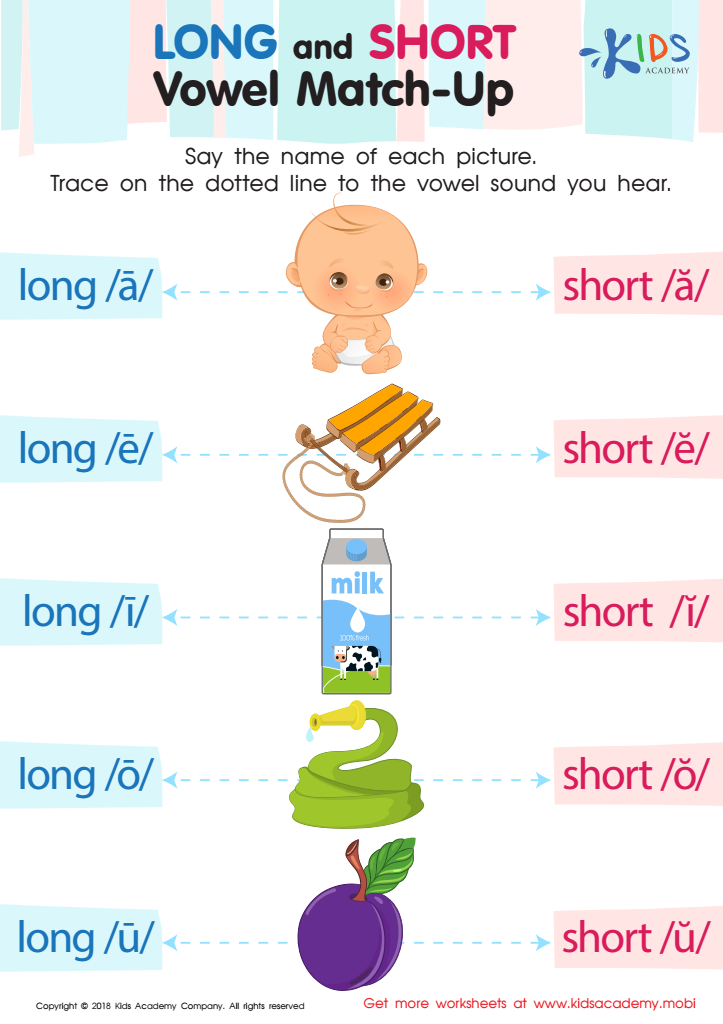
Long and Short Vowel Match up Reading Worksheet
 Assign to My Students
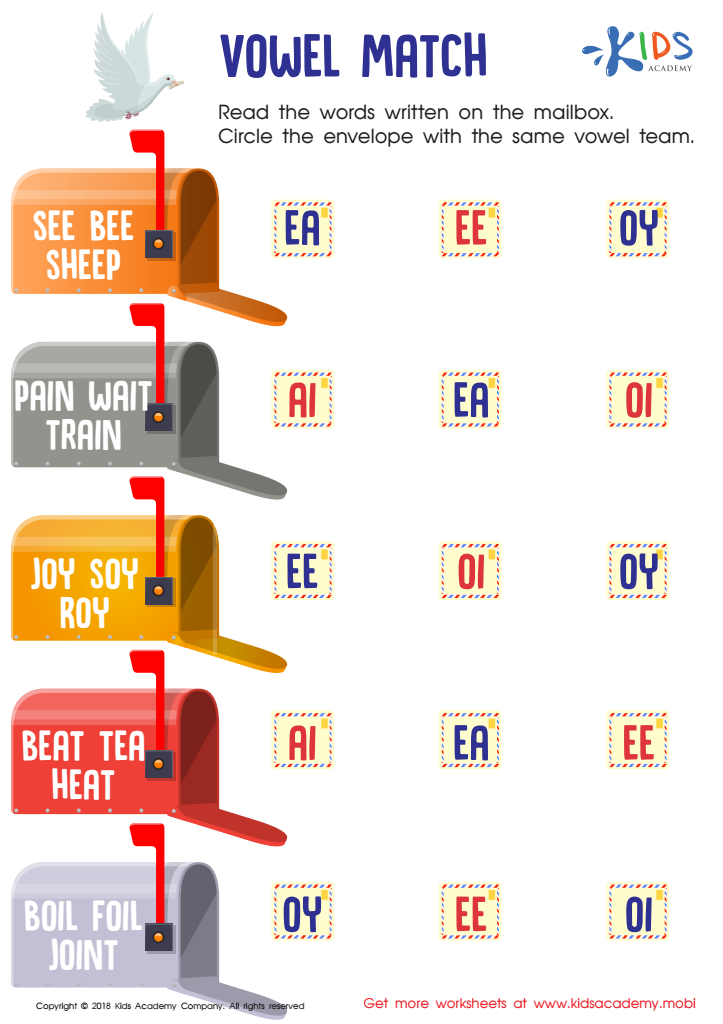
Vowel match Worksheet
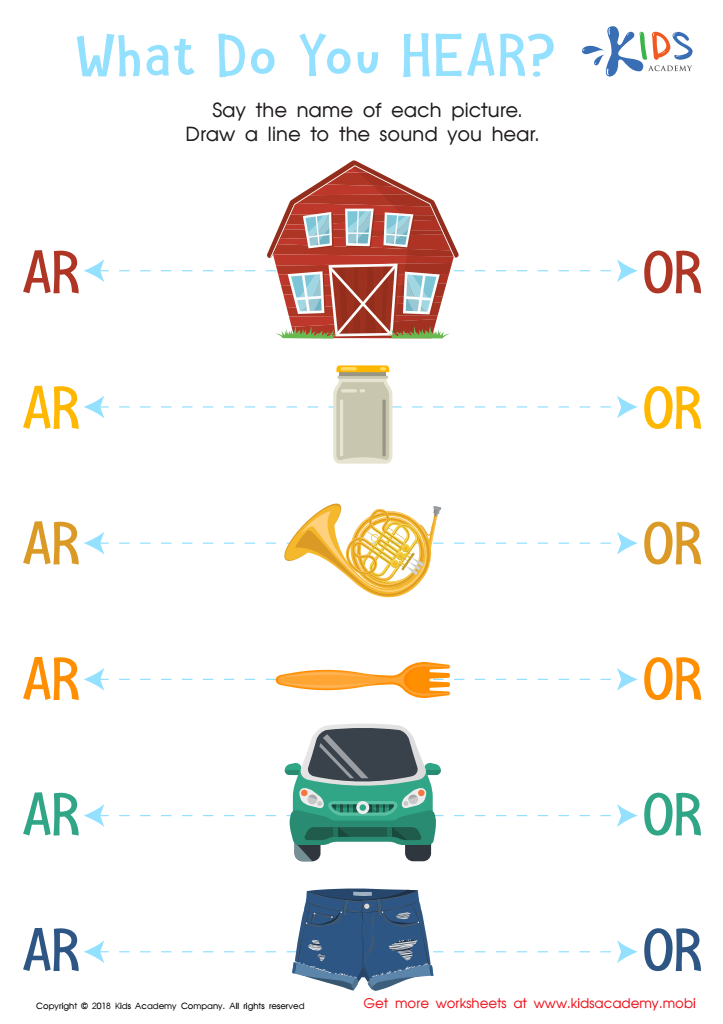
What do you hear Worksheet





Sound Association Vowels are crucial for literacy development in children aged 6-7 because they form the foundation for reading and writing skills. At this age, children are often beginning to decode words, and understanding how vowels function in different contexts directly influences their ability to sound out words, recognize patterns, and ultimately read fluently.
By focusing on sound association with vowels, parents and teachers can enhance children's phonemic awareness, helping them to differentiate between short and long vowel sounds. This skill is essential not just for reading but also for spelling, as children learn to associate specific sounds with corresponding letters or combinations.
Moreover, research shows that children who develop strong vowel sound recognition tend to gain confidence in their literacy skills, which can positively impact their overall academic performance. Engaging activities that promote vowel sound associations, like rhymes, songs, or phonics games, can make learning enjoyable and effective.
Ultimately, fostering an understanding of sound association with vowels creates a solid linguistic base, preparing children for future reading tasks and encouraging a lifelong love of learning. Recognizing the significance of this stage will empower educators and parents to provide the necessary support for their children’s success.