Chess knowledge Chess Worksheets for Ages 6-7
3 filtered results
-
From - To
Enhance your child's chess skills with our engaging Chess Knowledge Worksheets for ages 6-7! These worksheets are thoughtfully designed to introduce young learners to the foundational concepts of chess through fun and interactive exercises. Children will explore essential chess terms, piece movements, and basic strategies to foster critical thinking and problem-solving abilities. Our creative activities will spark curiosity and build confidence as they master the game of chess. Ideal for both classroom and home learning, these printable worksheets provide an engaging way for kids to develop strategic skills while enjoying the timeless game of chess. Start your child's chess adventure today!
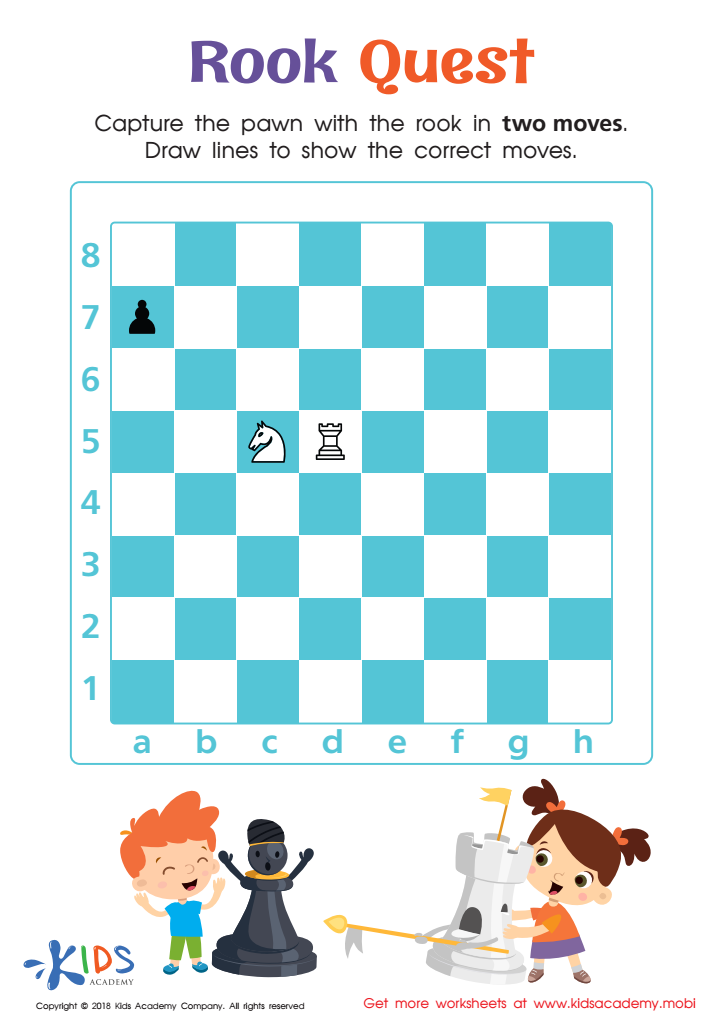
Rook Quest Worksheet
 Assign to My Students
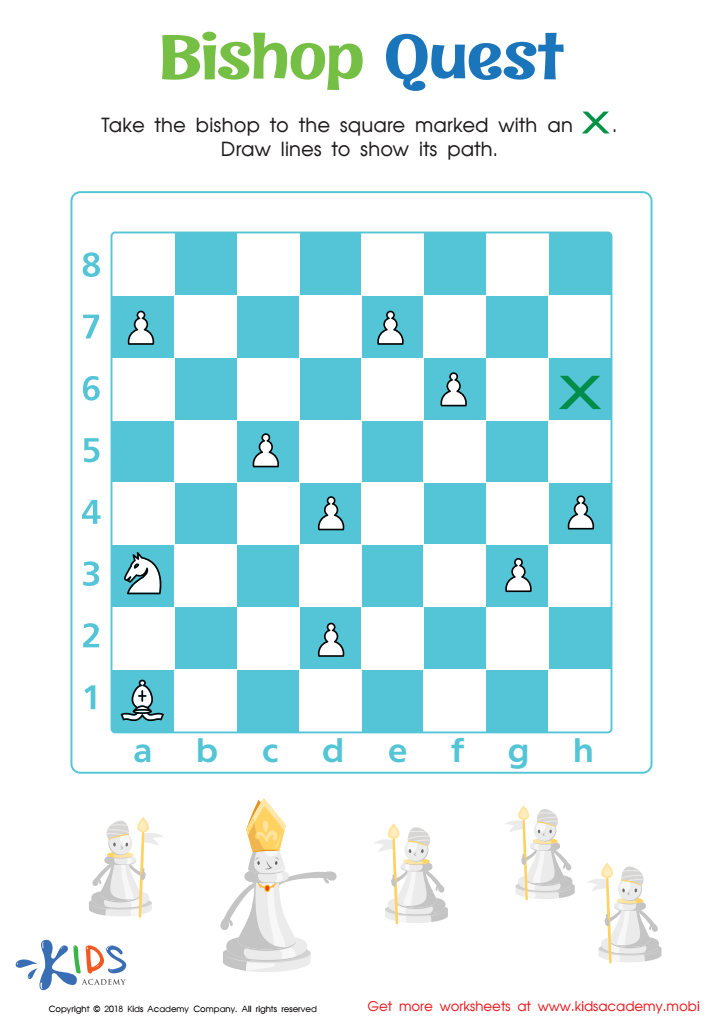
Bishop Quest Worksheet
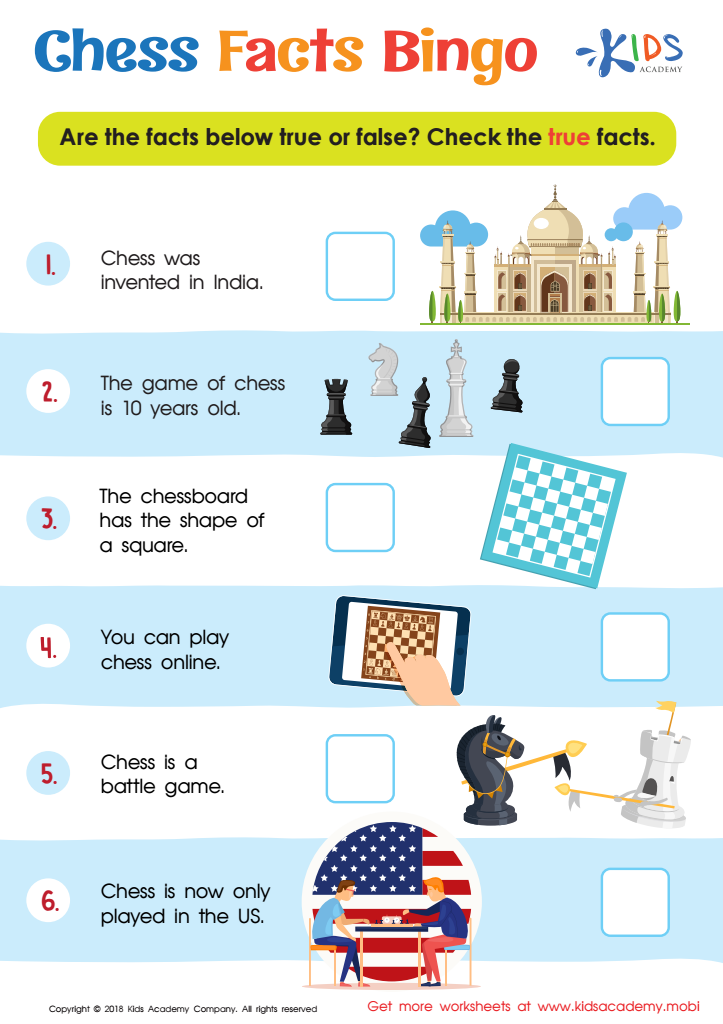
Chess Facts Bingo Worksheet






Teaching chess to children aged 6-7 offers numerous developmental benefits that parents and teachers should prioritize. First and foremost, chess enhances critical thinking and problem-solving skills. As children navigate the complexities of the game, they learn to analyze situations, anticipate opponents' moves, and develop strategies, engaging their cognitive faculties in a way that fosters intelligent reasoning.
Moreover, chess promotes patience and concentration. For young learners who are easily distracted, focusing on a chessboard and considering the consequences of their moves helps cultivate discipline and an ability to concentrate for sustained periods, beneficial traits in academic settings.
Socially, chess builds emotional intelligence—children learn to experience both winning and losing gracefully, which nurtures resilience and sportsmanship. This can improve interactions with peers, enhancing overall social skills.
Finally, chess can be entertaining and engaging, transforming learning through play. By incorporating gamified learning into their education, parents and teachers can ignite a passion for learning that transcends the chessboard.
In summary, chess is more than a game; it is a powerful educational tool that fosters cognitive and social skills in young children, making it an essential consideration for parents and educators alike.