Logical thinking improvement Chess Worksheets for Ages 6-7
3 filtered results
-
From - To
Introduce your young learners to the world of chess with our "Logical Thinking Improvement Chess Worksheets for Ages 6-7." Carefully designed to enhance cognitive skills, these printable worksheets make learning fun and interactive. Through engaging activities, children will master essential chess concepts while boosting their logical thinking, problem-solving, and decision-making abilities. Perfect for classroom or home use, our worksheets provide step-by-step guidance to help young minds grasp fundamental strategies, ensuring a strong foundational understanding of the game. Foster your child’s analytical skills and ignite their passion for chess today with our compelling and educational resources.
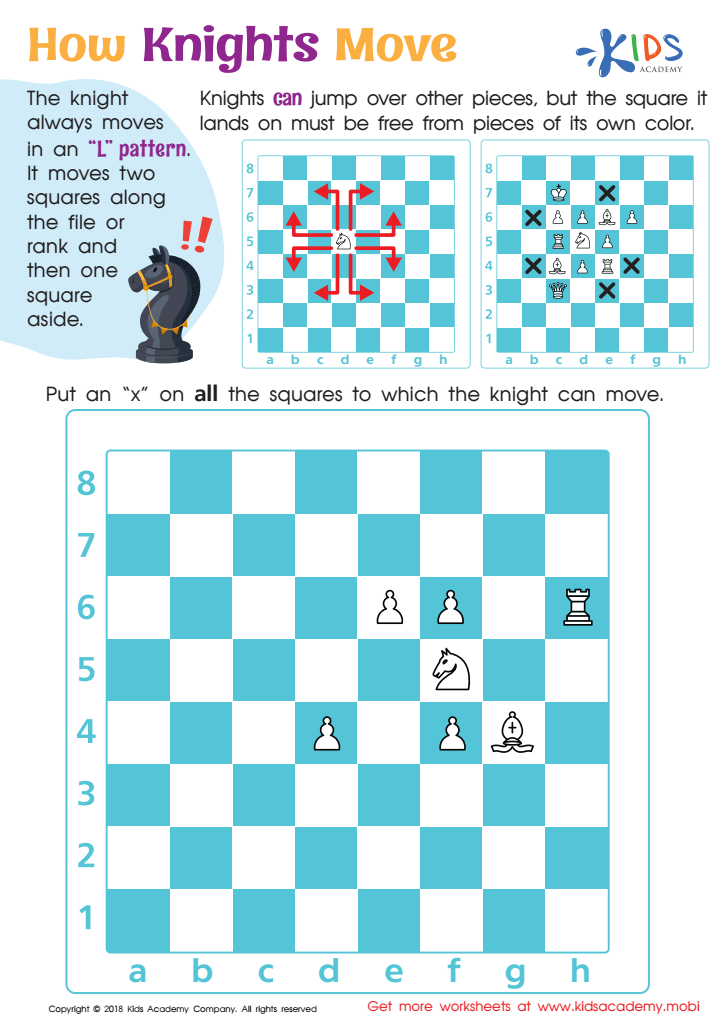
How Knights Move Worksheet
 Assign to My Students
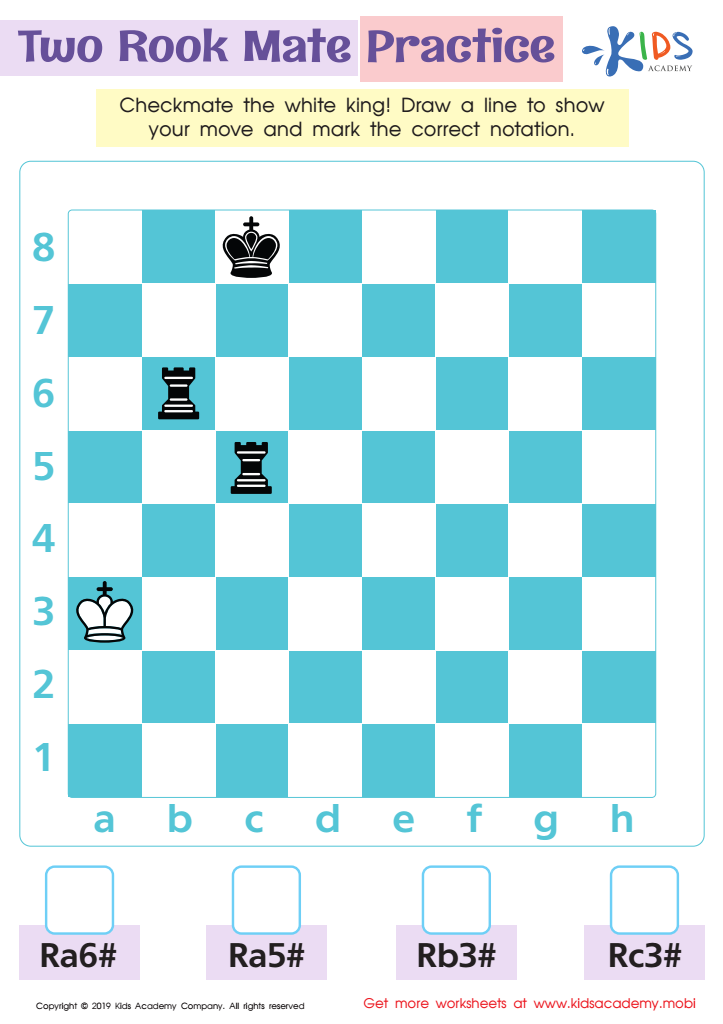
Two Rook Mate Practice Worksheet
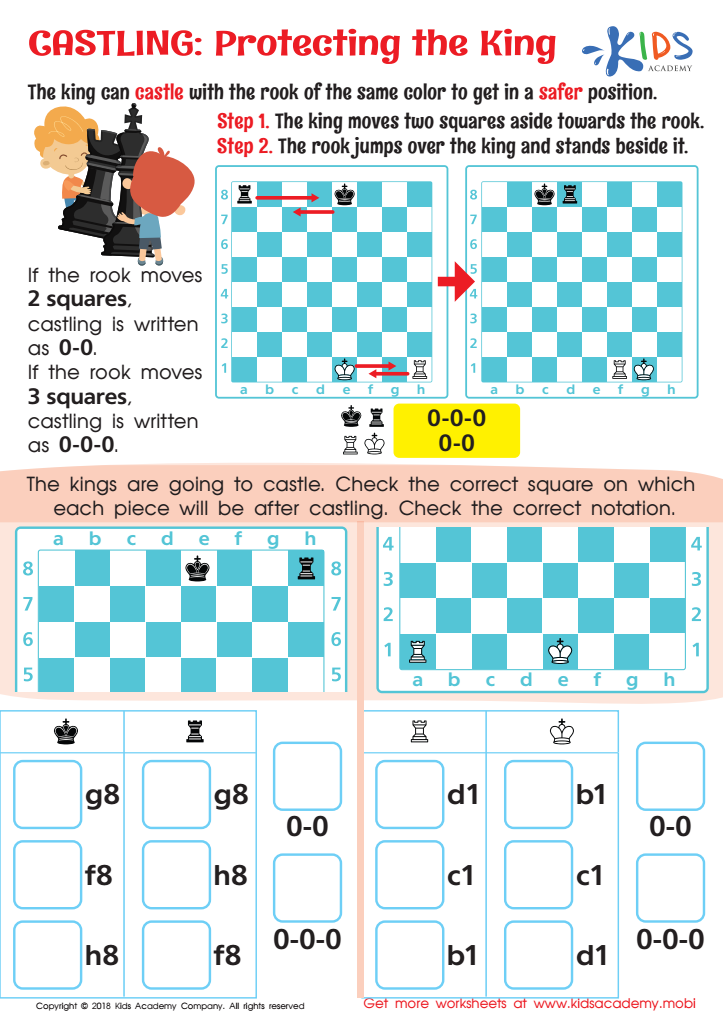
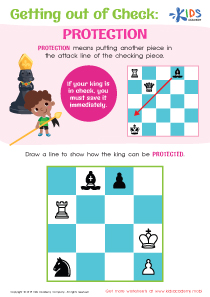
Castling: Protecting the King Worksheet






Logical thinking is a crucial skill for young children, and its development can have lasting benefits. Chess is an excellent tool for enhancing this skill, especially in children aged 6-7. At this age, kids are primed for cognitive development, and engaging activities like chess can significantly boost their logical thinking abilities.
Firstly, chess teaches children how to analyze and evaluate situations. They must consider their and their opponent’s moves, predict outcomes, and plan, training their minds to think ahead and manage multiple variables simultaneously. This kind of strategic thinking translates seamlessly into academics and everyday problem-solving.
Secondly, playing chess enhances memory. Children remember rules, strategies, and move sequences, which reinforces their memory skills. This cognitive exercise can improve their ability to recall instructions and lessons in school.
Moreover, chess fosters patience and impulse control. Young kids often act on impulse, but chess encourages them to slow down and contemplate their actions, fostering better decision-making and self-regulation.
Lastly, chess is fun and engaging, making learning through play an enjoyable experience. This positivity towards learning can increase their eagerness and motivation in educational environments.
Thus, parents and teachers should consider incorporating chess into their children’s activities to enhance logical thinking, which is foundational for academic success and life skills.