Problem-solving practice Chess Worksheets for Ages 6-7
3 filtered results
-
From - To
Discover our engaging "Problem-Solving Practice Chess Worksheets" tailored for children aged 6-7! These worksheets are designed to enhance critical thinking and strategic skills through the exciting game of chess. Each worksheet features age-appropriate problems that encourage young learners to apply logic and reasoning while improving their ability to solve challenges. With colorful illustrations and kid-friendly language, our resources make learning fun and interactive! Perfect for teachers and parents seeking to foster problem-solving skills in their children, these worksheets serve as a valuable tool to introduce the fundamentals of chess while enhancing cognitive development. Unlock your child's potential today!
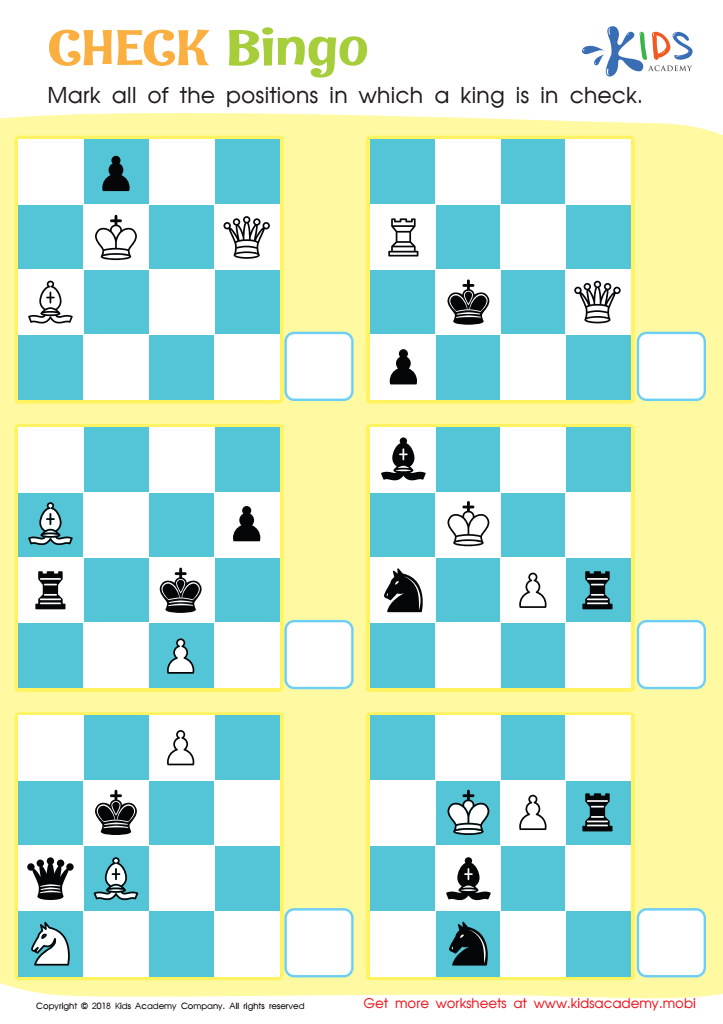
Check Bingo Worksheet
 Assign to My Students
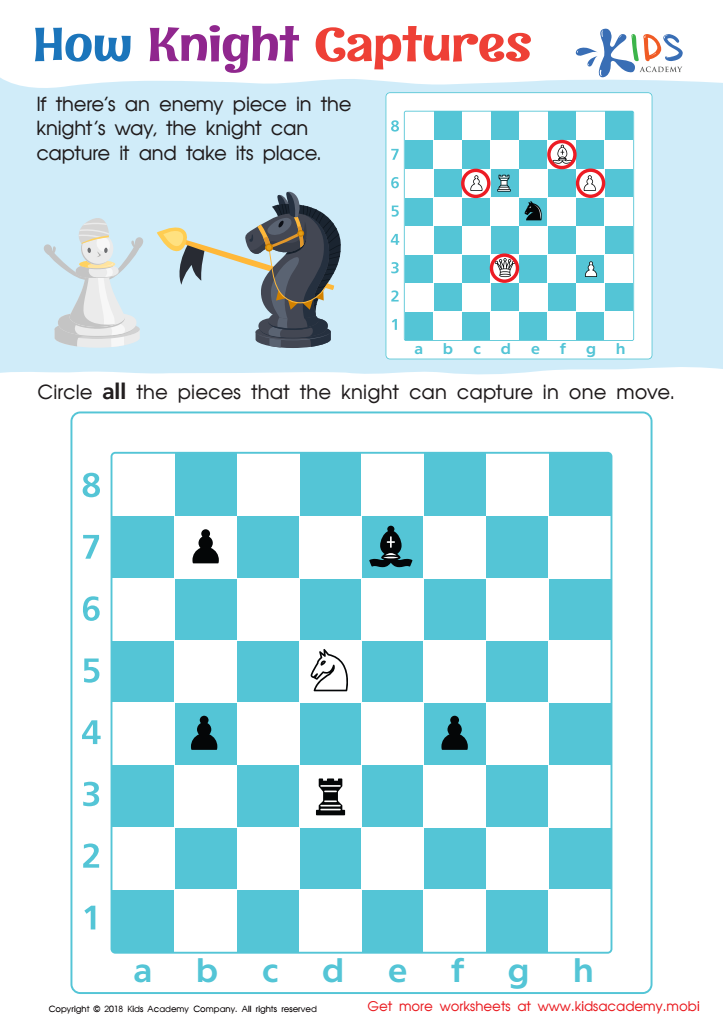
How Knight Captures Worksheet
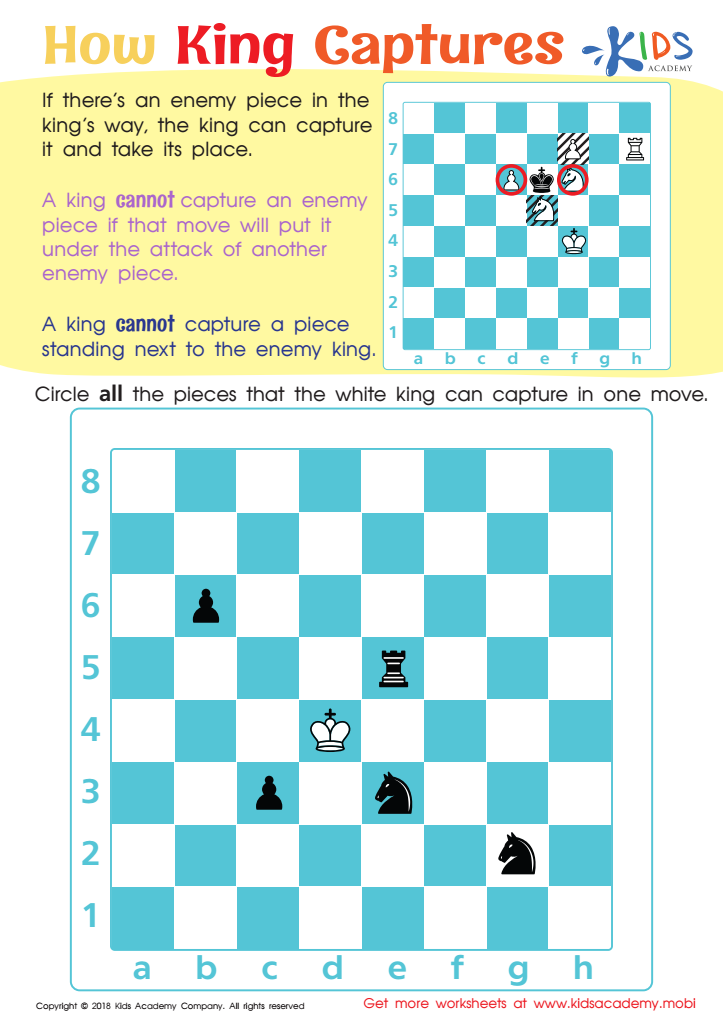
How King Captures Worksheet




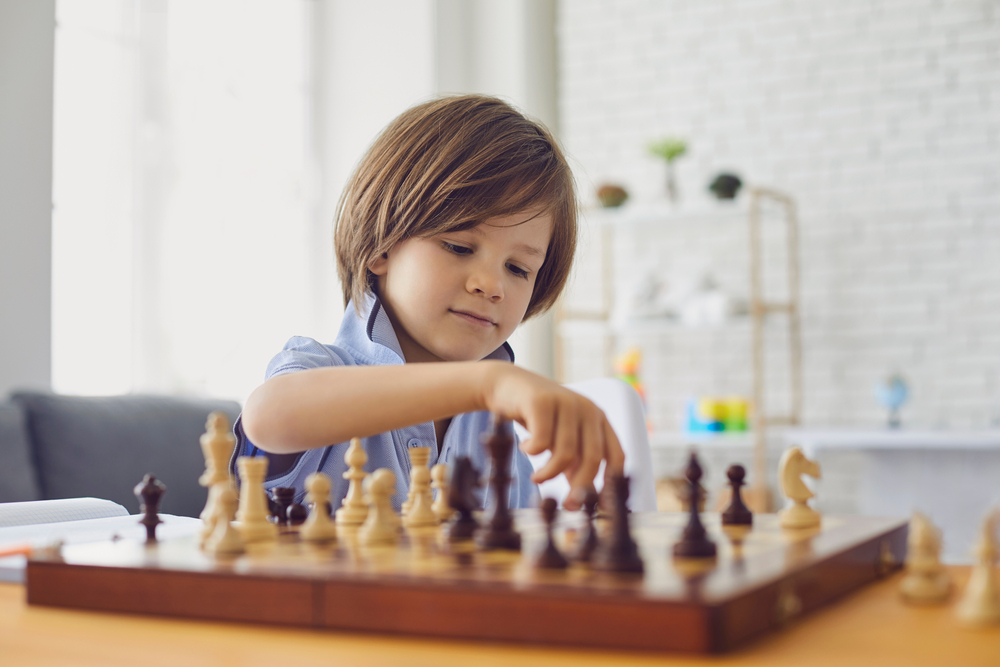


Parents and teachers should prioritize problem-solving practice through chess for children aged 6 to 7 for several compelling reasons. Chess enhances critical thinking and fosters cognitive development by requiring players to analyze complex situations, predict outcomes, and create strategic plans. Engaging in chess helps children develop patience and focus, skills essential not only in gameplay but also in academic settings and everyday life.
Moreover, chess promotes social interaction and emotional resilience. As children learn to navigate wins and losses on the chessboard, they cultivate sportsmanship and improve their ability to handle challenges constructively, which is vital for building self-esteem and confidence. Problem-solving in chess also lays the groundwork for mathematical skills, as kids learn to recognize patterns, understand spatial relationships, and improve their logical reasoning abilities.
Additionally, introducing chess in early education helps to create a stimulating environment that values intellectual engagement, encouraging a lifelong love for learning. By incorporating problem-solving practice through chess, parents and teachers equip young learners with essential skills that extend beyond the game itself, ultimately preparing them for future academic and personal success.