Handwriting improvement English for Beginners Worksheets for Ages 6-7
6 filtered results
Difficulty Level
Grade
Age
-
From - To
Subject
Activity
Standards
Our "Handwriting Improvement English for Beginners Worksheets" are designed specially for ages 6-7. These engaging worksheets help young learners develop essential handwriting skills while also expanding their English language abilities. Each activity combines fun and education to keep children motivated and excited about learning. With clear instructions and age-appropriate exercises, kids practice letter formation, spacing, and fine motor control. Perfect for home or classroom use, these worksheets lay a solid foundation for confident, legible writing. Watch your child's handwriting progress as they enjoy our thoughtfully crafted activities. Start their journey towards excellent penmanship today!
Favorites
With answer key
Interactive
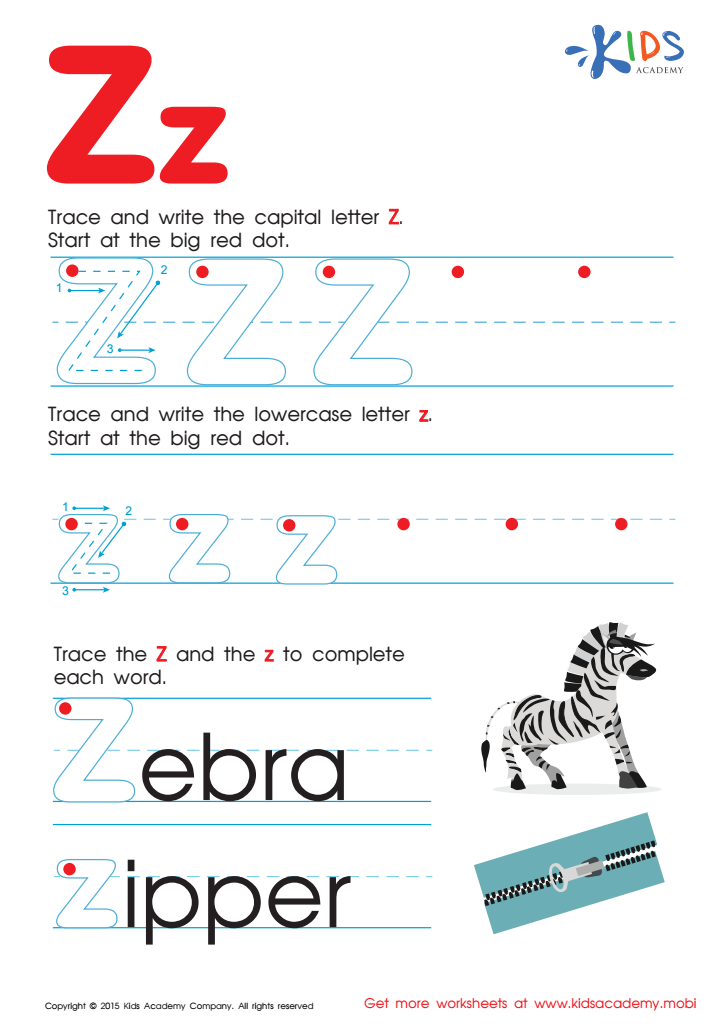
Letter Z Tracing Page
Trace and write capital "Z" and lowercase "z". Complete words "zebra" and "zipper". Be attentive and have fun! (80 words)
 Assign to My Students
Letter Z Tracing Page
Worksheet
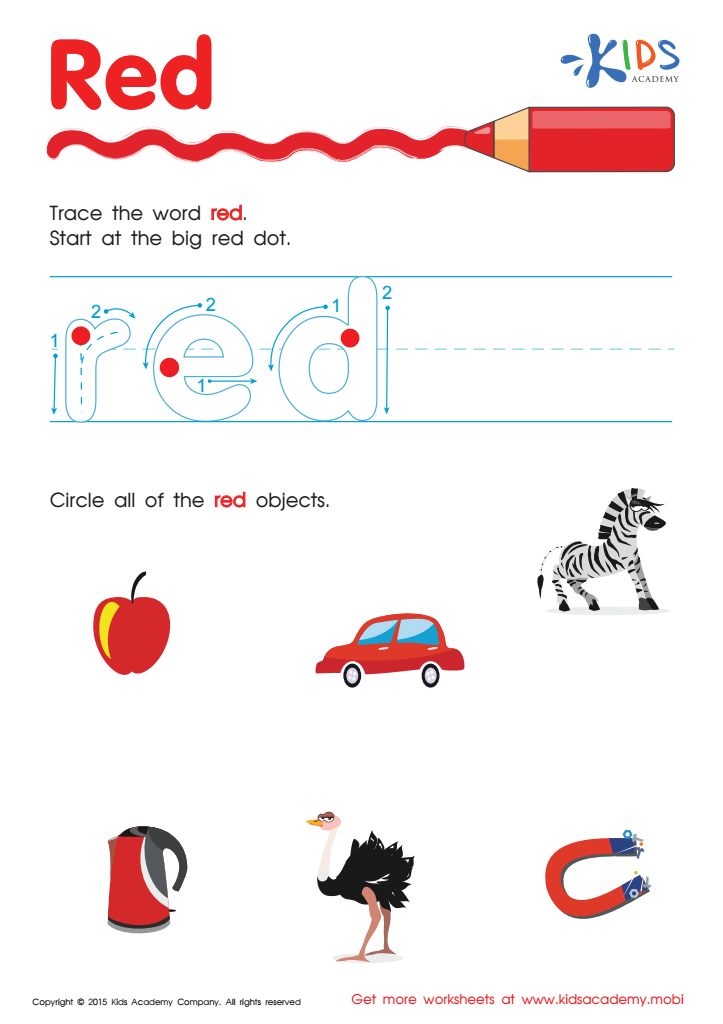
Red Tracing Color Words Printable
Trace red letter by letter, following the arrows and circling all the red objects. Look around your room and find something red. Have fun and become a handwriting master with this worksheet!
Red Tracing Color Words Printable
Worksheet
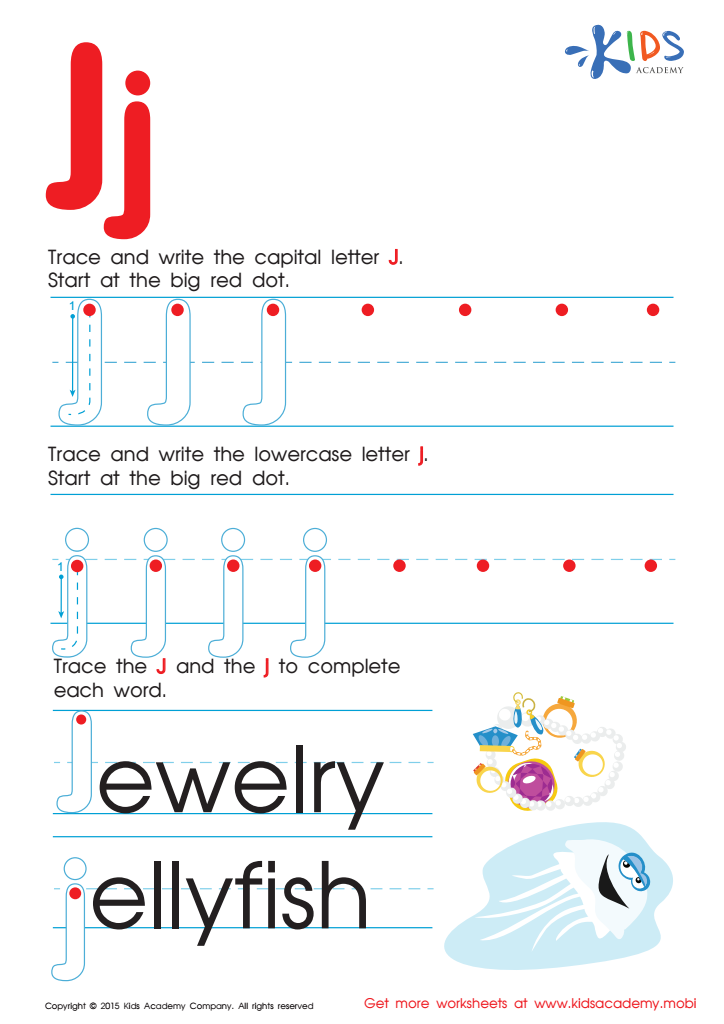
Letter J Tracing Page
Trace and write the letter "J" with our ABC worksheet - start at the big red dot! Have fun completing words like jewelry, jellyfish and more. Check out our kindergarten activities for more alphabet practice.
Letter J Tracing Page
Worksheet
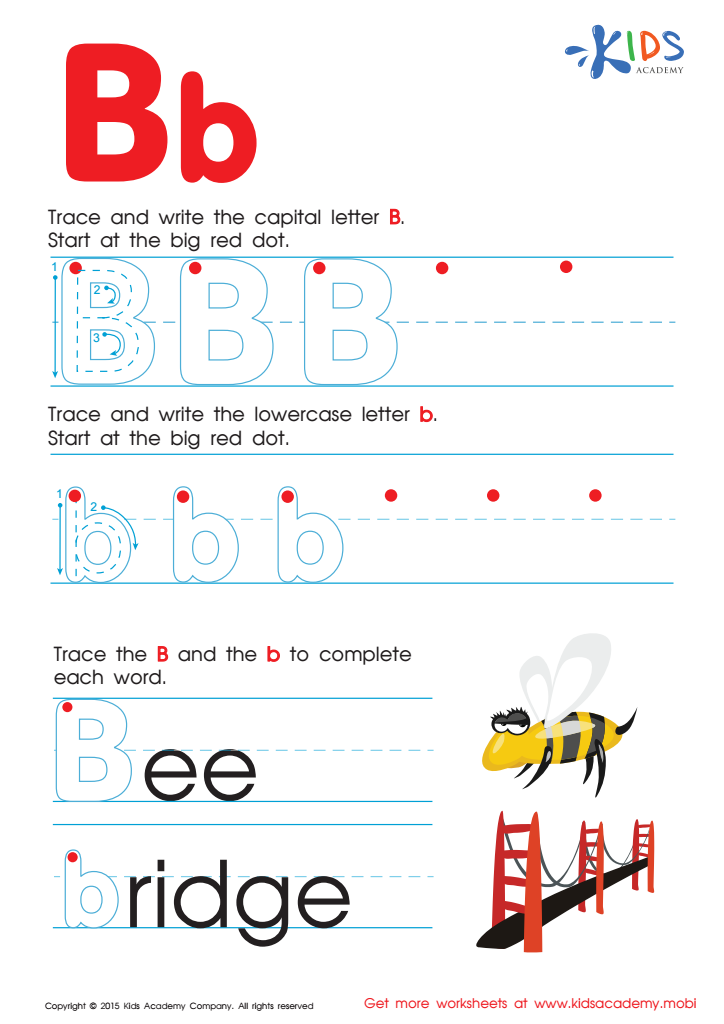
Letter B Tracing Page
Ready to learn the Alphabet? Put your pencil on the red dot and trace & write both capital & lowercase "B". Then have a look at the pictures. Catch the bee, cross the bridge & write the letters to complete the words. More ABC worksheets for kindergarten available!
Letter B Tracing Page
Worksheet
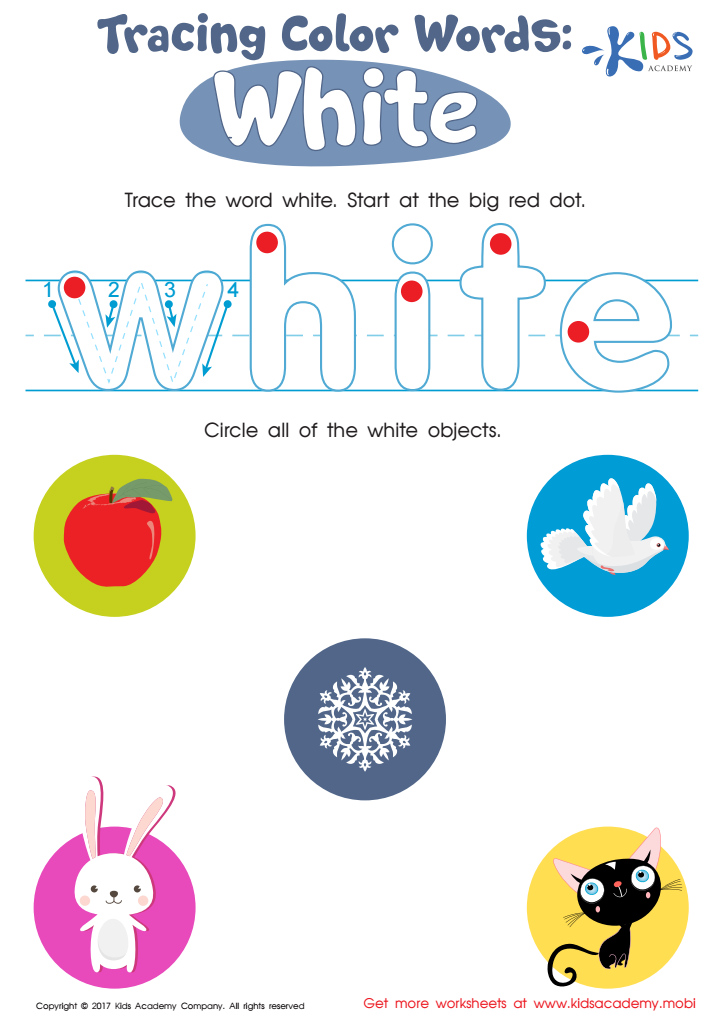
White Tracing Color Words Worksheet
This fun worksheet helps children learn color words quickly. They trace the letters and circle pictures of the color. This helps them practice reading and identifying objects, and they can do it without needing to read phonetically. Download it now and watch your child's skill grow!
White Tracing Color Words Worksheet
Worksheet
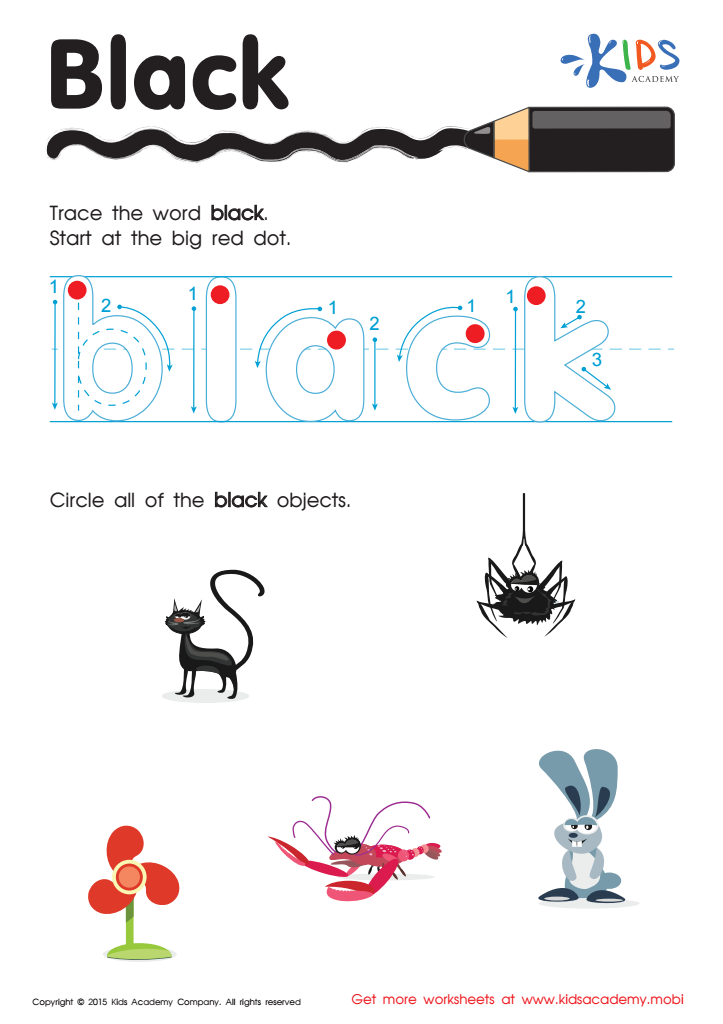
Black Tracing Color Words Printable
Tracing is essential for kids to learn good handwriting and boost their fine motor skills. This handwriting worksheet lets kids trace the word "black" letter by letter using a black crayon and spot all the black items. With this free printable, they'll have fun while writing! For more practice, check out the link.
Black Tracing Color Words Printable
Worksheet
Join Kids Academy for Free
Who is primarily going to use this learning content?




Handwriting improvement for English beginners aged 6-7 is crucial for several important reasons. First and foremost, neat and legible handwriting is foundational for effective communication. When children can write clearly, they express their thoughts more coherently, helping teachers and peers understand their ideas. This is particularly important as they start their academic journey.
Moreover, good handwriting skills are linked to overall academic performance. Studies have shown that children who write neatly tend to perform better in school because they grasp and retain information more thoroughly. This connection is due to the need for coordination, concentration, and fine motor skills, all of which are bolstered by handwriting practice.
Additionally, improving handwriting fosters a sense of pride and confidence in young students. When they can see their progress and produce work that others can read and appreciate, their self-esteem grows. This confidence often translates to greater participation and enthusiasm in the classroom.
For parents, encouraging handwriting practice at home can also strengthen the parent-child bond, offering regular opportunities for quality, focused interaction. Finally, in this digital age, where typing skills are prioritized, addressing handwriting skills ensures that children do not lose an essential, foundational skill crucial for their cognitive and academic development.