Letter tracing skills English for Beginners Worksheets for Ages 6-7
3 filtered results
-
From - To
Welcome to our Letter Tracing Skills worksheets designed specifically for English beginners aged 6-7! These engaging worksheets help young learners develop their writing abilities with easy-to-follow tracing activities. Each sheet focuses on individual letters, enabling children to master the alphabet through repetition and practice. Perfect for enhancing fine motor skills and building confidence in writing, our worksheets combine fun illustrations with educational content. As kids trace letters, they familiarize themselves with the shapes and sounds, setting a strong foundation for future language learning. Explore our collection and watch your child's skills flourish in a joyful, supportive environment!
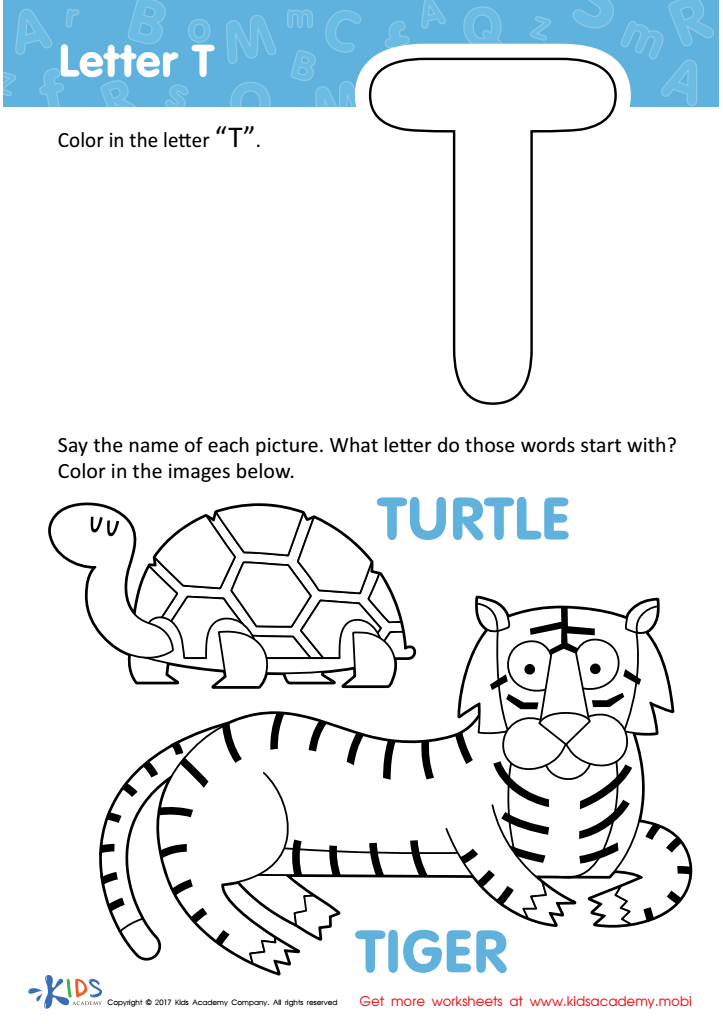
Letter T Coloring Sheet
 Assign to My Students
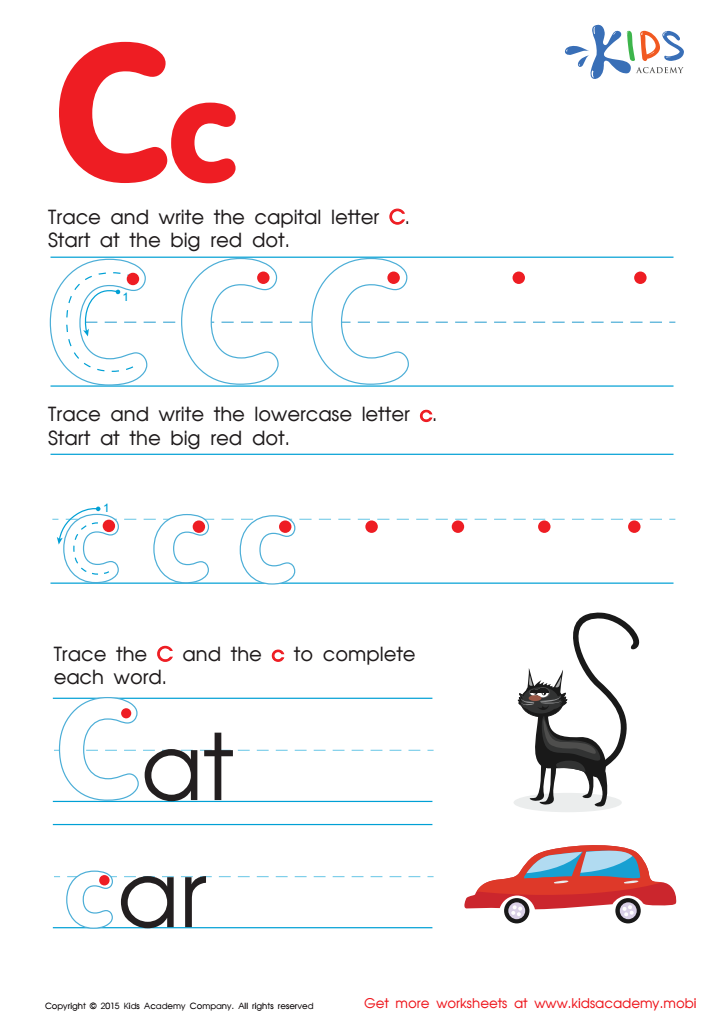
Letter C Tracing Page
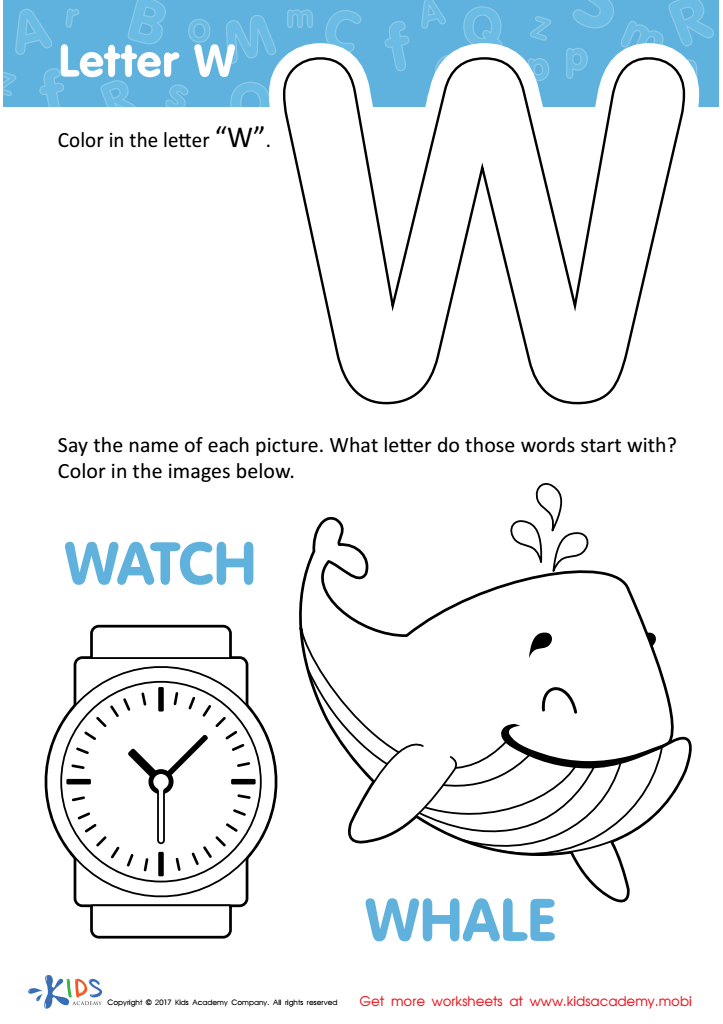
Letter W Coloring Sheet
Assign to My Students





Letter tracing skills are essential for children ages 6-7, laying a strong foundation for their literacy development. At this age, students are becoming more adept at recognizing letters and sounds, and tracing helps reinforce those connections. By practicing letter tracing, children improve their fine motor skills, which are critical for writing neatly and legibly as they progress in their education.
Parents and teachers should care about this skill because it contributes to overall academic success. Strong writing skills not only boost a child’s confidence but also enhance their ability to communicate ideas effectively. Furthermore, letter tracing activities make learning engaging, often combining visual, auditory, and kinesthetic elements that cater to various learning styles.
Incorporating letter tracing in early education fosters a passion for literacy, preparing students for more advanced reading and writing tasks. This methodical approach enhances letter formation and word recognition, crucial for developing reading abilities—a cornerstone of lifelong learning. Lastly, consistent practice through tracing cultivates positive habits, instilling discipline, patience, and persistence in young learners as they embark on their educational journeys. Thus, prioritizing letter tracing during this pivotal age is beneficial for both academic achievement and holistic development.