Astronomy basics Worksheets for Ages 6-7
3 filtered results
-
From - To
Explore the wonders of the universe with our Astronomy Basics Worksheets designed especially for kids aged 6-7! These engaging, printable activities introduce young learners to the solar system, planets, stars, and more. Through fun puzzles, matching games, and simple explanations, children can develop a solid foundation in astronomy while boosting their critical thinking and observation skills. Perfect for classroom use or homeschooling, these worksheets make learning about space an exciting adventure. Inspire your child's curiosity and ignite a passion for science with our thoughtfully crafted educational resources. Visit our page to start your stellar journey today!
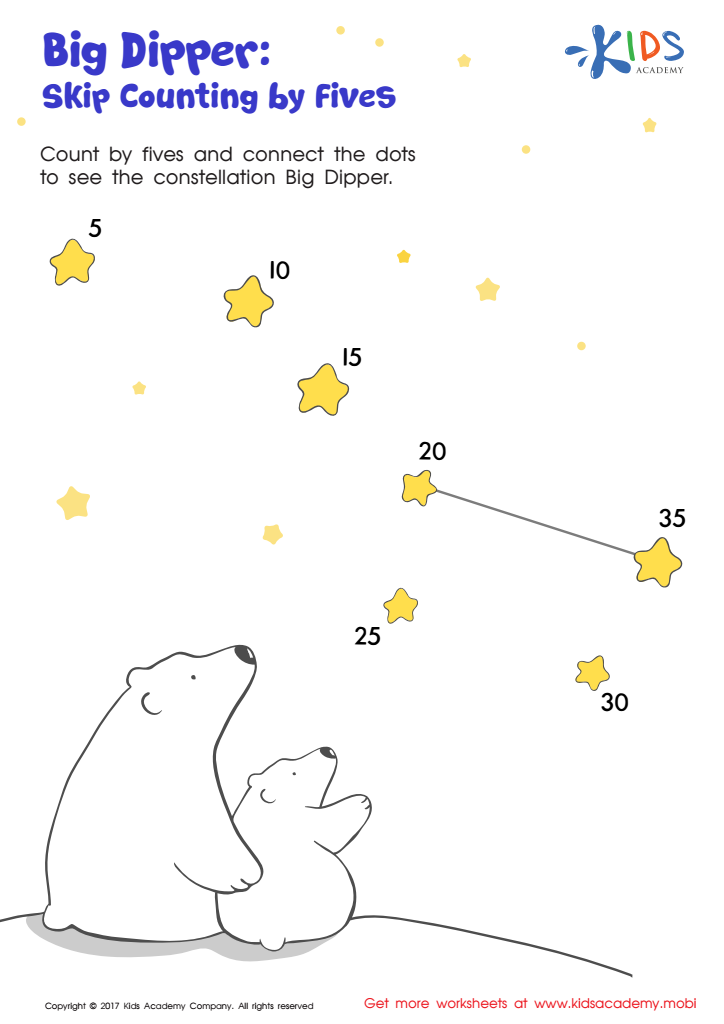
 Assign to My Students
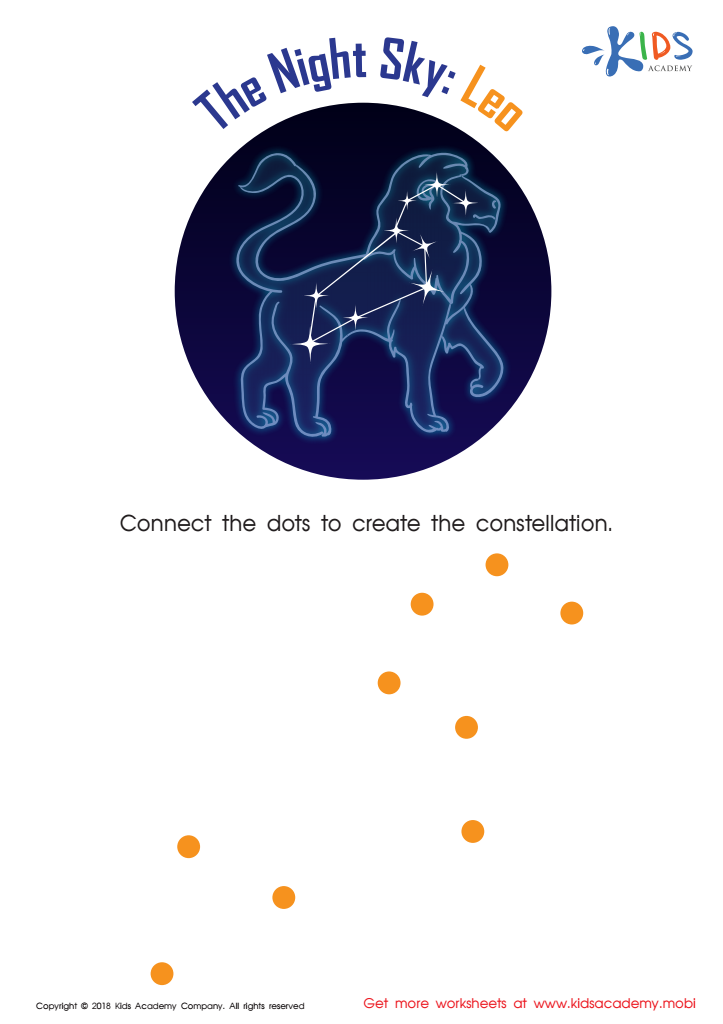
The Night Sky: Leo Worksheet
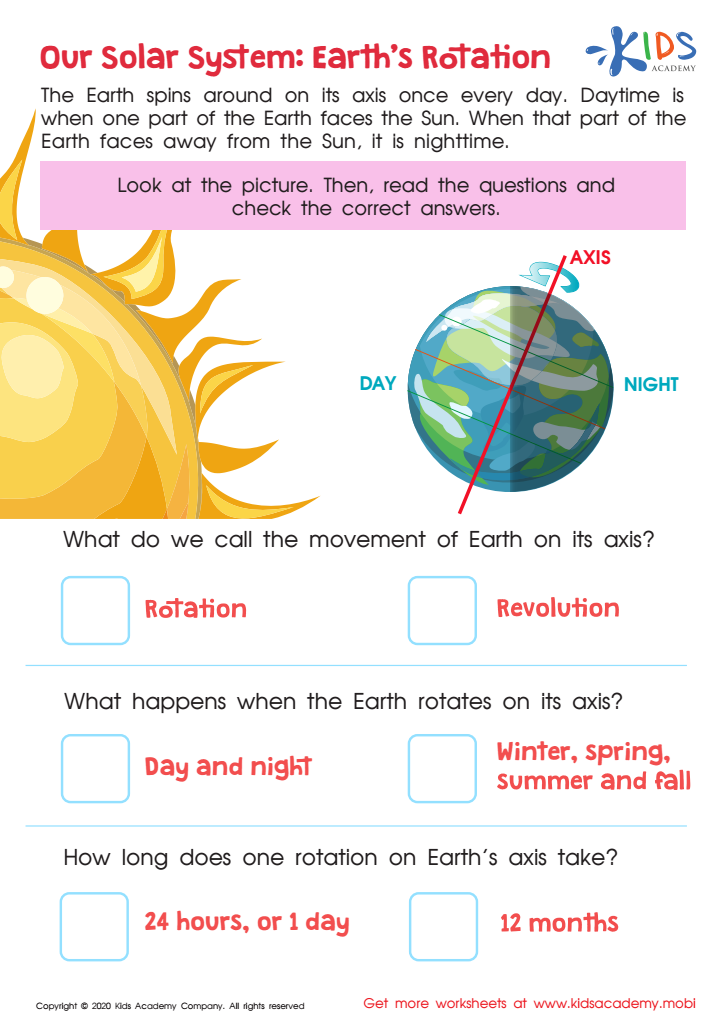
Our Solar System: Earth's Rotation Printable








Parents and teachers should care about teaching Astronomy basics to children aged 6-7 because early exposure to science fosters curiosity, critical thinking, and a love for learning. Astronomy, in particular, provides an accessible gateway into complex scientific concepts.
Children at this age are naturally inquisitive, and the vastness of space ignites their imagination. Understanding basic ideas such as the Earth’s rotation, the phases of the moon, and the presence of stars builds foundational knowledge that benefits other areas of learning. For example, identifying patterns in the night sky enhances observational skills, which are fundamental to the scientific method.
Moreover, simple astronomy facts encourage conversations about day and night, seasons, and the different planets. These discussions not only broaden a child's vocabulary but also their understanding of the world around them, fostering a more comprehensive educational experience. Contributions to an early interest in science can inspire lifelong learning and perhaps even future careers in STEM fields. Early science education also promotes critical thinking, problem-solving, and analytical skills, which are crucial for overall cognitive development.
Incorporating basic astronomy into early education nurtures curiosity, proficiency in scientific inquiry, and a sense of wonder, laying a solid groundwork for future scientific comprehension and exploration.








