Boost critical thinking Worksheets for Ages 6-7
5 filtered results
-
From - To
Boost critical thinking in young learners with our engaging worksheets designed for children ages 6-7. These fun and interactive activities promote problem solving, reasoning, and analytical skills essential for their academic growth. Each worksheet fosters creativity and encourages kids to think outside the box through exciting puzzles, games, and challenges tailored to their developmental stage. Ideal for both in-class activities and at-home learning, our materials make it easy for educators and parents to reinforce critical thinking in a playful, captivating way. Help your child develop these vital skills while having fun—explore our collection of boost critical thinking worksheets today!
 Assign to My Students
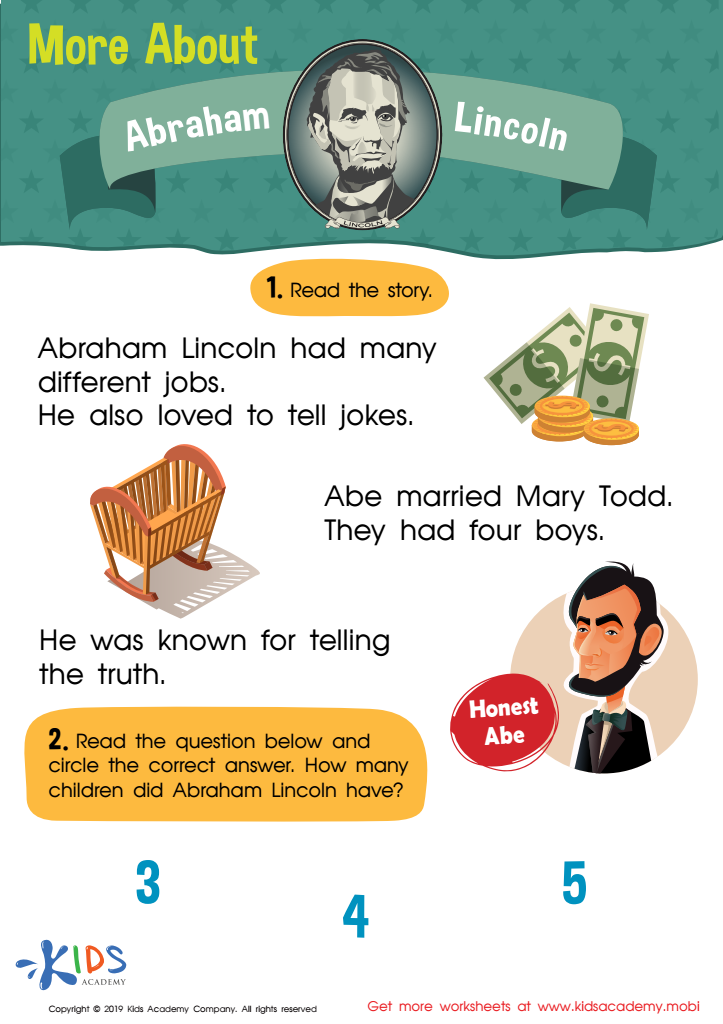
More About Abraham Lincoln Worksheet






Boosting critical thinking skills in children aged 6-7 is essential for their cognitive and social development. At this crucial stage, children begin to think more independently and form their own opinions. Encouraging critical thinking helps them analyze information, make informed decisions, and solve problems creatively. This skill set supports academic success across subjects and fosters a love for learning, as inquisitive learners tend to explore topics more deeply.
Moreover, critical thinking skills enhance a child's ability to understand different perspectives, promoting empathy and effective communication. When parents and teachers encourage questioning and exploration, children learn to evaluate evidence, think logically, and engage meaningfully in discussions—critical abilities in today’s information-rich world.
Incorporating critical thinking exercises into daily activities—such as asking open-ended questions, encouraging discussion, and providing problem-solving scenarios—can make learning both enjoyable and impactful. By nurturing these skills early on, parents and teachers empower children to navigate the complexities of life beyond the classroom, preparing them for future challenges in a rapidly changing society. Ultimately, fostering critical thinking gives children the confidence to express themselves, articulate their thoughts, and engage thoughtfully with the world around them, laying a foundation for lifelong learning and responsible citizenship.








