
Chess piece identification Worksheets for Ages 6-7
3 filtered results
Difficulty Level
Grade
Age
-
From - To
Subject
Activity
Standards
Welcome to our Chess Piece Identification Worksheets for Ages 6-7! Designed to introduce young learners to the exciting world of chess, these engaging worksheets help children recognize and understand the different chess pieces—king, queen, rook, bishop, knight, and pawn. Through fun activities and exercises, students will enhance their visual perception, improve their critical thinking, and develop essential gameplay strategies. Ideal for classroom or home use, these worksheets offer a playful yet educational approach to chess. Encourage your child's cognitive development and love for strategic games with our resourceful materials, specially crafted for young enthusiasts eager to learn and play!
Favorites
With answer key
Interactive
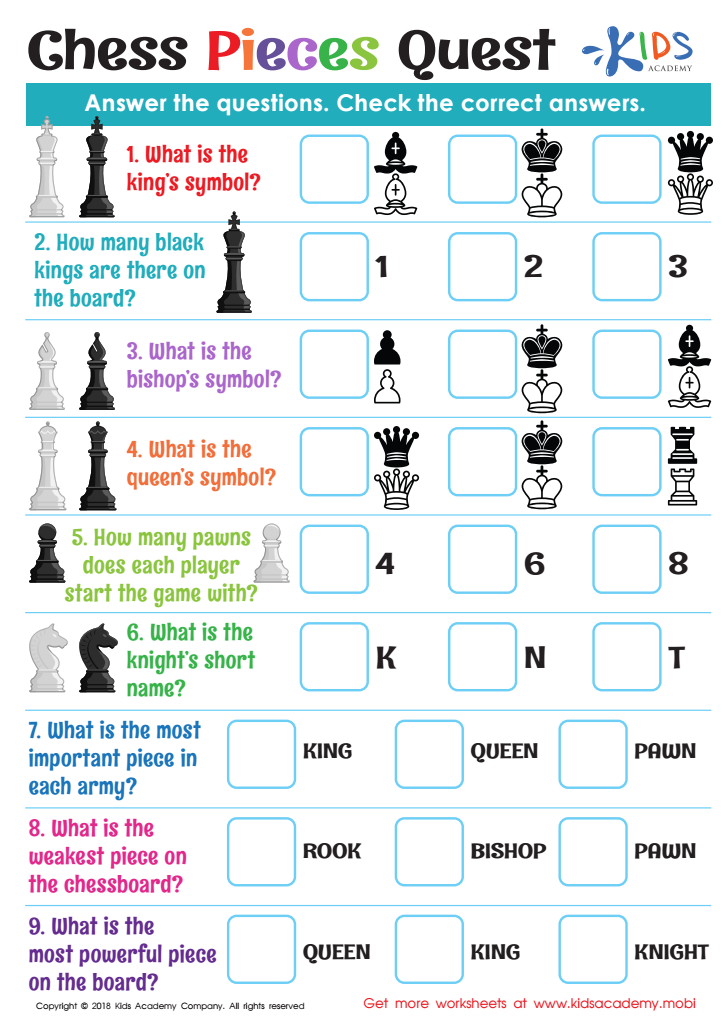
Chess Pieces Quest Worksheet
Help your child prepare for the chess quest by refreshing their knowledge of the symbols and characteristics of each chess piece. Then, have them try the 9 questions on this worksheet. These questions will assess their understanding of the symbols and how many pieces each player starts with.
 Assign to My Students
Chess Pieces Quest Worksheet
Worksheet
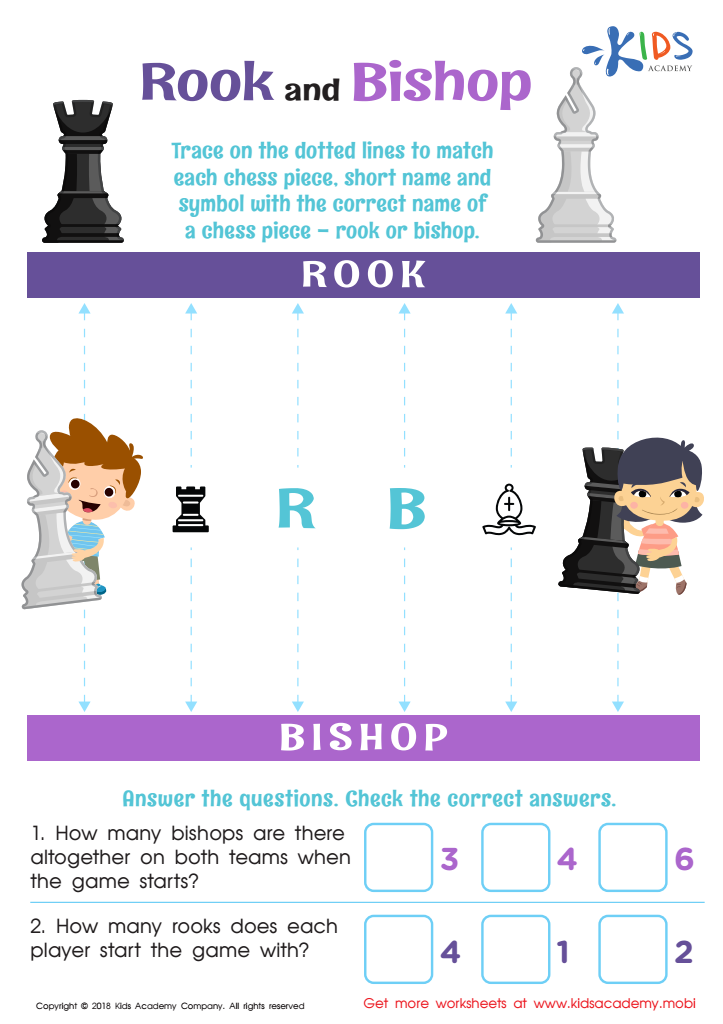
Rook and Bishop Worksheet
This tracing sheet helps your child learn chess pieces by matching each piece, short name and symbol to the correct name. After tracing, have them answer the questions and check their answers. It's a great way for them to become familiarized with chess.
Rook and Bishop Worksheet
Worksheet
Join Kids Academy for Free
Who is primarily going to use this learning content?







.jpg)
Chess piece identification is an essential skill for children ages 6-7, primarily because it lays the foundation for cognitive and analytical development. Recognizing different chess pieces—pawns, knights, bishops, rooks, queens, and kings—helps young learners engage in problem-solving, critical thinking, and strategic planning. When children understand the unique movements and characteristics of each piece, they cultivate spatial awareness and learn to visualize potential scenarios on the board, skills that are transferable to other areas of learning.
Furthermore, chess is a game rich in history and culture, fostering a sense of social interaction and sportsmanship among peers. When parents and teachers encourage children to learn about chess piece identification, they are promoting patience, focus, and resilience, qualities essential for academic success. Chess also enhances memory and concentration, as children must remember and recall how each piece moves while strategizing their approach.
In a broader sense, engaging children in chess is an enjoyable way to integrate important life skills into their education. By prioritizing chess piece identification, parents and teachers contribute to a well-rounded learning experience that stimulates intellectual growth, emotional maturity, and lifelong problem-solving abilities.








