Developing problem-solving skills Worksheets for Ages 6-7
8 filtered results
-
From - To
Explore our engaging worksheets designed for children aged 6-7, focusing on developing essential problem-solving skills. These resources are crafted to nurture critical thinking and innovative solutions through fun and interactive activities. Each worksheet provides a variety of challenges, including puzzles, logical reasoning tasks, and real-life scenarios that encourage collaboration and creativity. Whether at home or in the classroom, our problem-solving skills worksheets help young learners build confidence and independence while having fun. Ideal for early grade teachers and parents alike, these printable tools make learning an enjoyable adventure. Captivate young minds today and set the foundation for a lifetime of problem-solving success!
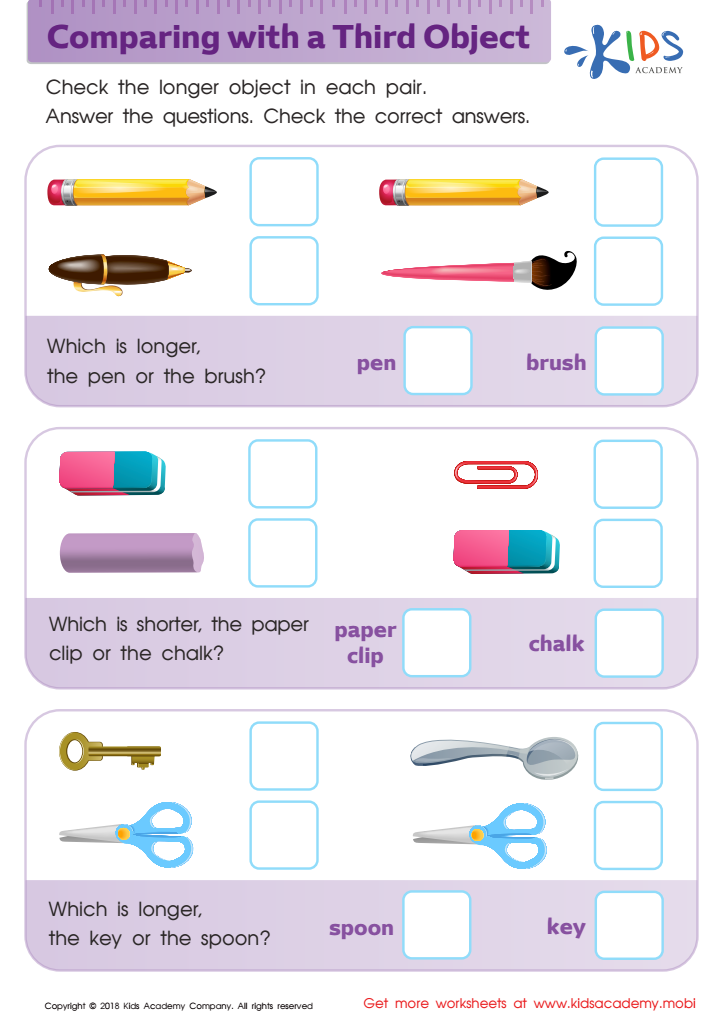
Comparing with a Third Object Worksheet
 Assign to My Students
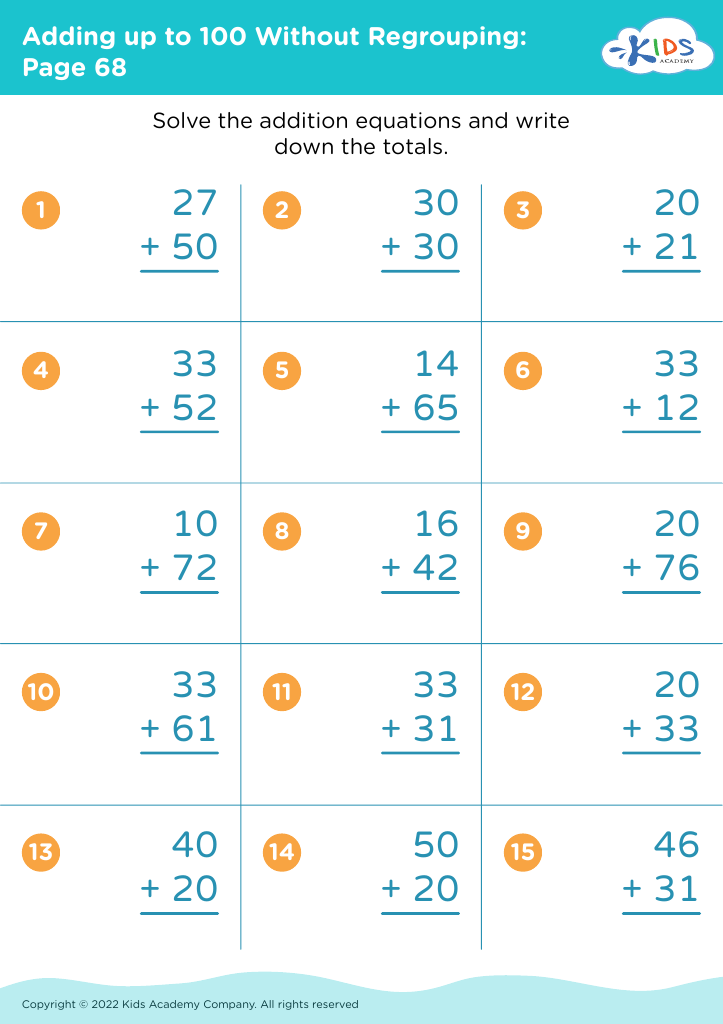
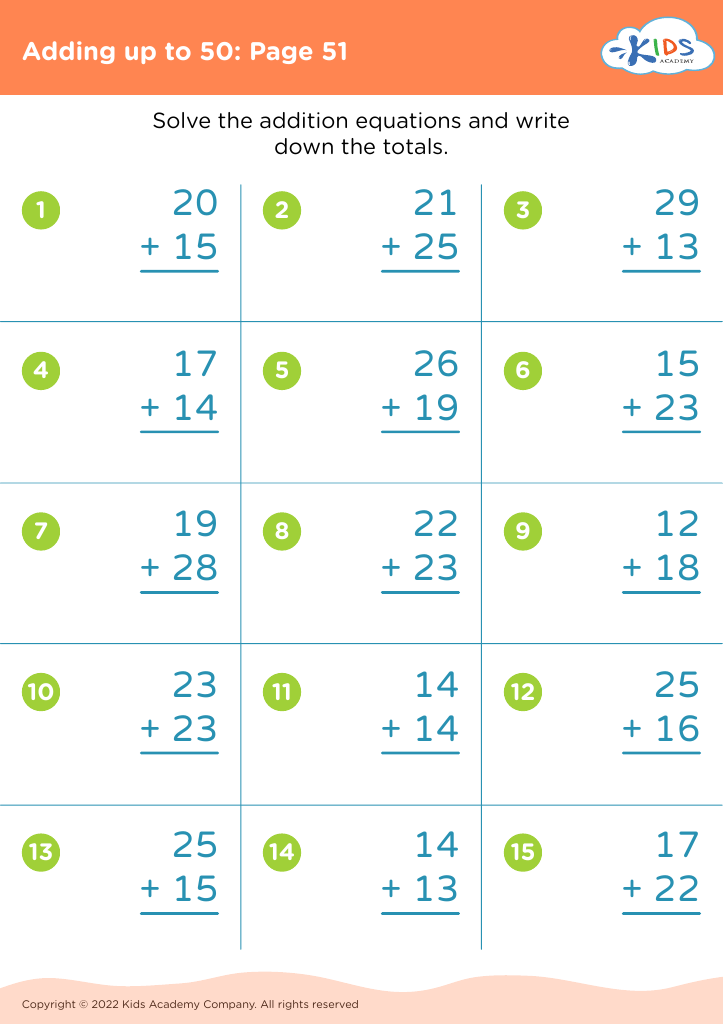
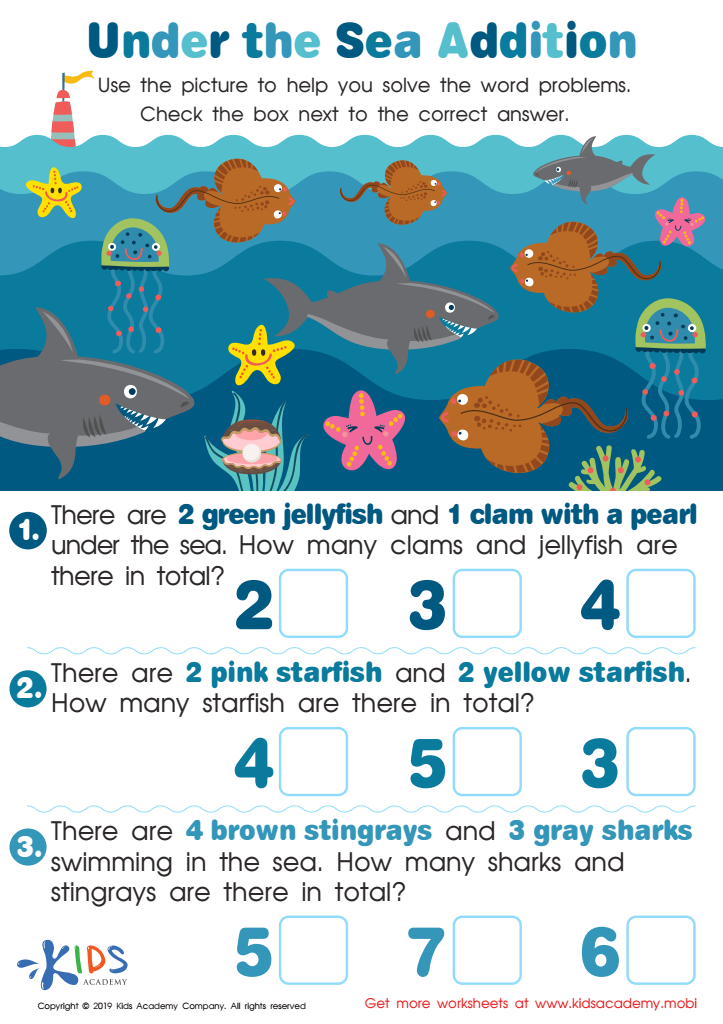
Under the Sea Addition Worksheet
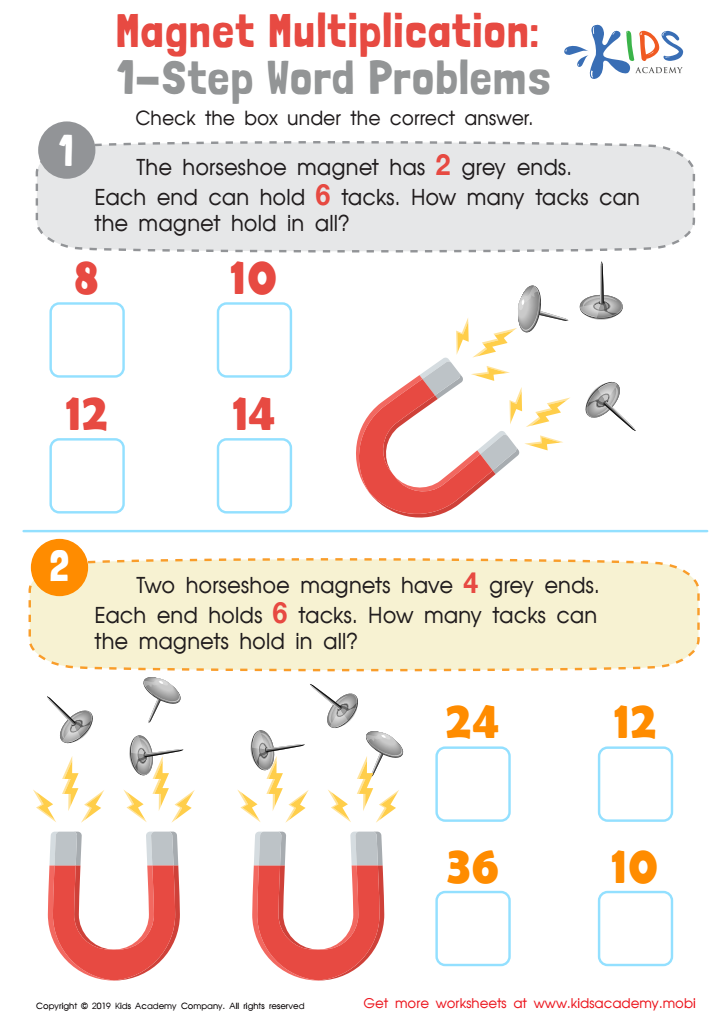
Magnet Multiplication: 1-Step Word Problems Worksheet








Developing problem-solving skills in children aged 6-7 is crucial for their overall cognitive and emotional growth. At this age, children are naturally curious and eager to understand the world around them. Teaching problem-solving enhances their critical thinking abilities, allowing them to analyze situations, consider multiple solutions, and make informed decisions. These skills are not only academic but also life skills that aid in navigating social interactions and overcoming everyday challenges.
Moreover, problem-solving fosters resilience and perseverance. When children encounter obstacles and learn to tackle them through trial and error, they develop a growth mindset. This helps them understand that failure is a part of learning and not something to fear. Furthermore, these skills prepare them to face increasingly complex problems as they progress in their education.
Encouraging problem-solving in various contexts—including math, science, and even social scenarios—grooms them for future challenges in more advanced contexts. It also encourages creativity, as they learn that there can be multiple approaches to a single problem. In essence, nurturing problem-solving skills at this formative age lays the foundation needed for academic success and personal empowerment throughout their lives, making it a priority for both parents and educators.








