Differentiating push/pull Worksheets for Ages 6-7
3 filtered results
-
From - To
Explore our engaging Differentiating Push/Pull Worksheets designed specifically for children aged 6-7! These interactive resources help young learners understand the concepts of push and pull through fun activities and colorful illustrations. Each worksheet is crafted to accommodate varying skill levels, ensuring that every child can participate and learn at their own pace. From identifying objects that push and pull in everyday life to applying these concepts through hands-on exercises, these worksheets provide a comprehensive and enjoyable learning experience. Foster your child's critical thinking and motor skills with our thoughtfully designed worksheets that promote active learning in a playful approach!
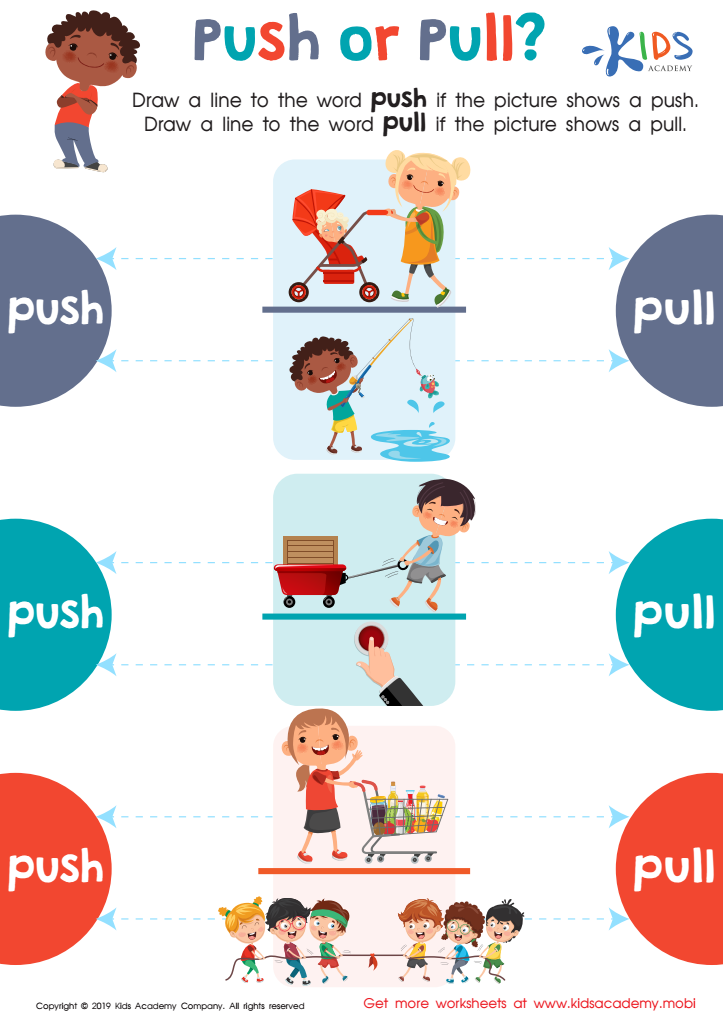
Push or Pull? Worksheet
 Assign to My Students
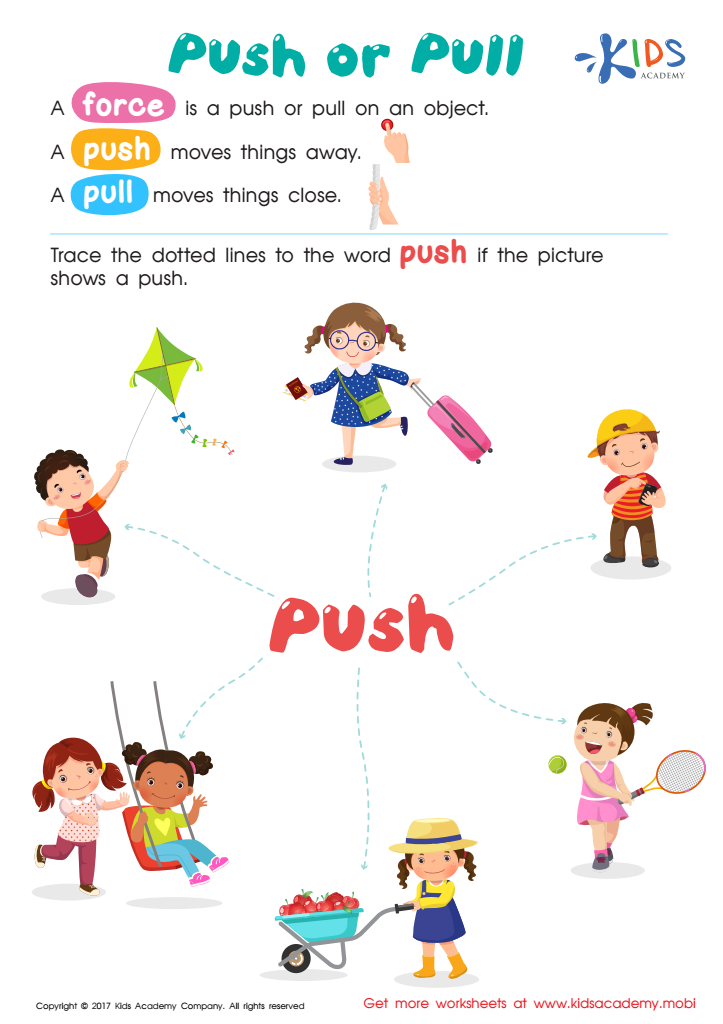
Push or Pull Worksheet
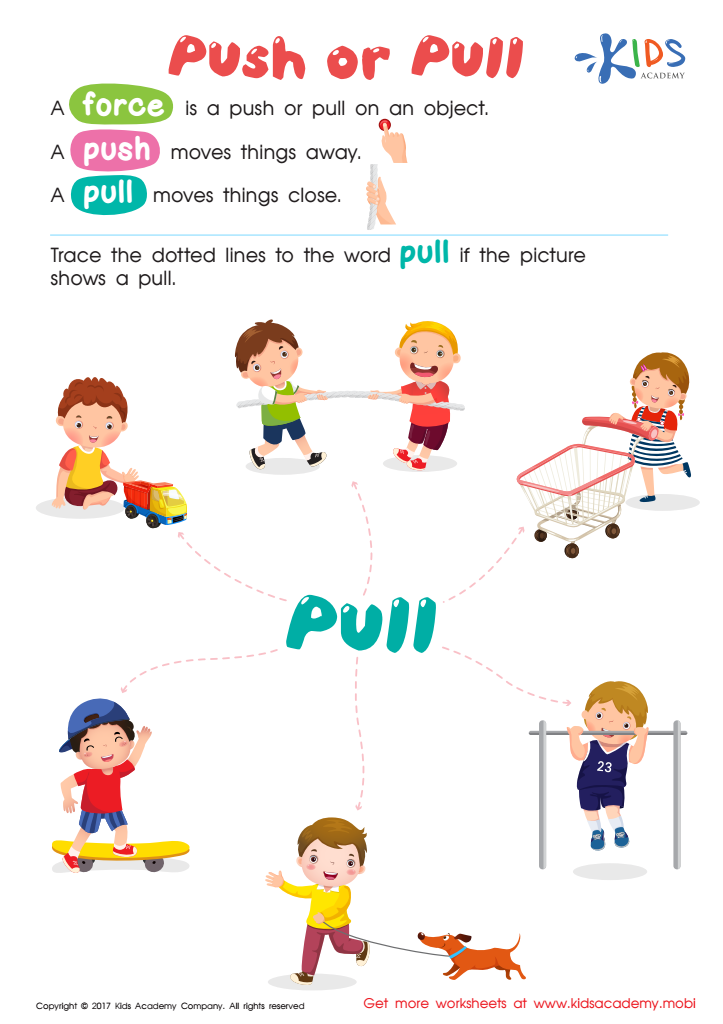
Pull or Push Worksheet



.jpg)



Differentiating push/pull strategies for children aged 6-7 is essential for fostering effective learning experiences. At this age, children exhibit varied interests, strengths, and learning styles. Using a push/pull approach involves tailoring instruction to challenge or support individual students, ensuring they remain engaged and motivated.
Push strategies involve challenging students by offering advanced materials or complex tasks. This approach encourages gifted learners to stretch their abilities, fostering critical thinking and problem-solving skills. On the other hand, pull strategies provide additional support to those who may struggle with certain concepts, ensuring they grasp foundational skills before progressing.
By implementing these differentiation methods, teachers and parents can create a more inclusive classroom environment. It helps students feel valued and understood, leading to improved self-esteem and academic performance. Moreover, differentiating instruction supports social-emotional development, as children learn to collaborate with peers at different levels.
Ultimately, caring about push/pull differentiation means recognizing that each child is unique. Emphasizing individualized learning not only boosts academic success but also cultivates a love for learning, inspiring lifelong curiosity and growth. Therefore, by prioritizing these strategies, parents and teachers play a crucial role in shaping well-rounded, confident learners.








