Differentiating shapes Worksheets for Ages 6-7
5 filtered results
-
From - To
Enhance your child's geometric skills with our Differentiating Shapes Worksheets for Ages 6-7. Our carefully crafted activities focus on identifying, comparing, and distinguishing various shapes to build a strong foundation in early math. With a range of engaging exercises, children won't just recognize shapes—they'll understand their properties, the fundamental differences among them, and the significance in everyday contexts. These worksheets cater to different learning paces, fostering confidence and ensuring no child is left behind. Perfect for parents and educators, our resources make learning interactive and fun, setting young learners up for future success in mathematics.
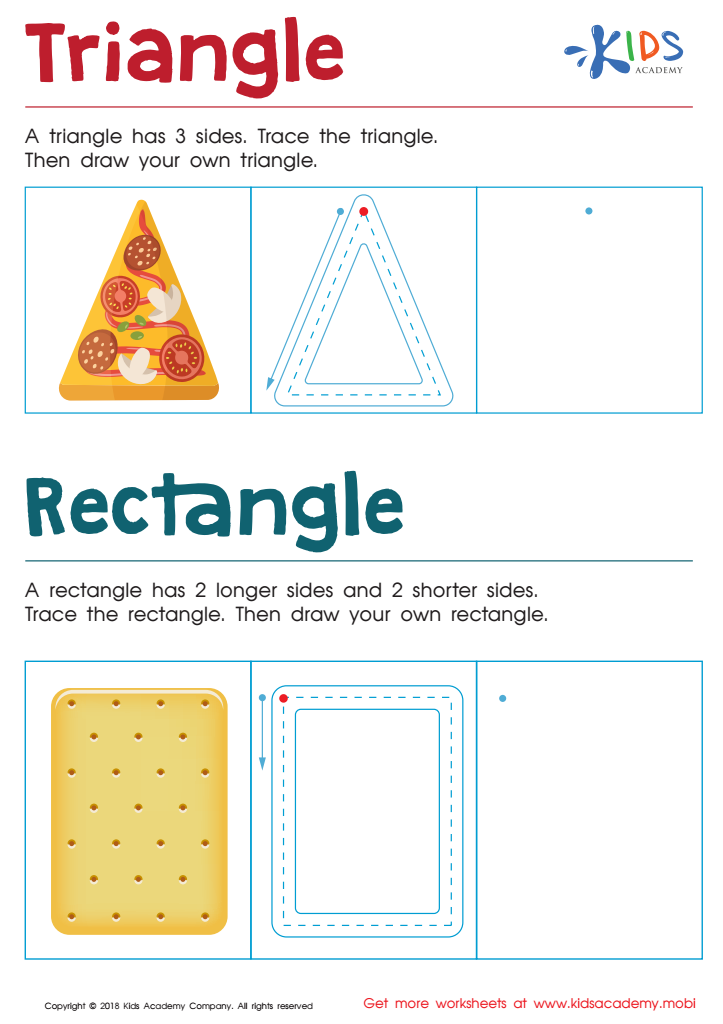
Triangle Rectangle Worksheet
 Assign to My Students
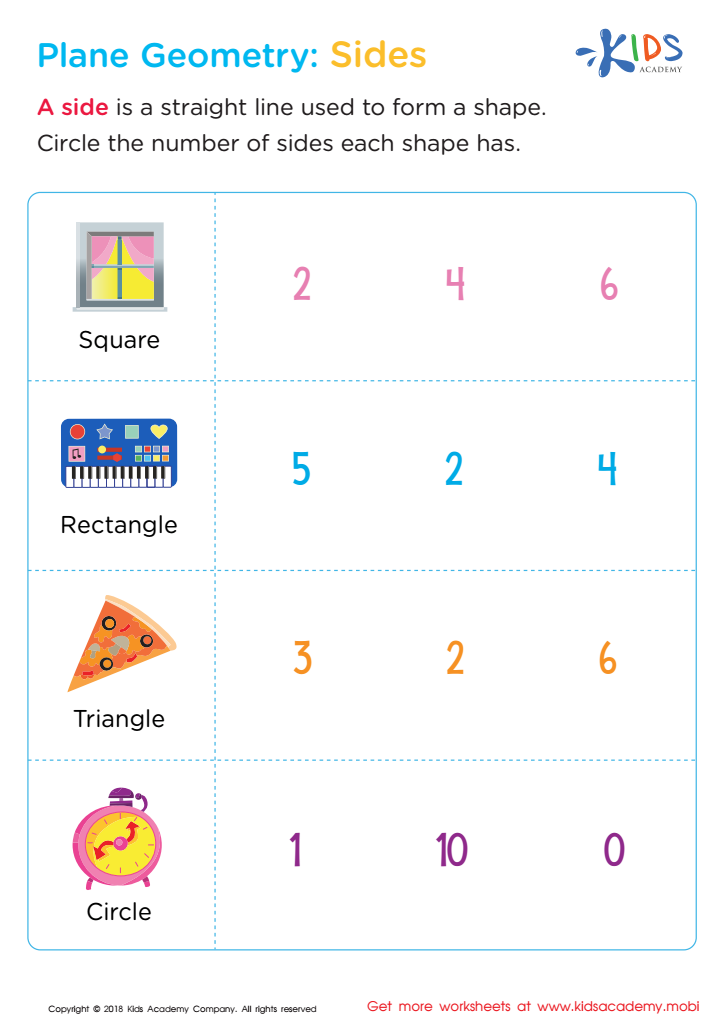
Plane Geometry: Sides Worksheet
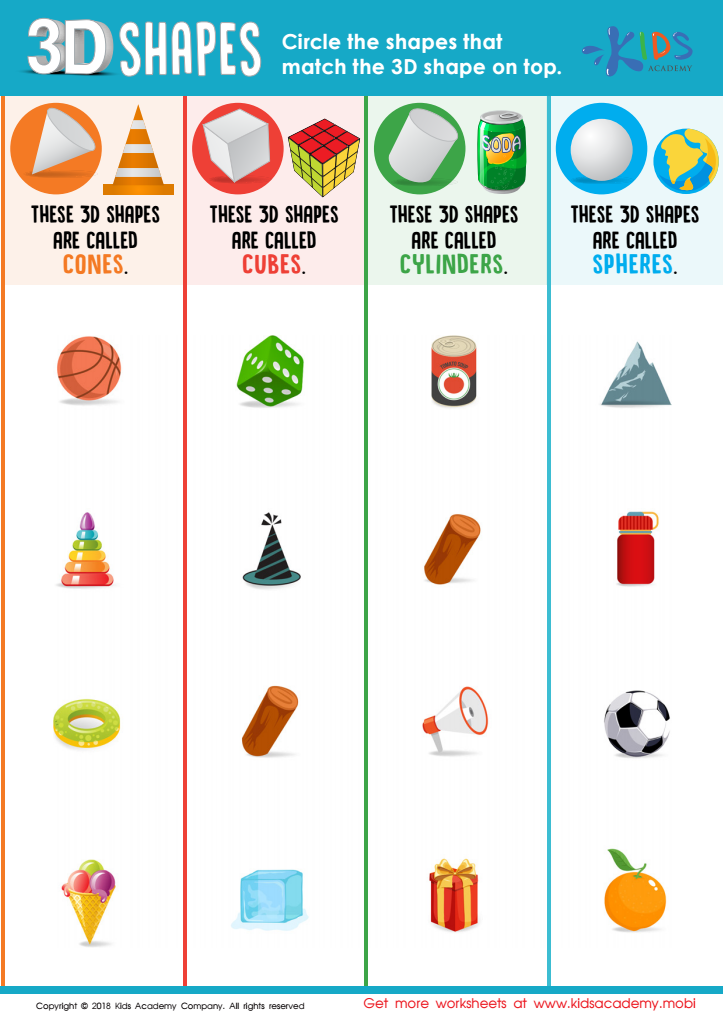
3D Shapes Worksheet








Differentiating shapes is crucial for children aged 6-7 as it lays the foundation for essential cognitive and perceptual skills. At this stage, kids transition from recognizing simple shapes to understanding more complex geometric concepts, which are integral to everyday tasks and academic disciplines like mathematics and science.
Engaging children in shape differentiation fosters spatial awareness, helping them comprehend space, distance, and dimensions. These skills are not just confined to academics but are also vital for daily activities such as navigating spaces and understanding maps and diagrams.
Moreover, differentiating shapes enhances problem-solving abilities and critical thinking. When children sort shapes, compare their properties, and classify them, they cultivate analytical skills that benefit mathematical thinking and problem-solving later in life.
Socially and emotionally, learning about shapes can boost a child’s confidence. Success in shape differentiation can build a child’s self-esteem and encourage a positive attitude toward learning. Teachers and parents can make this process engaging through hands-on activities, interactive games, and relatable examples, fostering not only cognitive development but also a love for learning.
In conclusion, focusing on shape differentiation at ages 6-7 supports a child's overall cognitive development, problem-solving abilities, and confidence, forming a crucial part of their educational journey.








