
Geography skills Worksheets for Ages 6-7
3 filtered results
Difficulty Level
Grade
Age
-
From - To
Subject
Activity
Standards
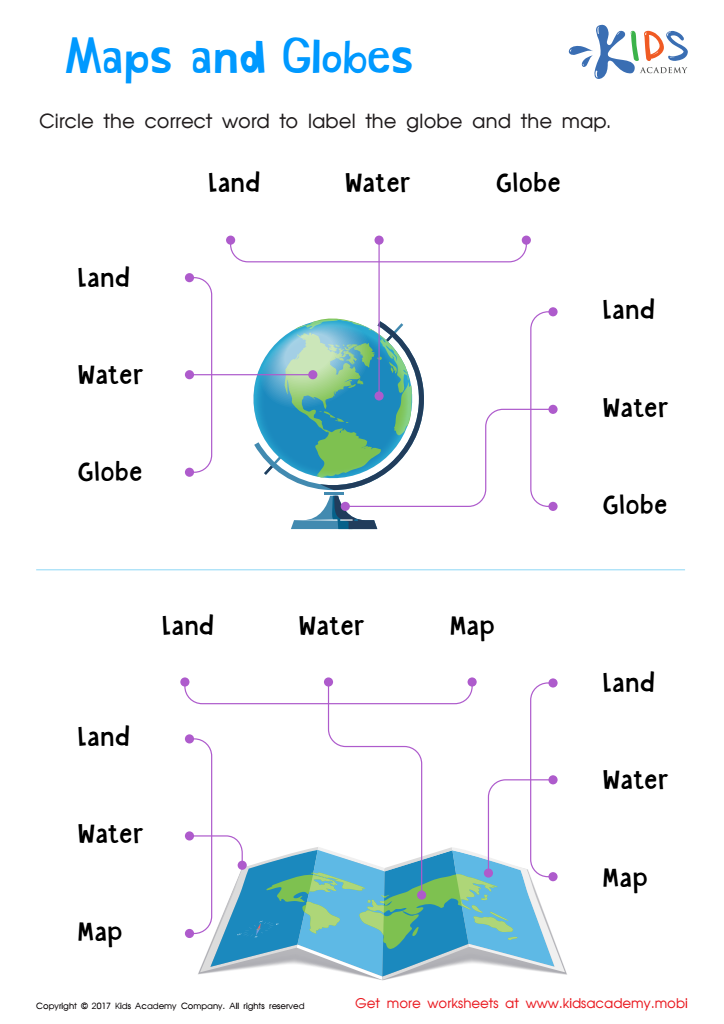
Discover engaging Geography Skills Worksheets for ages 6-7 at Kids Academy! Our expert-designed resources ignite curiosity in young learners, teaching essential concepts like map reading, directions, and basic geography terms through fun, interactive activities. Perfect for home or classroom use, these printable worksheets help children build critical thinking and spatial awareness. Encourage your child's exploration of the world with vibrant, age-appropriate exercises tailored to foster a love for geography. Visit Kids Academy to access a variety of worksheets that make geography fun and easy to understand for young minds!
Favorites
With answer key
Interactive
 Assign to My Students
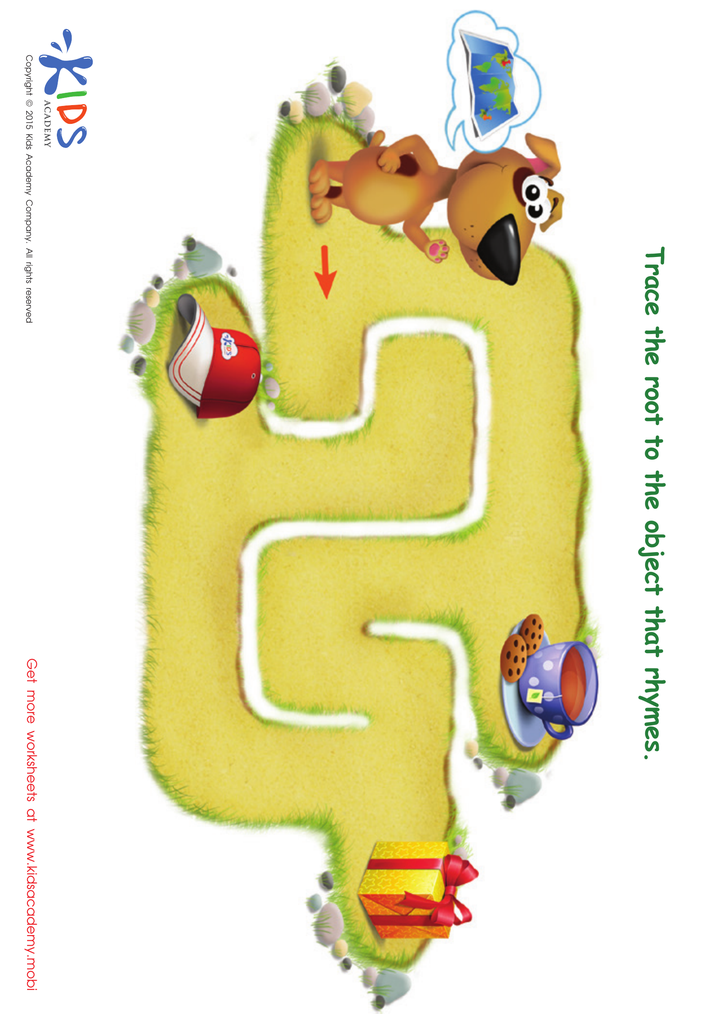
Map Rhyming Words Worksheet
Get them now and practice your skills while having fun playing. Find words that rhyme, trace the roots and enjoy the journey!
Map Rhyming Words Worksheet
Worksheet
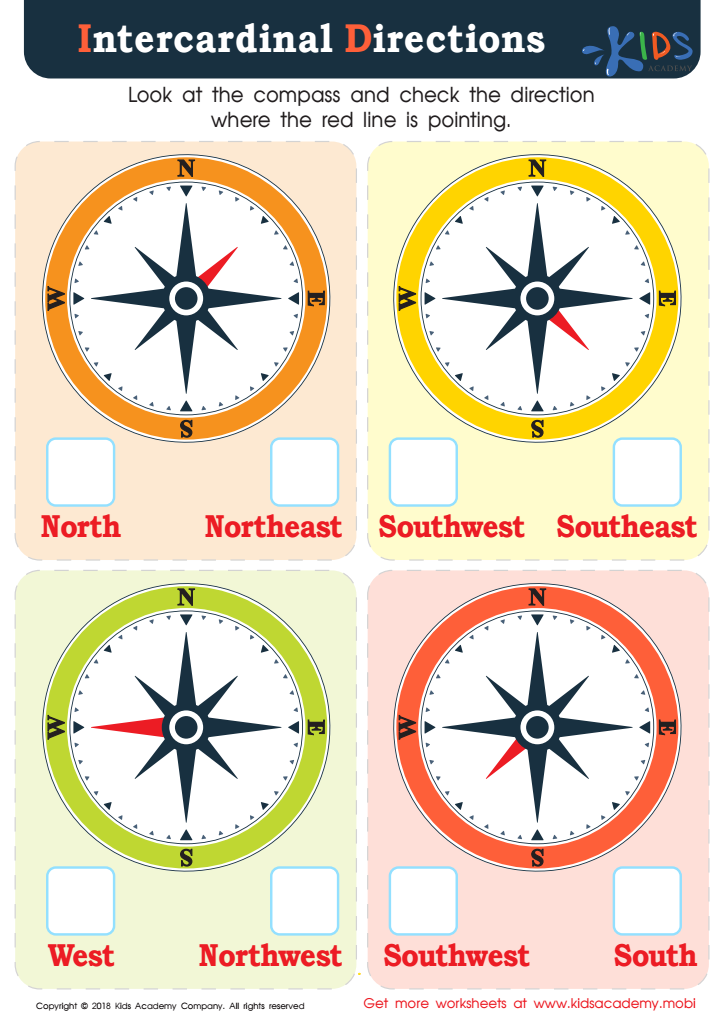
Intercardinal Directions Worksheet
Young students often don't get to practice cardinal and intercardinal directions in the digital age, but it's an important social studies and geography concept to learn. This PDF provides colorful compasses for them to practice with, giving them a real-world skill for common curriculum and independent living.
Intercardinal Directions Worksheet
Worksheet
Join Kids Academy for Free
Who is primarily going to use this learning content?






Parents and teachers should care about geography skills for ages 6-7 as these formative years build the foundation for a child's understanding of the world. At this age, children are naturally curious, and introducing geography nurtures this curiosity. It helps them comprehend spatial relationships, which is essential for everyday tasks and more complex problem-solving skills later in life.
Geography provides context to the children’s surroundings, fostering a sense of place and identity. Knowing about different places, cultures, and landscapes cultivates empathy and global awareness, critical traits in our increasingly interconnected world. This early exposure can promote respect for diversity and cross-cultural understanding, encouraging children to appreciate the wide variety of human experiences.
Additionally, geography integrates well with other core subjects, enhancing overall academic development. For instance, learning about different countries can enrich vocabulary and reading skills, while mapping activities can support mathematical concepts like scale and proportion.
Moreover, geography-related activities such as puzzles and interactive maps boost fine motor skills and cognitive development. By helping children make connections between their immediate environment and the larger world, parents and teachers lay the groundwork for informed, inquisitive, and compassionate future citizens. Thus, fostering geography skills early on is essential for holistic educational and personal growth.








