Identifying story elements Worksheets for Ages 6-7
4 filtered results
-
From - To
Enhance your child's reading comprehension with our "Identifying Story Elements Worksheets" designed for ages 6-7! These engaging worksheets help young learners recognize key components of stories, including characters, settings, plots, and themes. By practicing these vital narrative elements, children develop critical thinking skills and a deeper understanding of storytelling. Our user-friendly printable materials feature colorful illustrations that keep kids motivated while they explore their favorite tales. Ideal for classroom use or home learning, these worksheets are a fantastic tool for building foundational literacy skills. Foster a love for reading and storytelling in your child today!
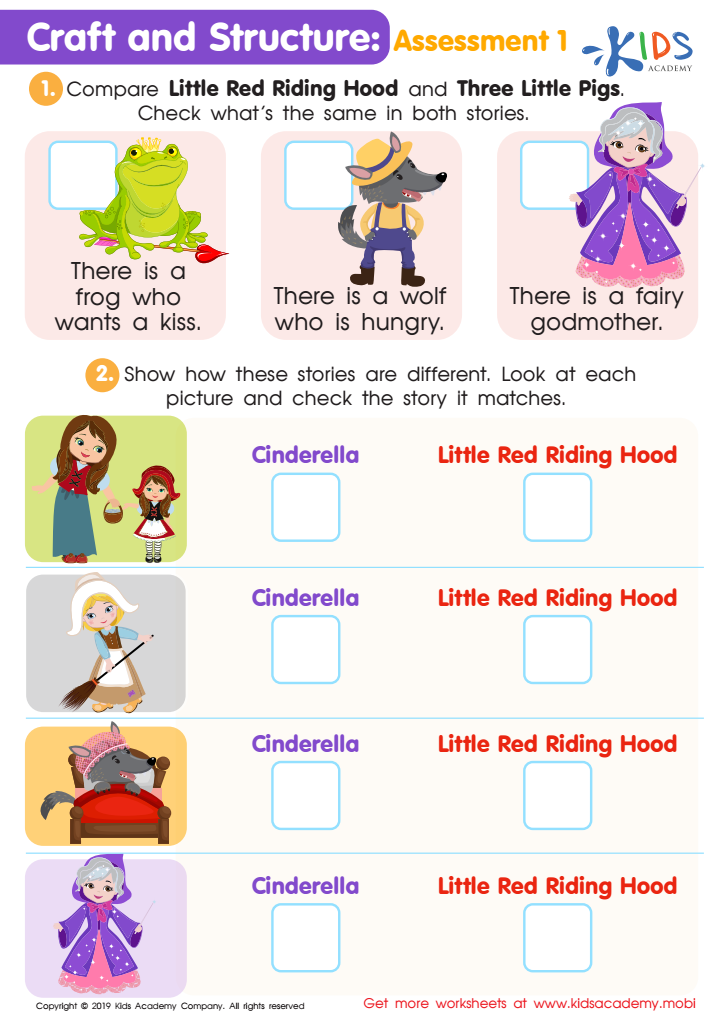
Craft and Structure: Assessment 1 Worksheet
 Assign to My Students
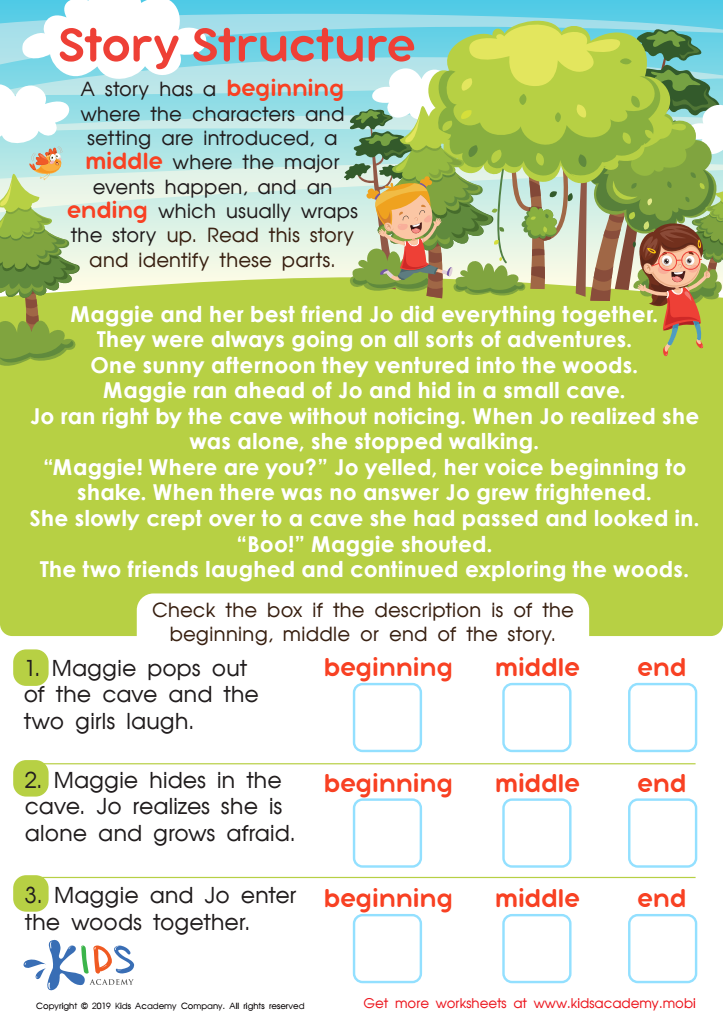
Story Structure Worksheet
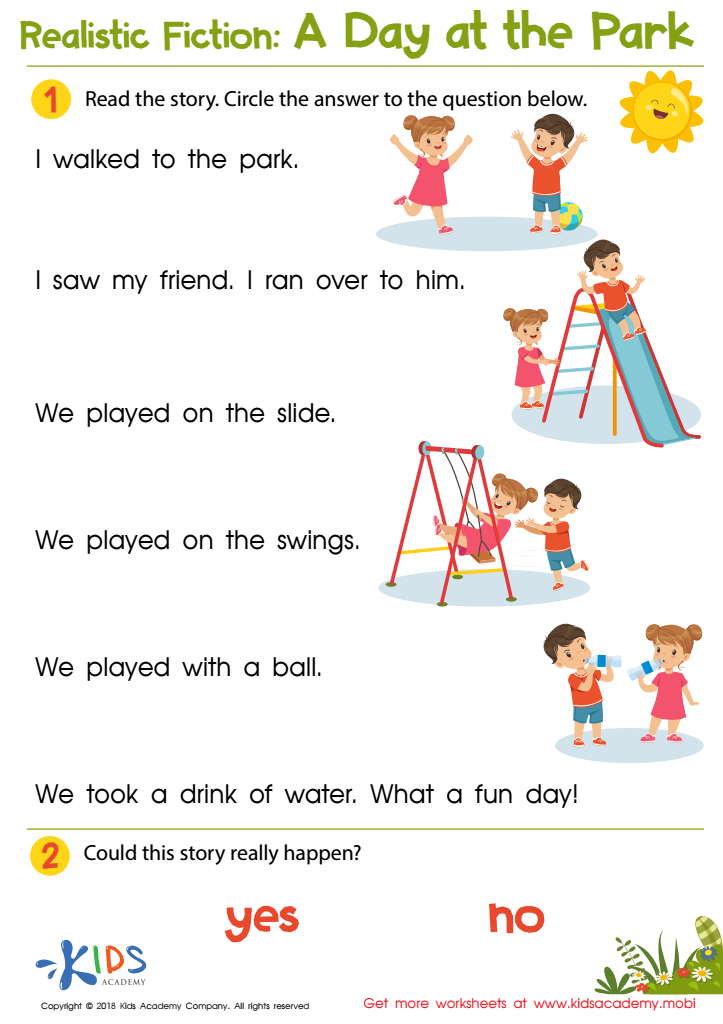
A Day at the Park Worksheet
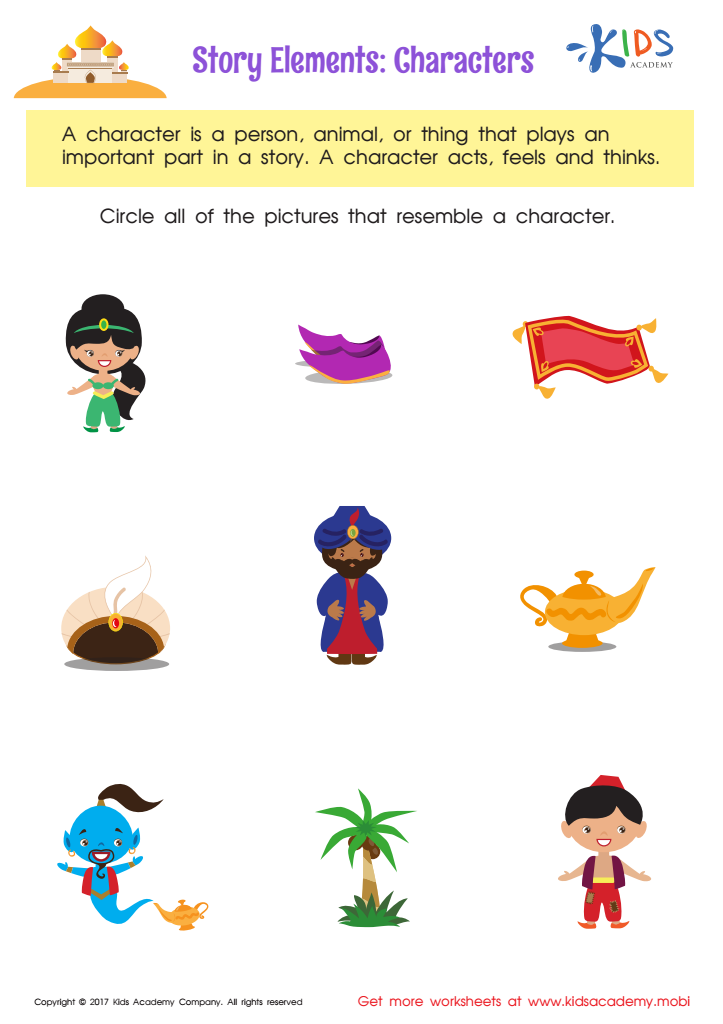
Story Elements Printable






Identifying story elements is crucial for children ages 6-7 as it builds the foundational skills essential for reading comprehension and critical thinking. When parents and teachers guide children in recognizing elements such as characters, setting, plot, conflict, and resolution, they enhance the child's ability to understand and engage with stories. This comprehension fosters a deeper appreciation for literature and encourages a love for reading.
Moreover, identifying story elements helps children organize their thoughts, which is vital for both oral and written communication. Through discussions about these elements, children learn to express their ideas, make predictions, and draw conclusions, honing their analytical skills.
Additionally, storytelling plays a key role in emotional development; understanding characters' feelings and motivations promotes empathy and social awareness. Collaboratively discussing story elements in a safe environment allows children to connect with their peers and share diverse perspectives.
Ultimately, nurturing these skills at an early age equips children for academic success and lifelong learning. It helps them become confident readers and critical thinkers, preparing them for more complex texts and real-world experiences as they grow. Thus, identifying story elements should be a key focus for parents and teachers alike.








