
Improve spelling skills Worksheets for Ages 6-7
3 filtered results
Difficulty Level
Grade
Age
-
From - To
Subject
Activity
Standards
Enhance your child's spelling skills with our engaging worksheets tailored for ages 6-7! Designed to support early learners, these fun and interactive activities promote phonetic awareness, vocabulary expansion, and independent writing. Our worksheets include various exercises such as fill-in-the-blank, word matching, and spelling games that make learning enjoyable. Each worksheet aligns with educational standards to ensure that your child builds a strong spelling foundation while developing essential literacy skills. Perfect for classroom settings or at-home practice, these resources will keep your young learners motivated and eager to improve their spelling. Download now and watch their confidence soar!
Favorites
With answer key
Interactive
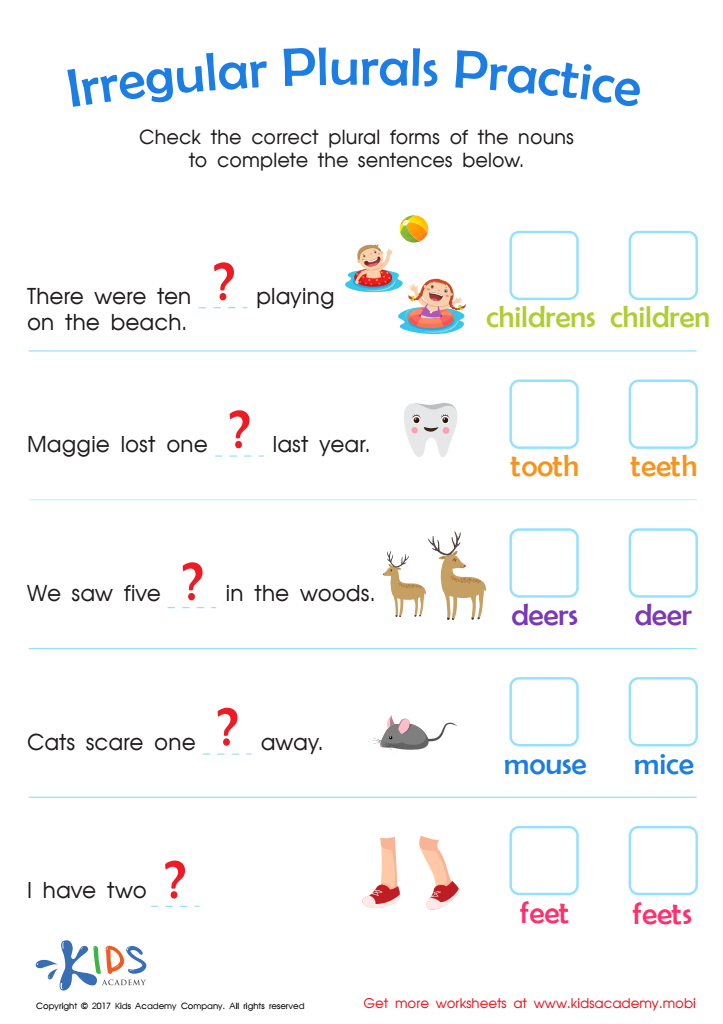
Irregular Plural Nouns Worksheet
This worksheet for 2nd graders offers an engaging activity for practicing irregular nouns by choosing the right option. It covers the most common irregular plurals, making it a quick, easy, and effective way to learn.
Irregular Plural Nouns Worksheet
Worksheet
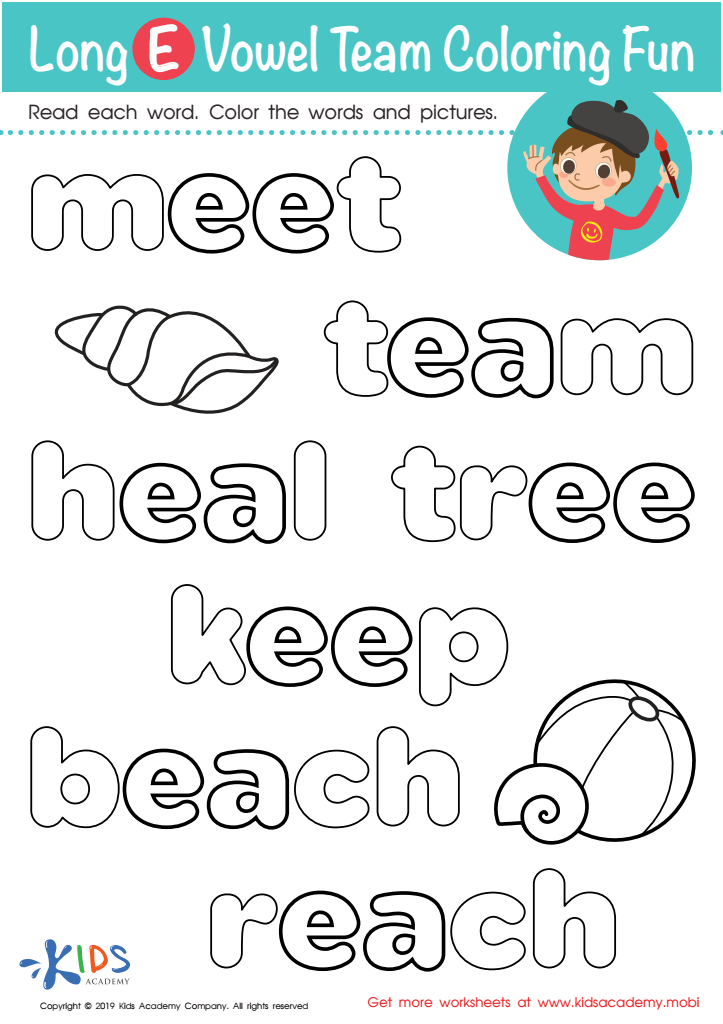
Long E Vowel Team Coloring Worksheet
Divide your students into teams and have them read words with long E sounds, such as "meet" and "team." Let them recognize that the sound can be created with either "ee" or "ea" letter pairings. Then, have the teams color words and pictures with the appropriate letters. This will make your phonics lesson fun and effective.
Download (PDF)
 Assign to My Students
Assign to My Students
Long E Vowel Team Coloring Worksheet
Worksheet
Join Kids Academy for Free
Who is primarily going to use this learning content?







Improving spelling skills in children aged 6-7 is essential for several reasons. First, this age group is typically in the early stages of literacy development, where foundational skills in spelling contribute to reading fluency and comprehension. Strong spelling abilities enable children to decode words more effectively, fostering a love for reading and a desire to explore books independently.
Moreover, spelling is closely linked to writing skills. Proficient spellers can express their thoughts and ideas more clearly, boosting their confidence as they share stories, reports, and other written work. This skill not only aids them in school but also equips them for future academic challenges.
Additionally, fostering good spelling habits at an early age promotes attention to detail and enhances vocabulary acquisition. Children often connect phonetics with meaning, giving them tools to engage more fully with language and improving overall communication skills.
Parents and teachers play a crucial role in this developmental journey by providing engaging activities, practice opportunities, and positive reinforcement. By nurturing spelling skills, they empower children to become proficient writers and confident communicators, setting the stage for lifelong learning and success in an increasingly text-driven world.








