
Long vowel recognition Worksheets for Ages 6-7
3 filtered results
Difficulty Level
Grade
Age
-
From - To
Subject
Activity
Standards
Enhance your child's reading skills with our engaging Long Vowel Recognition Worksheets designed for ages 6-7. These worksheets provide a fun and interactive way for young learners to identify and practice long vowel sounds in various words. Each activity is crafted to help children develop phonemic awareness, improve pronunciation, and boost confidence in reading. With colorful visuals and captivating exercises, your child will enjoy exploring the world of long vowels in an educational yet entertaining manner. Perfect for both classroom use and home learning, our worksheets support early literacy and build a strong foundation for future reading success. Download now to get started!
Favorites
With answer key
Interactive
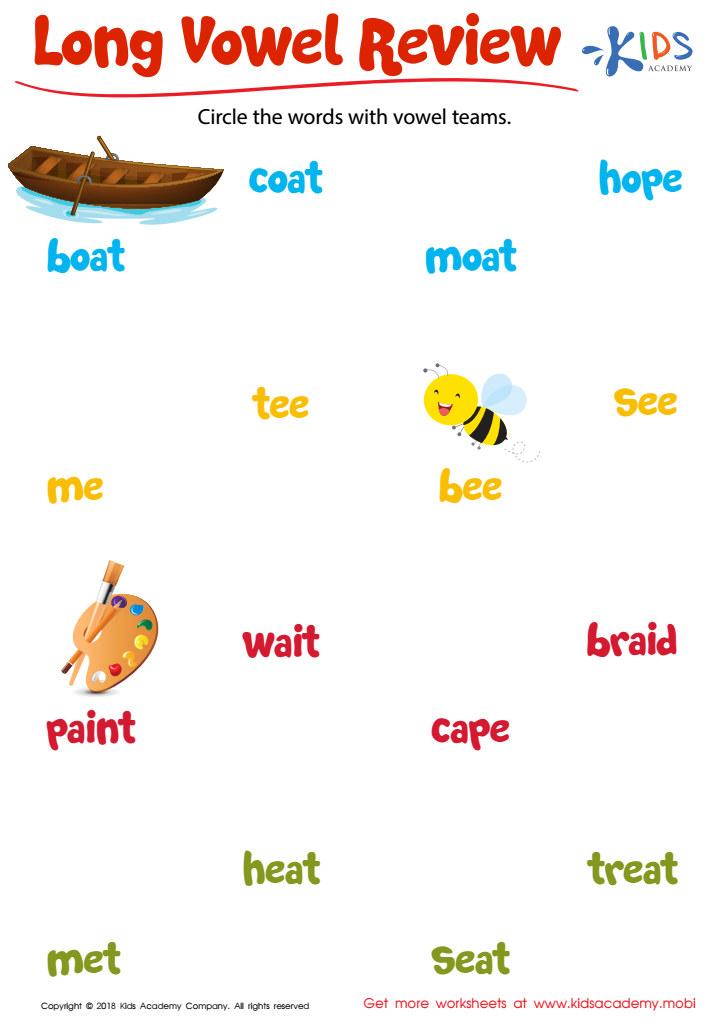
Long Vowel Review Worksheet
Vowel teams like "ea" and "ai" help us make words, and understanding these patterns aids emerging readers in becoming more fluent. This review worksheet has students finding words with vowel teams that make the long vowel sound, and helps them recognize high-frequency words.
 Assign to My Students
Long Vowel Review Worksheet
Worksheet
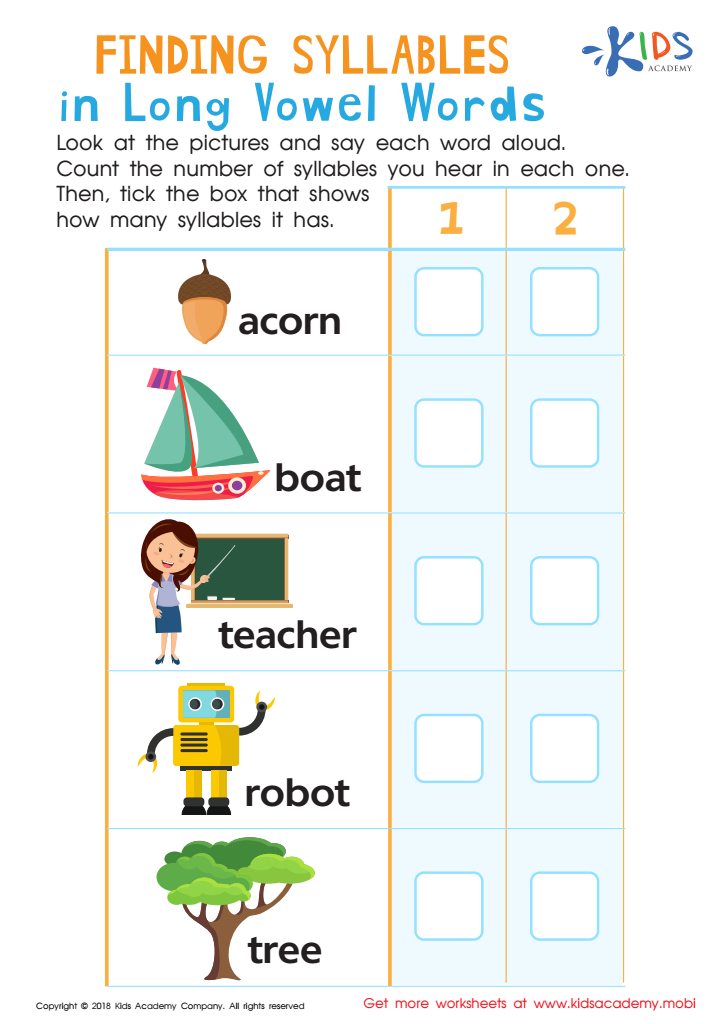
Finding Syllables in Long Vowel Words Worksheet
Help your kids identify objects and better count syllables in words. Look at the printout images with them and have them say each word out loud. Ask them to count syllables and tick the box with the correct number. With this worksheet, your kids will become more skilled.
Finding Syllables in Long Vowel Words Worksheet
Worksheet
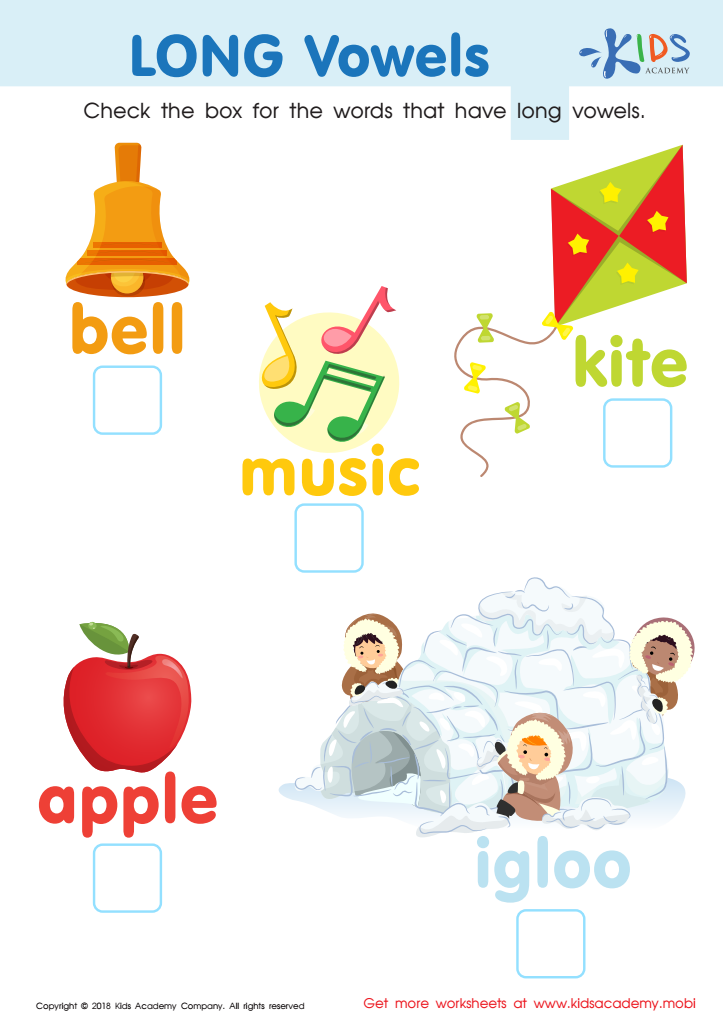
long vowels Worksheet
Have your early learner identify long vowels with this quick review. Ask them to name each picture aloud and listen out for the long vowel sounds to separate them from the shorter ones. Circle the ones that are long! Watch out for words with two vowels - they can be tricky!
long vowels Worksheet
Worksheet
Join Kids Academy for Free
Who is primarily going to use this learning content?








Long vowel recognition is crucial for children aged 6-7 as it significantly impacts their reading and writing development. At this age, children are transitioning from learning basic letter sounds to decoding and understanding words more comprehensively. Recognizing long vowels helps them differentiate between words, improving clarity in their reading and verbal communication. For instance, understanding that "bait" and "bat" have different meanings due to the vowel sounds supports vocabulary growth and literacy skills.
Additionally, long vowels are fundamental in phonics instruction. Mastery of these sounds allows children to tackle more complex reading materials, fostering a love for reading and learning. Phonemic awareness tied to long vowels enhances spelling proficiency—vital for effective written communication. When children can recognize and use long vowel sounds, it boosts their confidence in language arts, setting a strong foundation for academic success.
Moreover, encouraging long vowel recognition nurtures critical thinking and problem-solving skills as children learn to decode unfamiliar words independently. For parents and teachers, this recognition opens doors to engaging lessons and games that make learning enjoyable, while equipping children with the essential tools they need for future educational challenges. Prioritizing long vowel recognition fosters a brighter academic future for young learners.








