Picture-word association Worksheets for Ages 6-7
4 filtered results
-
From - To
Discover our engaging Picture-Word Association Worksheets designed specifically for children ages 6-7. These colorful and interactive resources help young learners connect images with corresponding words, enhancing vocabulary and comprehension skills. Ideal for home or classroom use, our worksheets encourage creativity and critical thinking through fun activities. Each worksheet features captivating visuals alongside words, making learning enjoyable and effective. By participating in picture-word association exercises, children reinforce their reading abilities and build a solid language foundation. Explore these valuable educational tools, fostering a love for language and boosting literacy skills in a playful and engaging manner. Perfect for early grade learning!
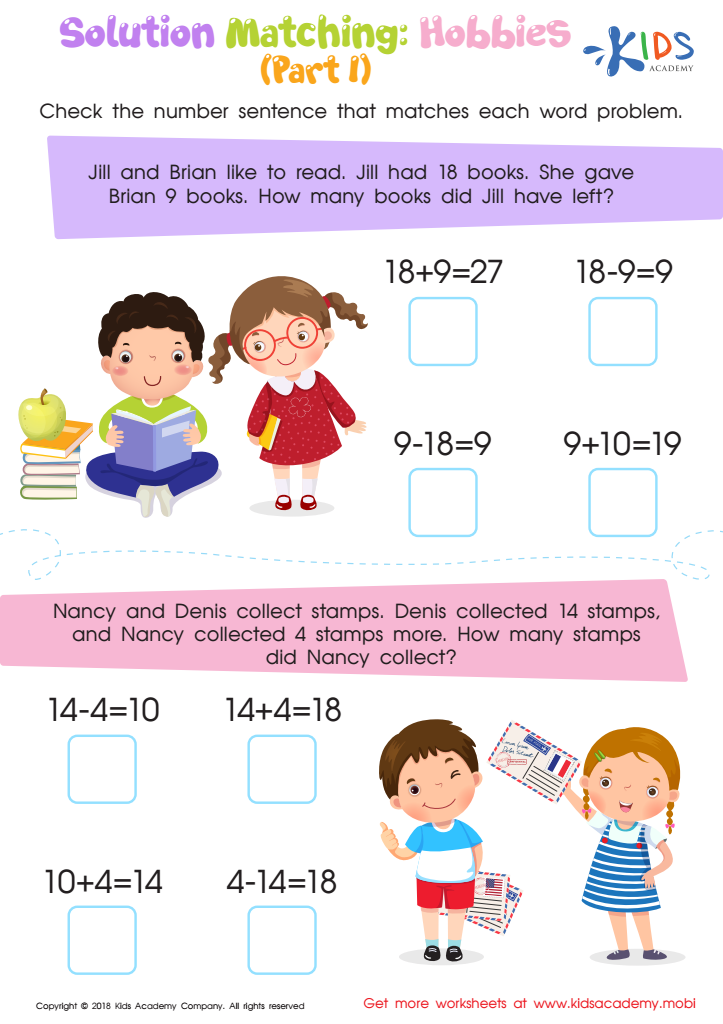
Solution Matching: Hobbies. Part 1 Worksheet
 Assign to My Students
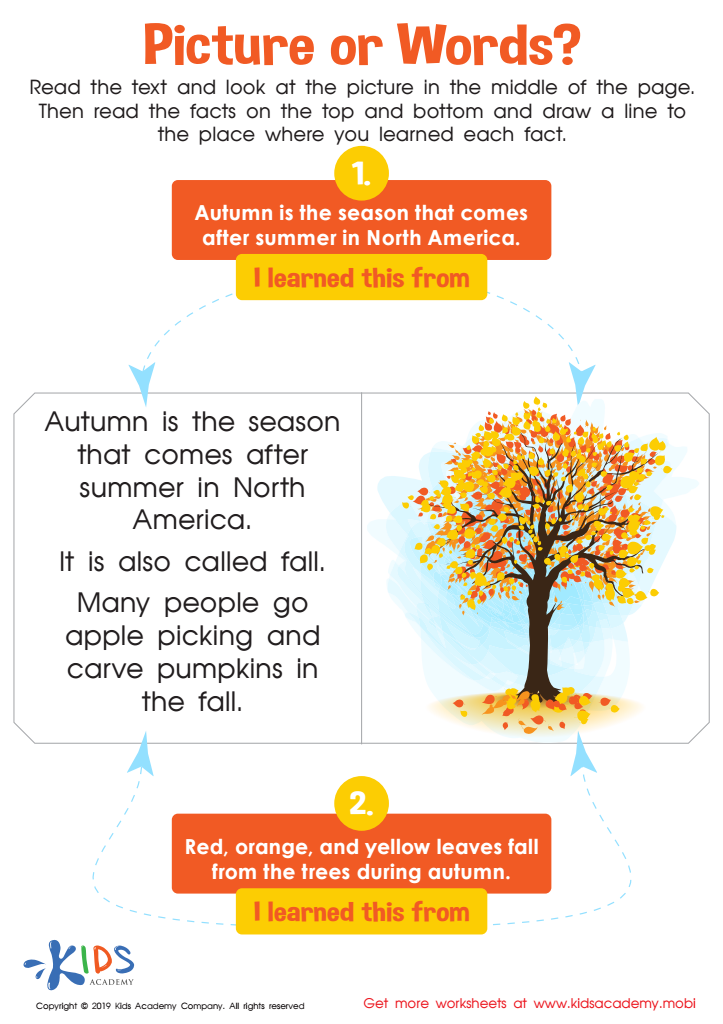
Picture Words Worksheet
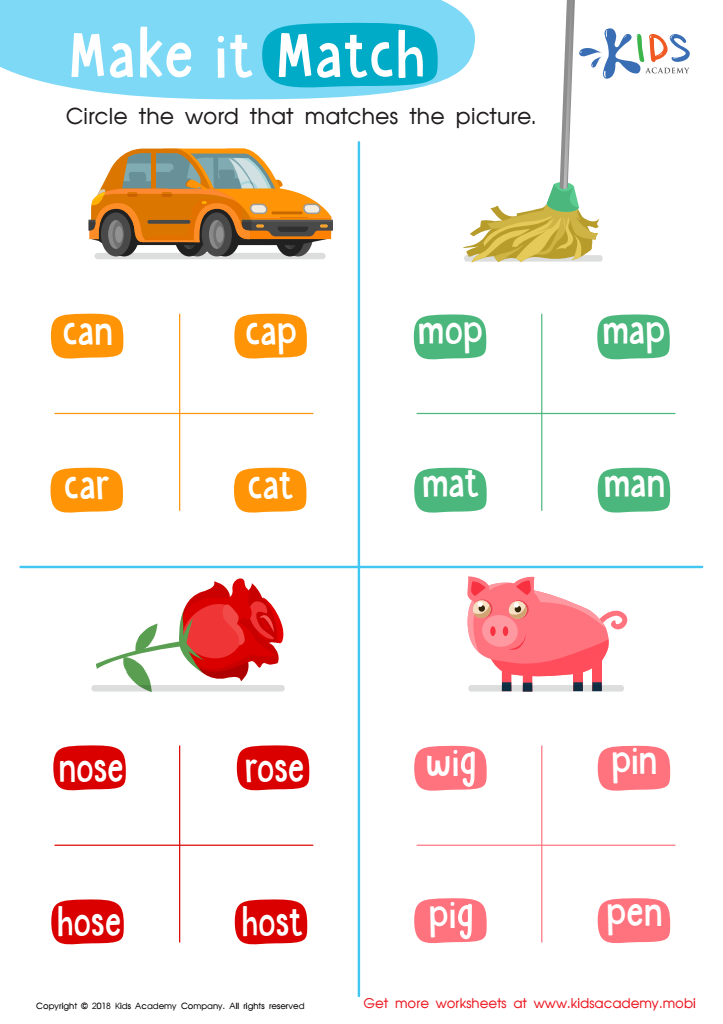
Make It Match Worksheet
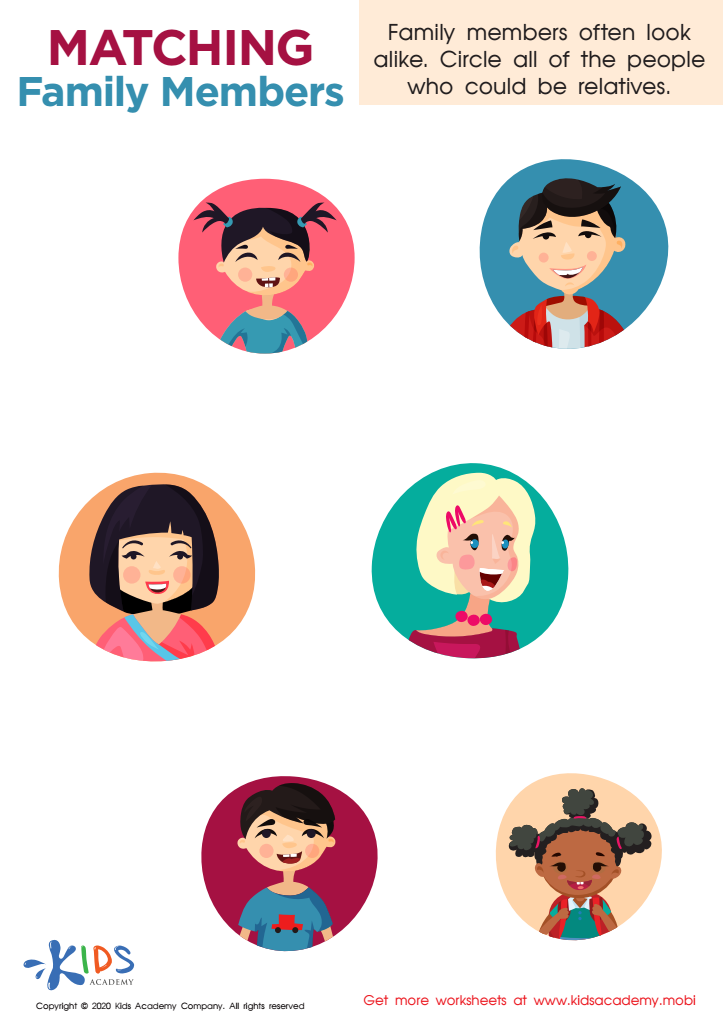
Matching Family Members Worksheet







Picture-word association is a vital educational strategy for children ages 6-7, as it plays a crucial role in developing language and literacy skills. During this formative stage, children are transitioning from learning to read to reading to learn. Engaging them in picture-word association activities enhances vocabulary acquisition, spelling skills, and comprehension, all of which are foundational for academic success.
The use of visual aids can make learning more enjoyable and relatable for young learners. When children connect words with images, it strengthens recall and enhances their ability to associate meanings, facilitating a deeper understanding of the language. This cognitive linking can be particularly beneficial for visual learners, as it caters to diverse learning styles.
Furthermore, picture-word association fosters creativity by allowing children to create narratives and engage in imaginative play, promoting critical thinking and problem-solving skills. It also supports parental involvement in education, providing easy-to-implement home activities that can keep children engaged while reinforcing what they learn in school.
In summary, prioritizing picture-word association helps young children build a strong literacy foundation, promotes a love for reading, and equips them with essential skills for their future educational journeys, making it a critical focus for parents and teachers alike.








