Practice writing numbers Worksheets for Ages 6-7
7 filtered results
-
From - To
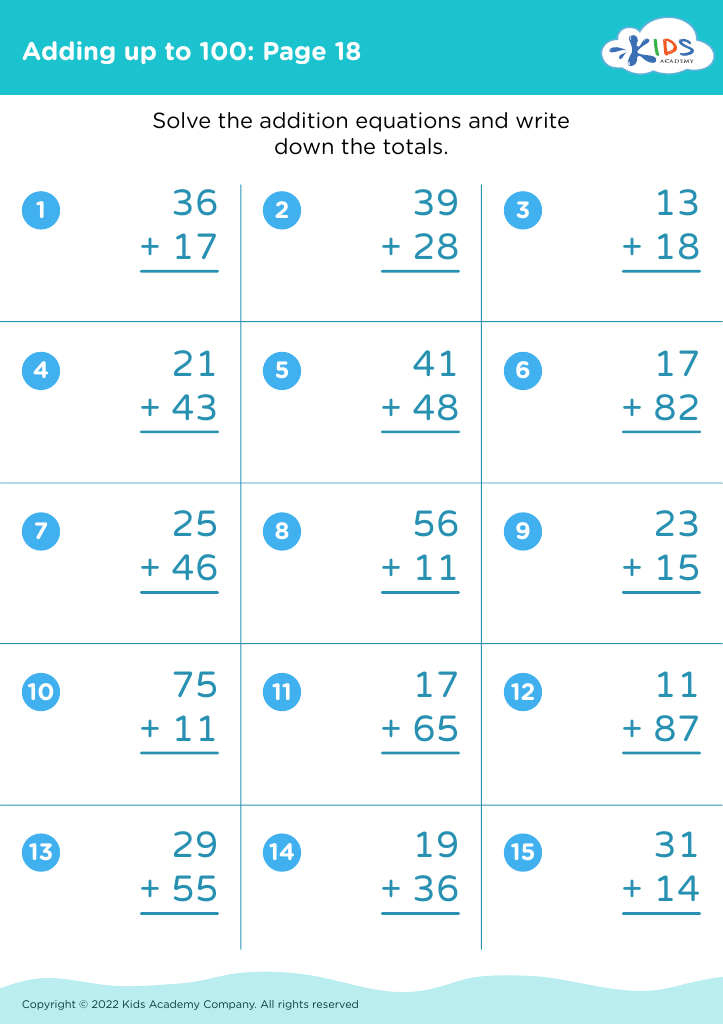
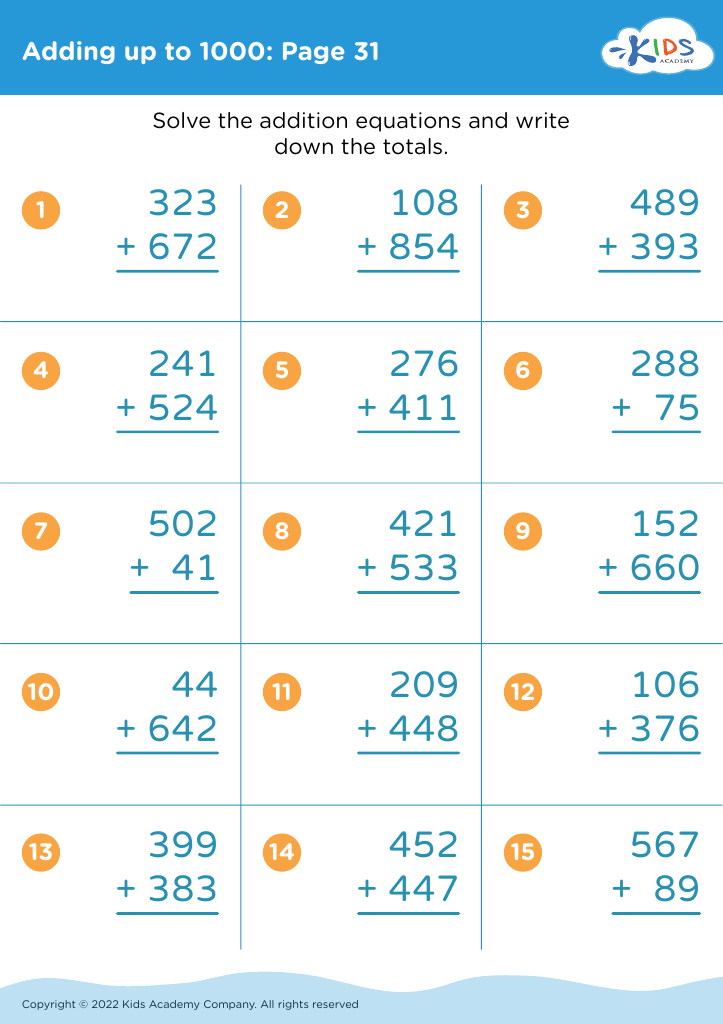
Enhance your child's numerical skills with our engaging "Practice Writing Numbers Worksheets" for ages 6-7! Designed to support early learning, these worksheets provide various activities that encourage children to trace, write, and recognize numbers. Each worksheet focuses on different digits, employing colorful designs and interactive elements to keep young learners motivated. As they practice, children will develop their fine motor skills and number familiarity, essential for math mastery. Perfect for both classroom and home use, our resources aim to make learning fun and effective. Boost your child's confidence in numbers today with our expertly crafted worksheets!
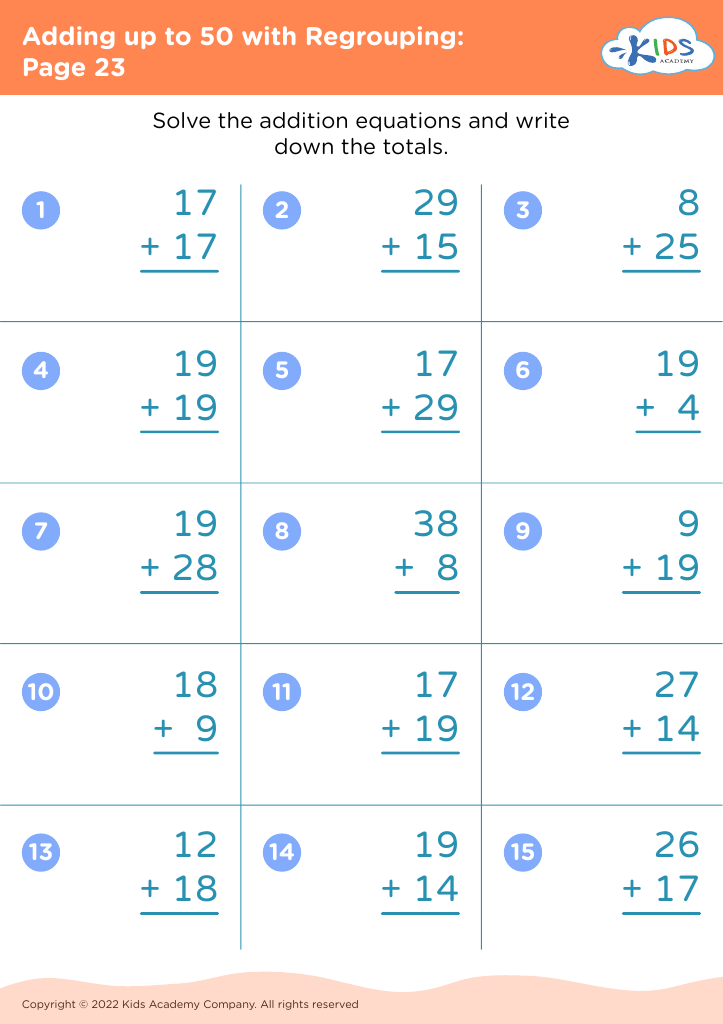
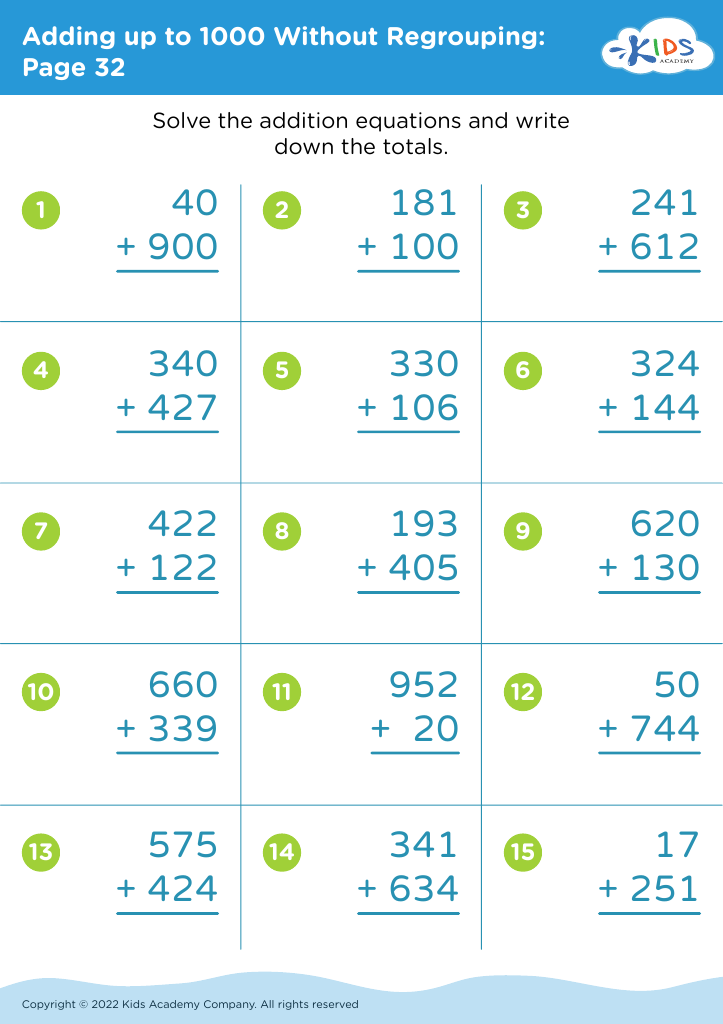
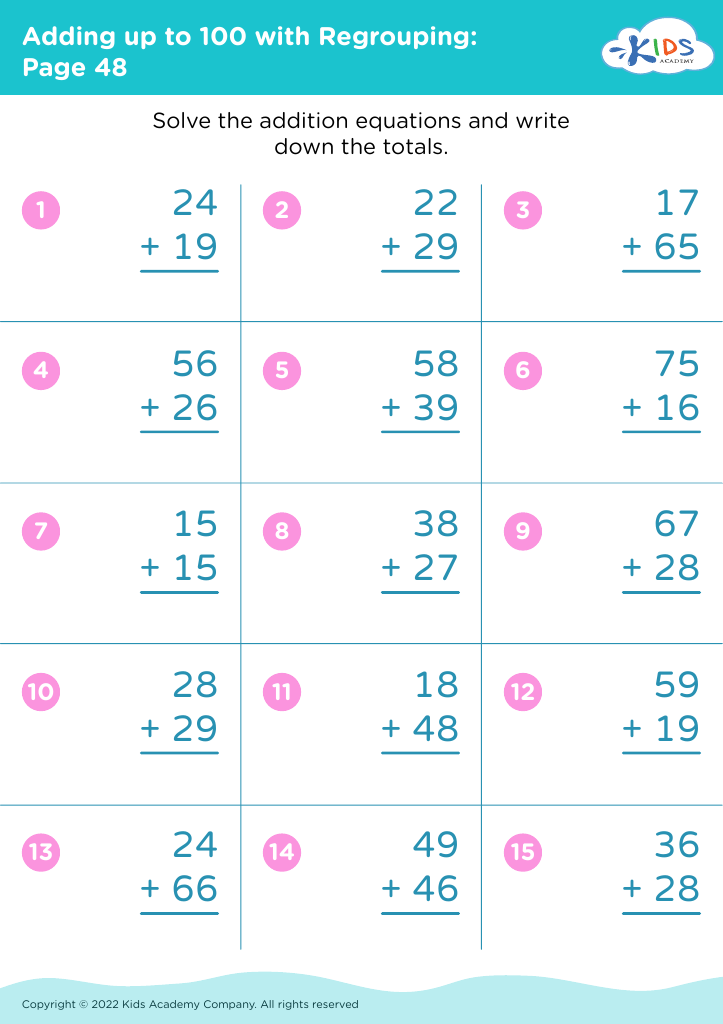
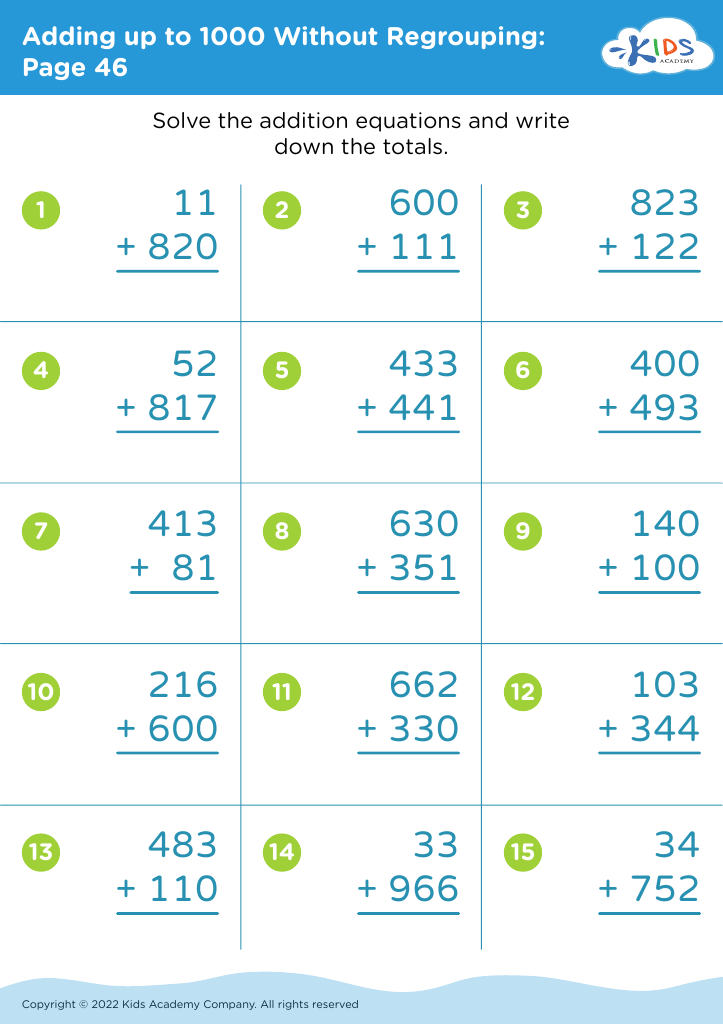






Practicing writing numbers for children aged 6-7 is essential for several key reasons. Firstly, this age is critical for developing foundational numeracy skills. When children consistently practice writing numbers, they improve their number recognition and understanding of quantity, which are crucial for future math concepts such as addition, subtraction, and place value.
Secondly, writing numbers helps enhance fine motor skills. This activity engages hand-eye coordination and helps strengthen the small muscles in young children’s hands, aiding their overall handwriting abilities.
Furthermore, mastering number writing boosts confidence. When children feel capable in a foundational skill like writing numbers, they are more likely to engage enthusiastically with mathematical learning and problem-solving tasks.
Additionally, consistent practice promotes familiarity with number patterns and sequences, which is instrumental in developing a sense of progression in mathematics.
Finally, this practice serves as a bonding opportunity where parents and teachers can collaborate with children, making learning engaging and enjoyable. By caring about and encouraging number-writing practice, parents and teachers are investing in children's cognitive development, boosting their academic confidence, and laying down a solid foundation for lifelong mathematical understanding and success.








