
Prefix understanding Worksheets for Ages 6-7
3 filtered results
Difficulty Level
Grade
Age
-
From - To
Subject
Activity
Standards
Discover the engaging world of language with our "Prefix Understanding Worksheets for Ages 6-7" from Kids Academy. Designed specifically for young learners, these worksheets focus on enhancing foundational skills through interactive exercises and activities. Children will explore common prefixes, understand their meanings, and learn how to use them to form new words. Each worksheet is crafted to make learning fun and effective, promoting reading comprehension and vocabulary development. Perfect for classroom use or at-home practice, these resources will boost your child's confidence in their early reading and writing journey.
Favorites
With answer key
Interactive
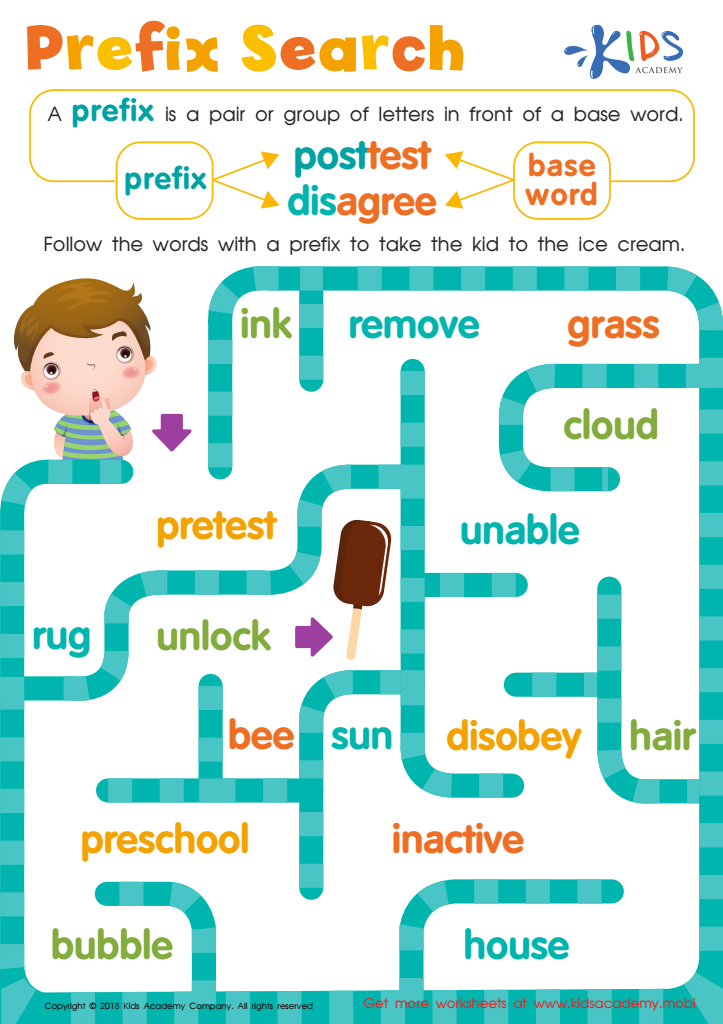
Reading: Prefix Search Worksheet
Maze your way through prefixes! This worksheet helps students practice reading new words with a prefix and figuring out the base word. An understanding of prefixes gives students the skills to comprehend new words. A fun and useful activity for the reading classroom!
 Assign to My Students
Reading: Prefix Search Worksheet
Worksheet
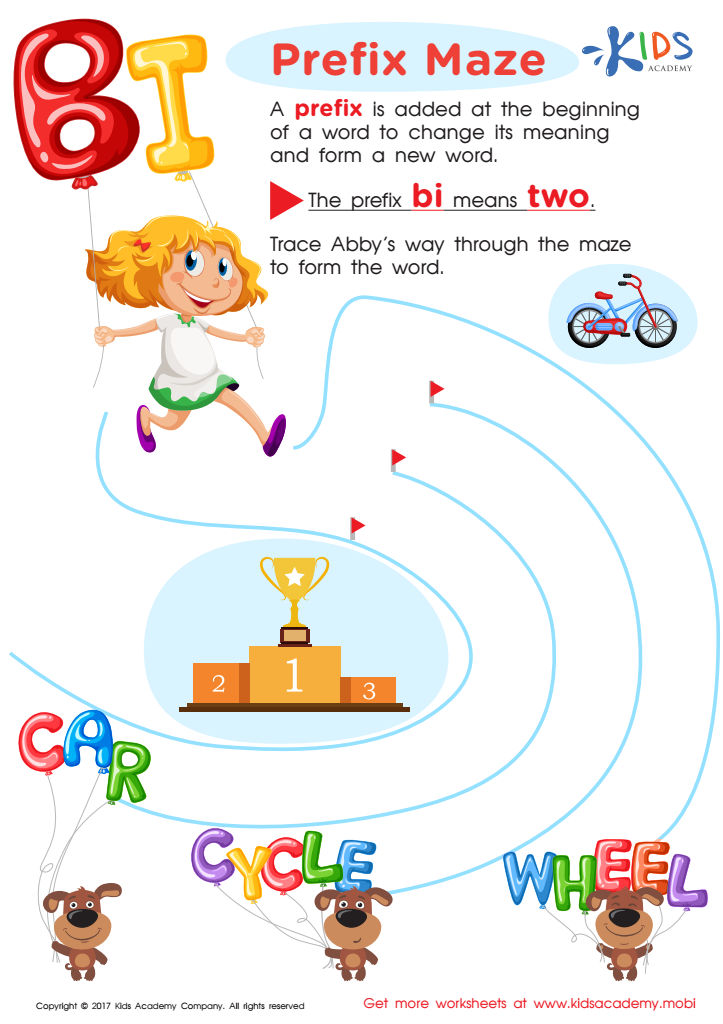
Prefix Bi Words Worksheet
Help "bi" find its root word in this fun and colorful prefix worksheet! Your child will learn how words are built while having a great time!
Prefix Bi Words Worksheet
Worksheet
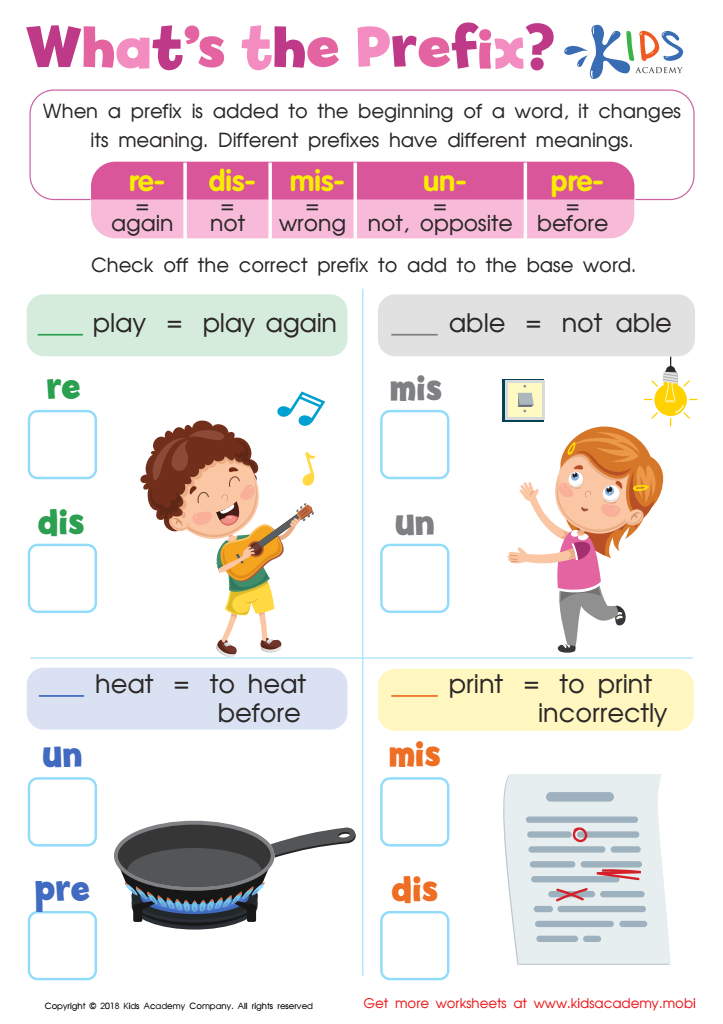
Reading: What Is the Prefix Worksheet
This worksheet helps children learn about prefixes by matching pictures and base words with the correct prefix. Learning these prefixes and their meanings is essential for reading and vocabulary comprehension. Use this free download to check your students' understanding.
Reading: What Is the Prefix Worksheet
Worksheet
Join Kids Academy for Free
Who is primarily going to use this learning content?


.jpg)




Understanding prefixes is crucial for children ages 6-7 because it significantly supports their reading and vocabulary development. At this age, children are transitioning from simple word recognition to more comprehensive reading skills. Recognizing prefixes helps them decode and understand new words they encounter. For example, knowing that "un-" means "not" helps children understand words like "unhappy" or "unfair."
Moreover, prefixes are foundational elements of many words in the English language. When children grasp common prefixes such as "re-", "pre-", and "dis-", they can infer the meanings of numerous words. This skill boosts their confidence and enhances their comprehension abilities, making reading a more enjoyable and less frustrating experience.
Understanding prefixes also aids in spelling and writing. When children learn that adding "pre-" to "view" changes the word from a verb "view" to a noun "preview" meaning something that comes before viewing, they start to see patterns in word formation. This understanding enables them to use and spell these words correctly.
Teachers and parents who emphasize prefix education contribute to building a robust linguistic foundation. Such knowledge enhances cognitive skills, academic success, and effective communication, laying the groundwork for lifelong learning and literacy.








