Recognizing equivalent fractions Worksheets for Ages 6-7
5 filtered results
-
From - To
Discover interactive and engaging Recognizing Equivalent Fractions worksheets specifically designed for kids aged 6-7. These educational resources from Kids Academy incorporate fun activities that help young learners effortlessly understand and identify equivalent fractions. Each worksheet features colorful visuals and relatable scenarios, ensuring the foundational concepts of fractions are grasped with ease. Perfect for classroom settings or at-home learning, these printables develop critical math skills while keeping children motivated and confident in their abilities. Give your child a head start with these expertly crafted worksheets that make fractions fun and approachable. Download and start learning today!
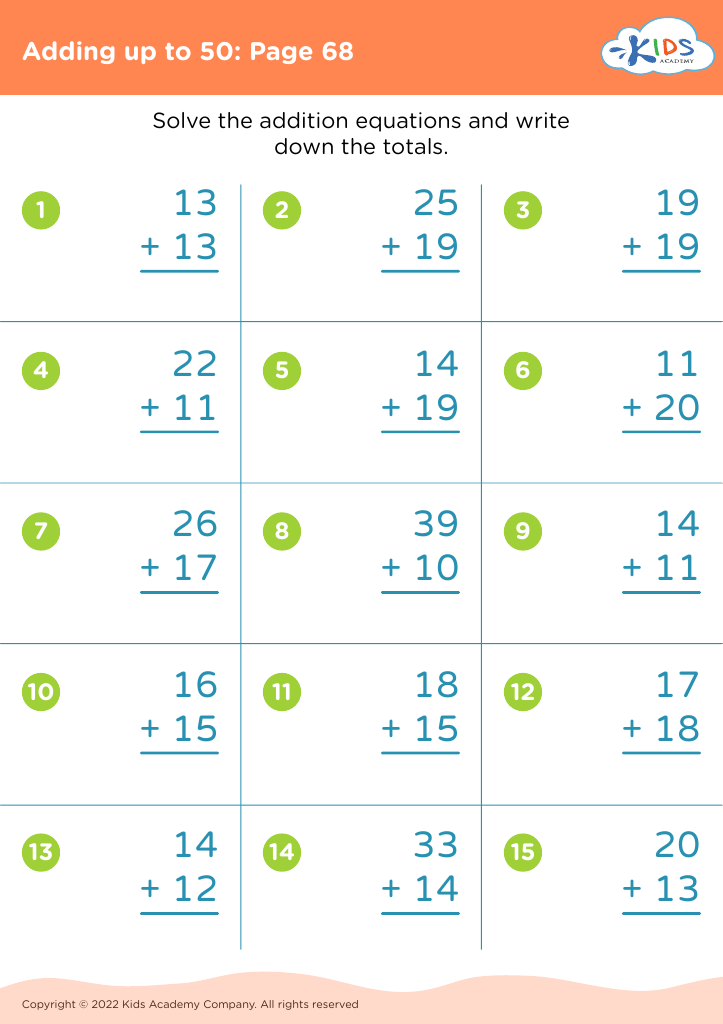
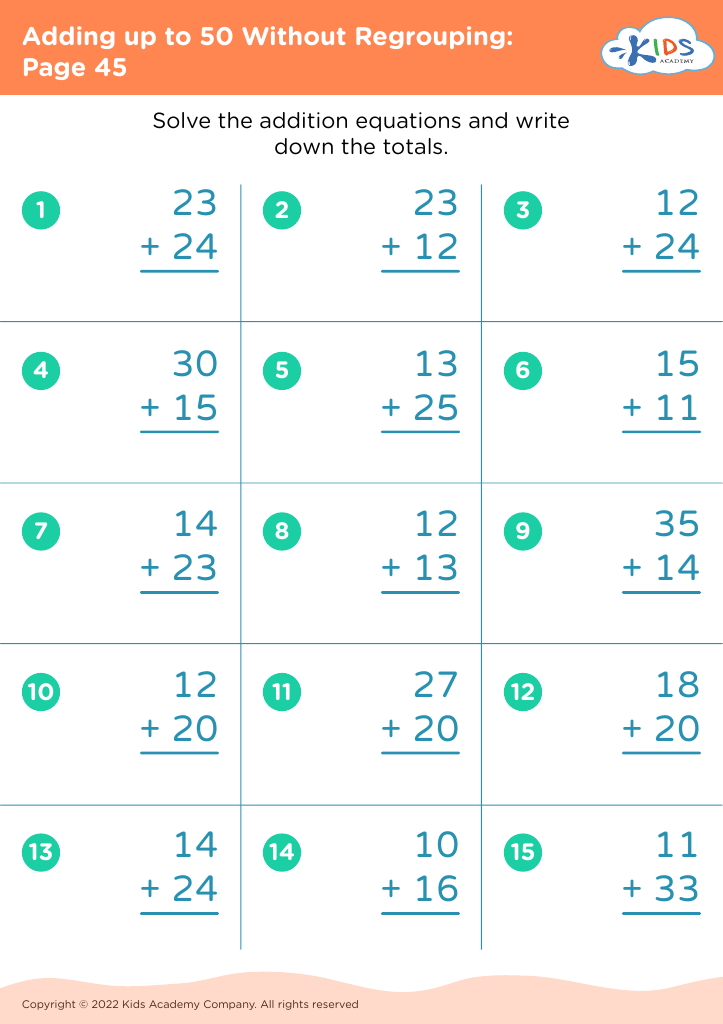
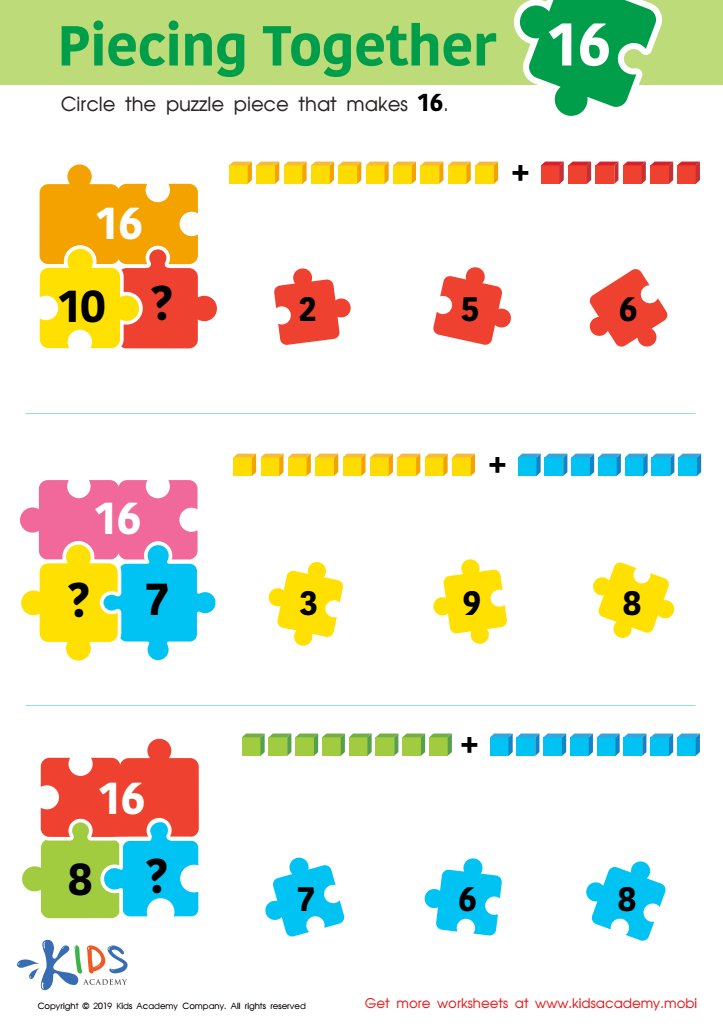
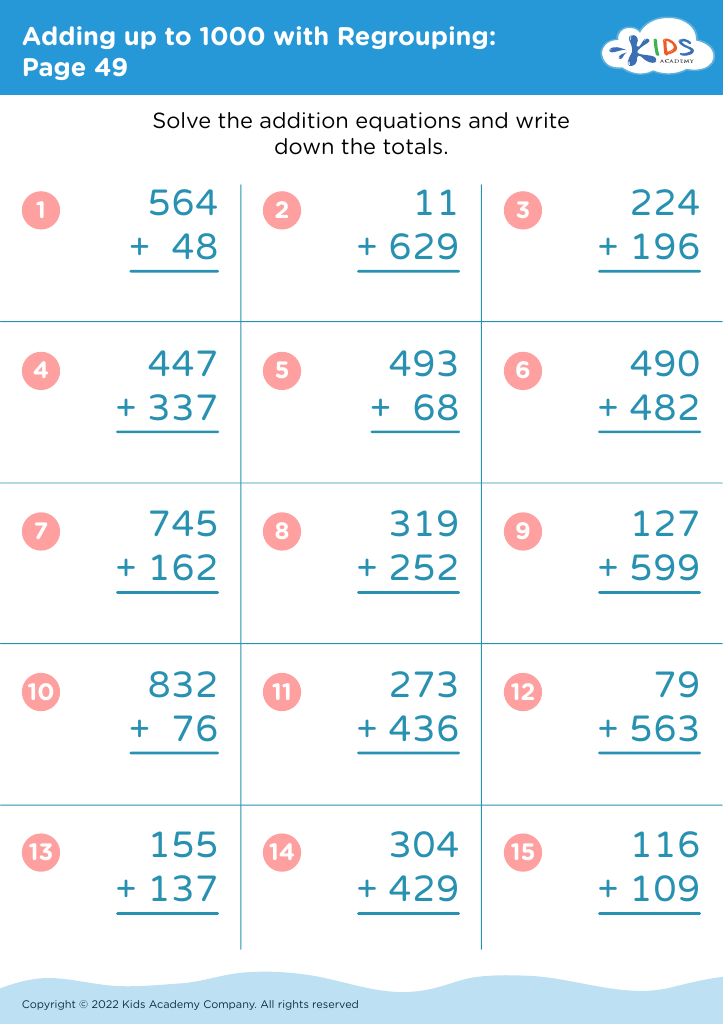
Piecing Together 16 Worksheet
 Assign to My Students





.jpg)

Recognizing equivalent fractions is an essential foundational skill for children aged 6-7, as it sets the groundwork for their future math learning and everyday problem-solving. Parents and teachers should care about this concept because it enhances a child's understanding of the part-whole relationships and allows for a deeper comprehension of fractions as they progress to more complex mathematical contexts.
At this young age, children are more receptive to intuitive learning approaches, visual aids, and hands-on experiences like fraction circles or number lines, making it easier to grasp equivalent fractions. By familiarizing themselves early with these concepts, children can more confidently tackle more advanced topics, such as ratios, proportions, and even algebra, in later grades.
Furthermore, understanding equivalent fractions supports everyday skills like dividing objects into equal portions, cooking, or managing time. For example, knowing that 1/2 is the same as 2/4 can help them equally share something between friends or determine when they are halfway through an event. Such practical applications underscore the relevance of math in the real world.
Incorporating this knowledge at an early stage boosts mathematical fluency, critical thinking, and problem-solving abilities. It fosters a positive attitude towards math, reducing anxiety and building self-confidence, which are invaluable for academic success and lifelong learning.








