Rhyming skills development Worksheets for Ages 6-7
4 filtered results
-
From - To
Unlock your child's potential with our Rhyming Skills Development Worksheets tailored for ages 6-7! These engaging activities promote foundational literacy by focusing on phonemic awareness through fun and creative rhymes. Each worksheet is designed to cultivate your child’s ability to recognize and produce rhyming words, significantly aiding in reading fluency and comprehension. With vibrant illustrations and captivating exercises, learning becomes an enjoyable journey. These worksheets are perfect for classroom use or at-home practice, offering parents and teachers an effective resource to strengthen young learners' language skills. Foster a love for reading with Kids Academy's rhyming worksheets today!

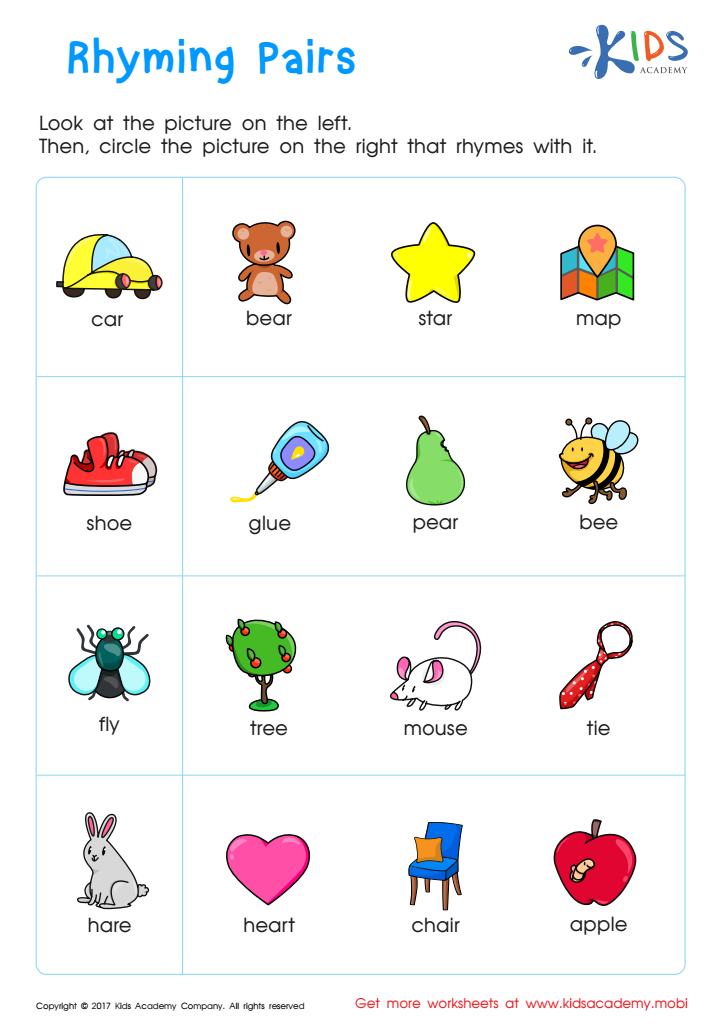
Rhyming Words Rhyming Worksheet
 Assign to My Students
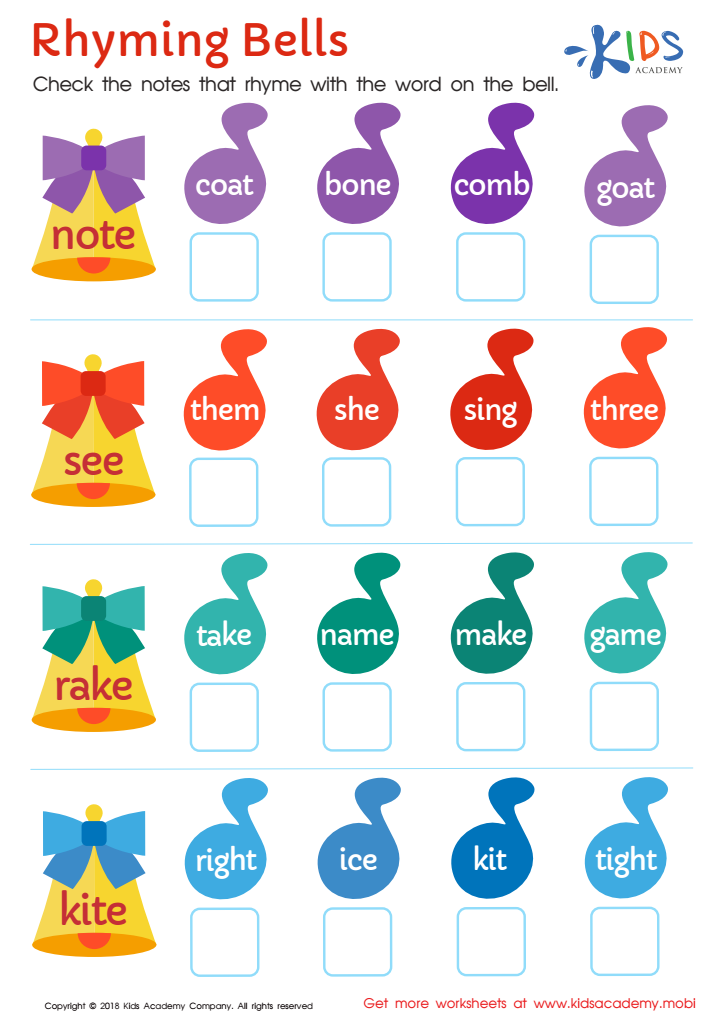
Rhyming Bells Worksheet

First Words: Picture Rhymes Worksheet







Developing rhyming skills in children ages 6-7 is essential for several reasons. Early exposure to rhymes enhances phonemic awareness, which is the ability to hear, identify, and manipulate individual sounds in words—a key foundational element of reading development. By recognizing and producing rhyming words, children learn to segment words into their constituent sounds and patterns, boosting their decoding skills for unfamiliar words they might encounter in the future.
Rhyming also enriches vocabulary and comprehension. When children engage with rhymes, they are often introduced to new words within a memorable context, making it easier for them to remember and use these words. This prevents frustration and enhances their ability to both understand and enjoy what they read.
Furthermore, rhyming can significantly improve a child's listening skills. Through active listening and participation in rhyming activities, children learn to focus, differentiate sounds, and anticipate language patterns, which is vital for effective communication and academic success.
Implementing rhyming activities in the classroom or at home can make learning enjoyable and interactive, fostering a love for language and reading. Engaging and fun rhyming stories or games can motivate children to participate more enthusiastically, setting a positive tone for lifelong reading endeavors. Therefore, parents and teachers should prioritize rhyming as an integral part of early literacy education.








