
Sentence structure Worksheets for Ages 6-7
8 filtered results
Difficulty Level
Grade
Age
-
From - To
Subject
Activity
Standards
Explore our engaging Sentence Structure Worksheets designed specifically for children aged 6-7. These worksheets provide a fun and interactive way for young learners to grasp the fundamentals of sentence formation. With a variety of activities, including identifying subjects and predicates, filling in the blanks, and constructing complete sentences, children will develop their writing skills while enhancing their comprehension. Our resources drive creativity and critical thinking in early education, ensuring each child builds a solid foundation in language arts. Perfect for both home and classroom use, these worksheets make learning about sentence structure enjoyable and effective. Start building your child's confidence in writing today!
Favorites
With answer key
Interactive
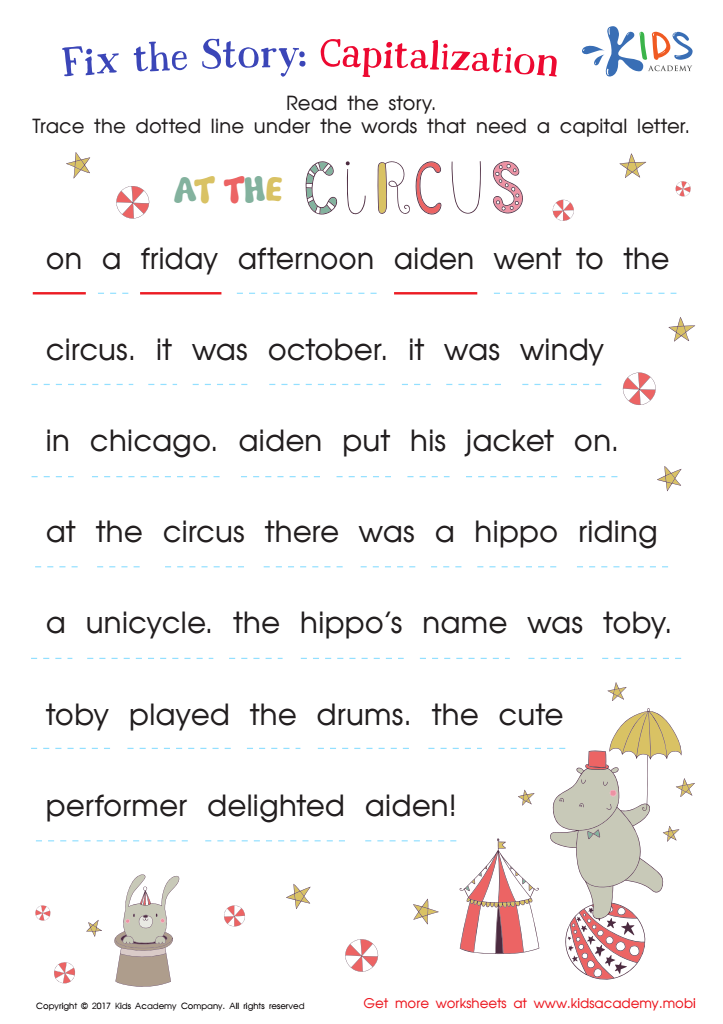
Capitalization: Fix the Story Worksheet
This worksheet is perfect for mastering capitalization in stories: Fix the Story. Read along with your child and help them find all the words that require capitalization. It's sure to be a fun and engaging challenge!
 Assign to My Students
Capitalization: Fix the Story Worksheet
Worksheet
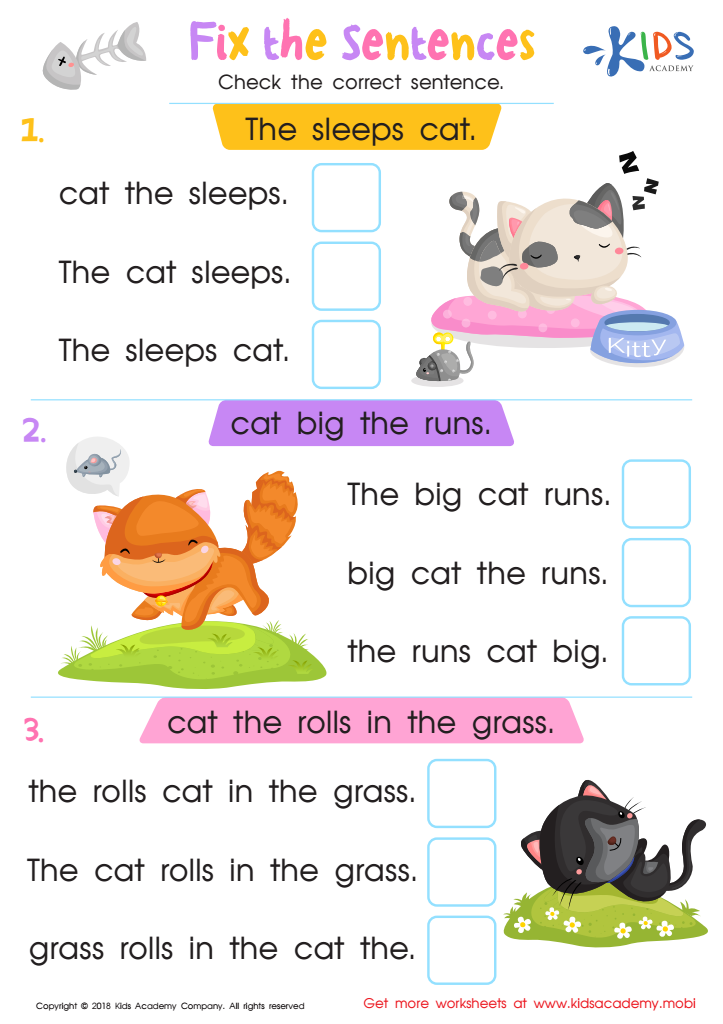
Fix the Sentences Worksheet
Once your students know the alphabet, teach them words. Then move on to constructing sentences. If they have a handle on sentence structure, give them this worksheet. Ask them to read the sentences and check the correct one.
Fix the Sentences Worksheet
Worksheet
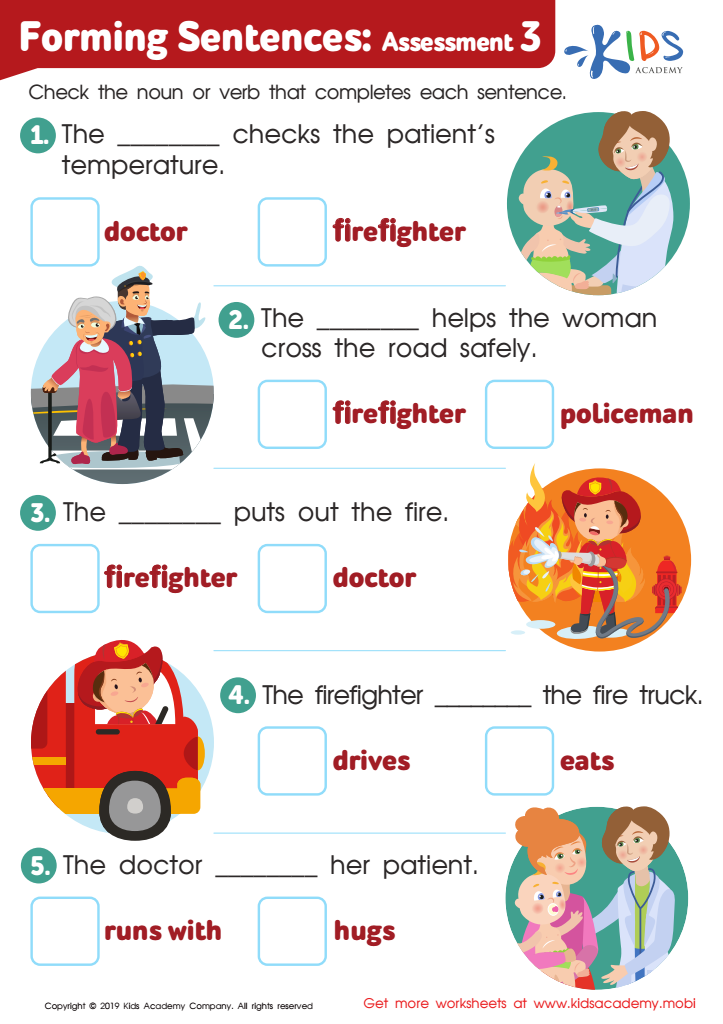
Forming Sentences: Assessment 3 Worksheet
Students must master sentence formation to be successful English learners. After grasping the ABCs and basic words, the next step is to construct sentences using those words. Worksheets like this one can help teach kids how to make sentences; they need to look at the pictures and select the correct noun or verb to complete each sentence.
Forming Sentences: Assessment 3 Worksheet
Worksheet
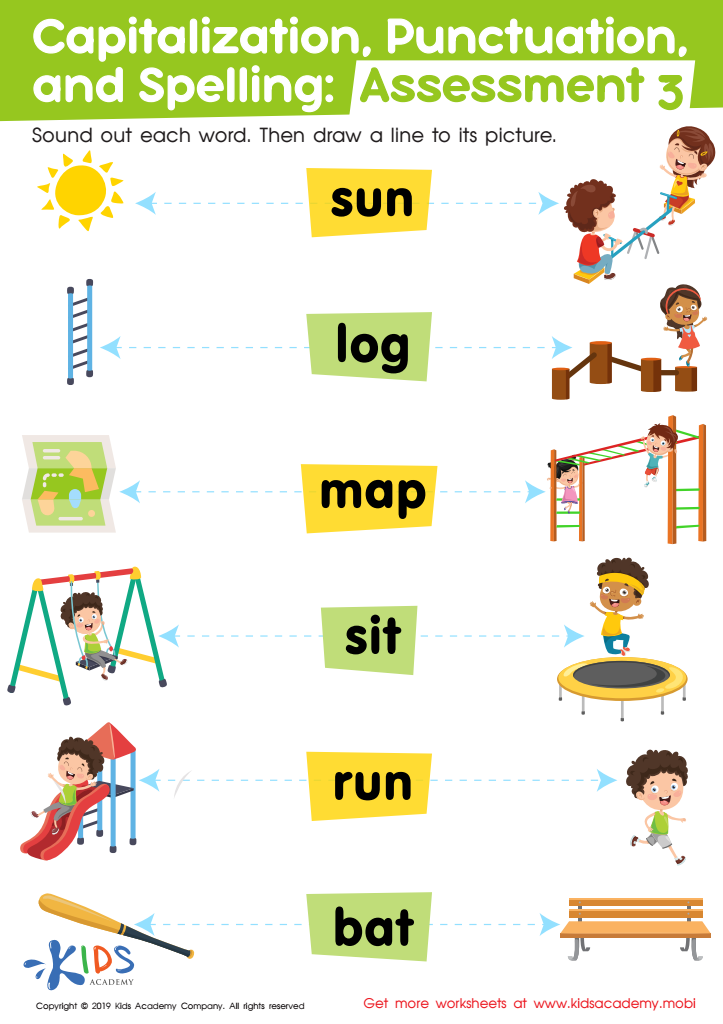
Capitalization. Punctuation. Spelling. Assessment 3 Worksheet
Before starting this worksheet, have your kids spell some simple words. Correct if wrong and show the right spellings. Then, ask them to link the pictures to the words you read out. Spelling is key for a good writer, and kids need to know how to spell to read texts easily.
Capitalization. Punctuation. Spelling. Assessment 3 Worksheet
Worksheet
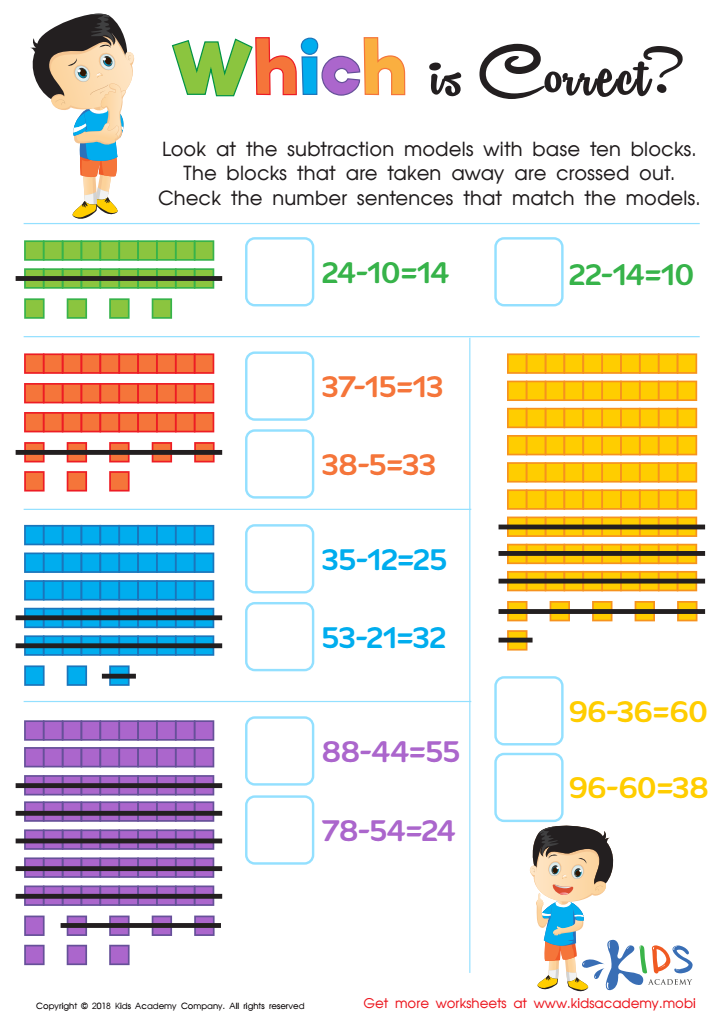
Which Is Correct? Math Worksheet
Young mathematicians will gain confidence solving subtraction problems with this bright, colorful worksheet. They'll use base ten blocks representations, then pick the right number sentence to match. It's great practice for developing number sense, helping them excel in higher-level math.
Which Is Correct? Math Worksheet
Worksheet
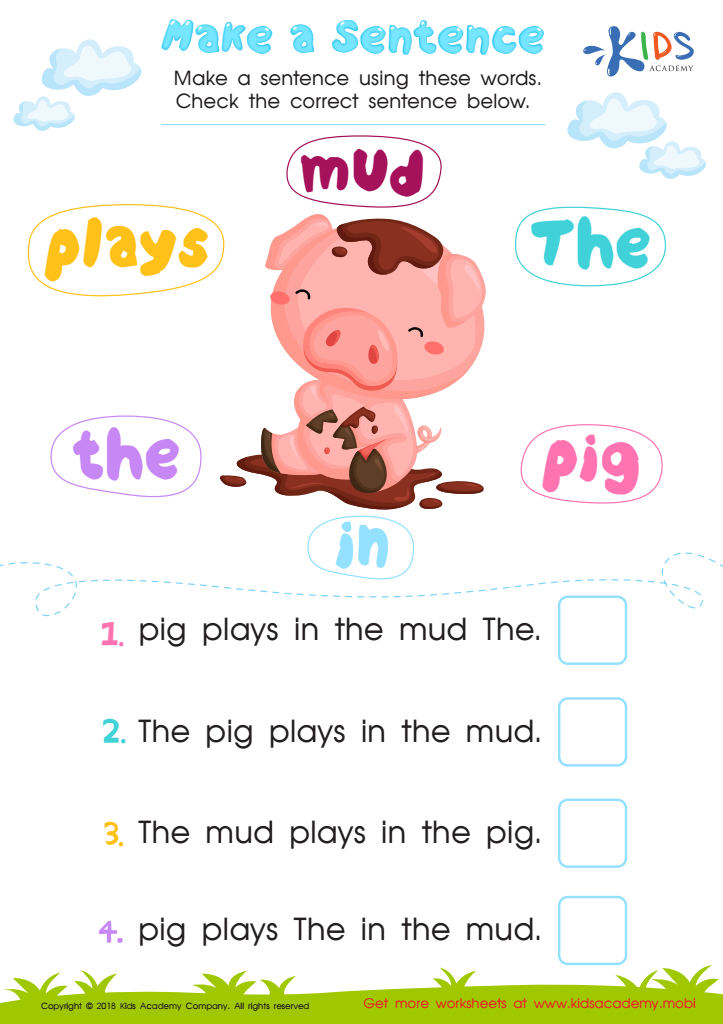
Assessment: Make a Sentence Worksheet
Help your kids identify the animal in the printout. Read the words in the bubbles and then read the four sentences in the options 1 – 4. Ask them to check the box with the correct sentence.
Assessment: Make a Sentence Worksheet
Worksheet
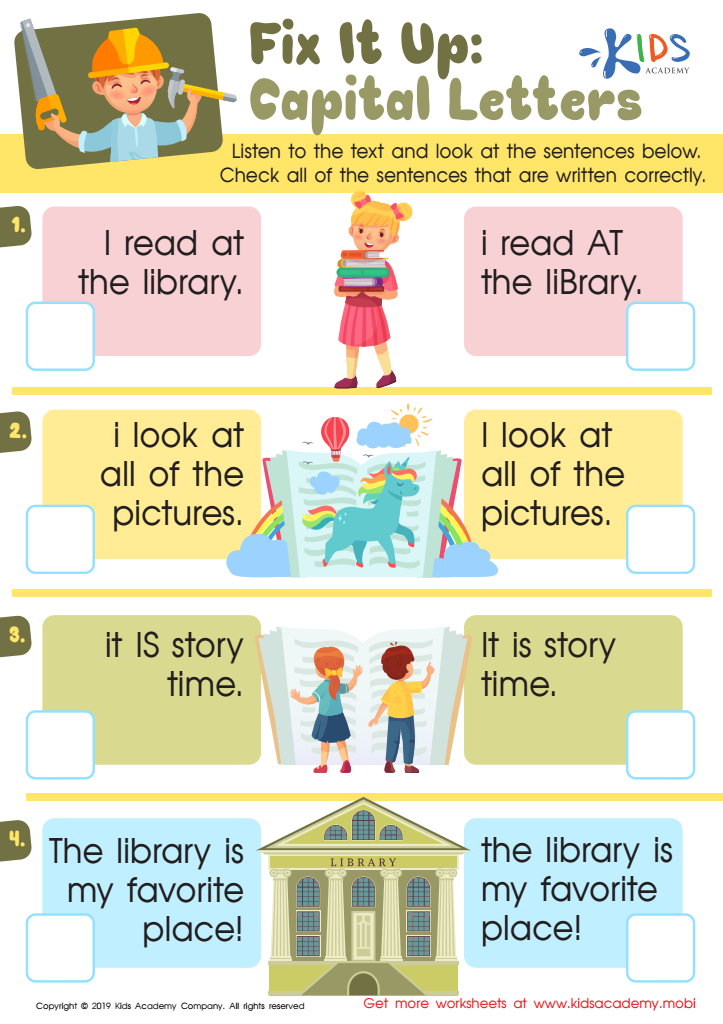
Fix Capital Letters Worksheet
Put on your hardhats and get out the tools - it's time to do some repair work! Have your child identify sentences written with proper capitalization on this fun and colorful worksheet. Ask more advanced students to rewrite incorrect sentences correctly - it'll help them understand letter case better.
Fix Capital Letters Worksheet
Worksheet
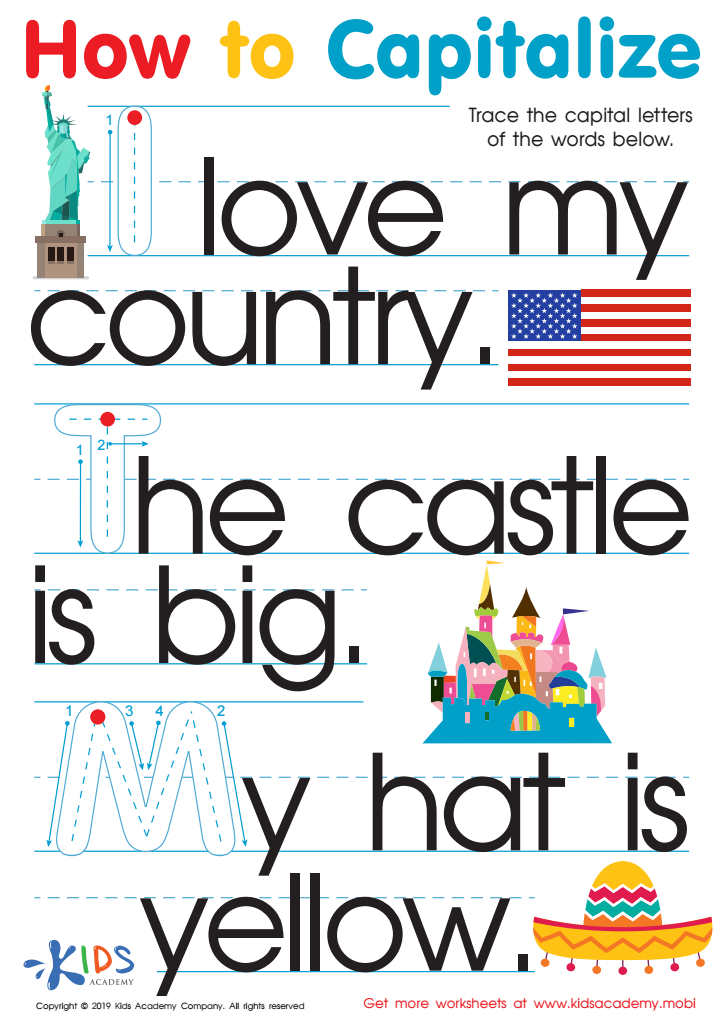
How to Capitalize Worksheet
Capitalizing letters is important in English. This worksheet will help your child learn how to write them. Words such as "the" and "I" will be covered, with visuals such as the Statue of Liberty, the American Flag, a castle, and a sombrero. The "How to Capitalize" PDF is a great way to sharpen your child's writing and aid their success!
How to Capitalize Worksheet
Worksheet
Join Kids Academy for Free
Who is primarily going to use this learning content?








Understanding sentence structure is crucial for children aged 6-7 as it lays the foundation for effective communication and literacy skills. At this developmental stage, kids begin to grasp the basics of grammar and the role of words in constructing meaningful sentences.
Fostering a strong understanding of sentence structure helps children express their thoughts clearly and creatively. When parents and teachers emphasize structured sentence formation, children learn how to organize their ideas logically, which enhances their writing and speaking abilities. It also enriches their reading comprehension, as they become more adept at understanding the various components of a sentence.
Moreover, mastering sentence structure prepares children for more complex language use as they progress through school. It aids in vocabulary expansion and encourages critical thinking as they begin to analyze and compare different sentence types. Simple sentences evolve into compound and complex ones, allowing kids to convey richer narratives and arguments.
In essence, focusing on sentence structure empowers children to communicate more effectively, fosters confidence in their language skills, and sets the groundwork for academic success. Parents and teachers should actively engage with children in these foundational skills, as they are essential tools for lifelong learning and personal expression.








